A federal judge has halted the Trump administration’s efforts to create a database containing millions of Americans’ personal and sensitive data. U.S. District Judge Sparkle Sooknanan, appointed by President Joe Biden, stated that the administration had violated privacy rights in a way that endangered the right to vote. She asserted that the court cannot allow such privacy rights violations.
The decision received praise from Marcia Johnson, chief of activation and justice for the League of Women Voters, who noted that plans for a federal voter database could undermine the core democratic right to vote. The lawsuit came from both the League and the Electronic Privacy Information Center (EPIC), aiming to prevent the federal government from building this database.
The lawsuit followed attempts by the Department of Homeland Security (DHS) and Social Security Administration (SSA) to convert the DHS’s Systematic Alien Verification for Entitlements (SAVE) system into a national citizenship database. Critics claimed that the Social Security data within the system was unreliable, leading some states to remove legitimate voters from rolls and initiate criminal investigations against them.
“Today’s decision is a victory for us all. By preventing the illegal consolidation of sensitive personal data across federal agencies, the court has protected both our privacy rights and the democratic foundation, the right to vote,” said John Davisson, EPIC Deputy Director and Director of Enforcement. “The ruling emphasizes that government agencies must abide by the law, protect privacy, and be accountable to the public they serve.”
The SAVE Database
The Systematic Alien Verification for Entitlements (SAVE) program is a federal system managed by the Department of Homeland Security (DHS). Initially, it was created to assist state and federal agencies in verifying the immigration status of noncitizens seeking public benefits.
Under an executive order from the Trump administration, the database was massively expanded into an interagency resource, integrating DHS and Social Security Administration (SSA) records. This expansion allowed the database to perform the following functions:
- Search individuals using Social Security numbers.
- Consolidate extensive pools of sensitive personal data.
- Act as a centralized citizenship verification tool for state election officials to check voter eligibility and manage registration rolls.
Judge Sparkle Sooknanan’s Role
U.S. District Judge Sparkle Sooknanan is part of the U.S. District Court for the District of Columbia. She was appointed by Biden and took office in January 2025. Hailing from Trinidad and Tobago, she is the first woman from Trinidad to serve on this court. Her nomination was widely supported, receiving backing from members across the legal community.
Details of the Ruling
In a comprehensive 75-page decision issued on June 22, Judge Sooknanan sided with plaintiffs, including the League of Women Voters and EPIC, by granting an injunction to stop the data pooling development. Sooknanan ruled that the Trump administration executed these significant changes secretly, breaching statutory requirements. The judgment highlighted the government’s failure to provide adequate public notice, allow comment periods, or sufficiently evaluate privacy risks as prescribed by the Administrative Procedure Act and the Privacy Act of 1974.
Timing of the Injunction
The federal injunction arrived at a politically sensitive time. The 2026 United States midterm elections are set for November 3, 2026. With the control of both the House of Representatives and the Senate at stake, the ruling removed a critical tool that the administration and its allies could have exploited for extensive voter roll maintenance before November.
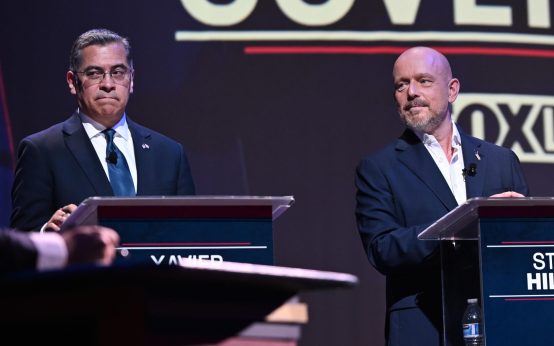 California Gubernatorial Debate: Becerra vs. Hilton
  California Gubernatorial Debate: Key Highlights
  Debate Highlights: Xavier Becerra vs. Steve Hilton
  Tiffany and Crowley Neck and Neck in Wisconsin Governor’s Race
 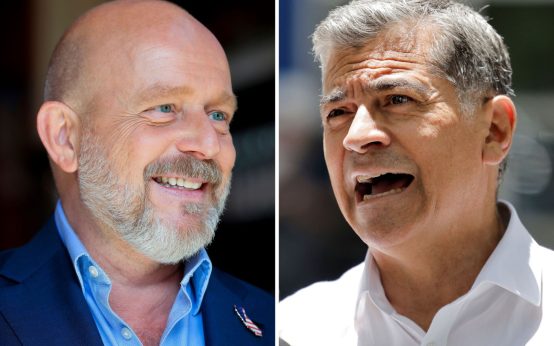 Xavier Becerra and Steve Hilton Face Off in Crucial Debate
  Gavin Newsom Looks to Bill Clinton for Political Inspiration Amid 2028 Speculation