
In Detroit, a diverse group of religious leaders gathered to discuss the intersection of religion and politics with Abdul El-Sayed, a Democratic candidate for the U.S. Senate in Michigan. El-Sayed, who previously ran for governor, highlighted how his Muslim faith shapes his progressive views as he addresses economic challenges and social justice.
During the meeting before Tuesday’s primary, El-Sayed questioned fellow faith leaders about the impact of accountability and inspiration from something greater than oneself on community service. He emphasized the importance of acting when confronted with inequality and need, citing his belief that if he can help someone who struggles to eat, it is his responsibility to do so.
Recent victories of progressive Democrats across the country arise from widespread concerns about inequality, affordability, and job security influenced by artificial intelligence. These issues are central to the upcoming midterms, with many candidates and supporters drawing on religious principles to justify their stances. El-Sayed argues that significant religious traditions stress responsibility, particularly for the wealthy, to address these issues.
Following a major rally featuring progressive leaders like Senator Bernie Sanders and Representative Alexandria Ocasio-Cortez, El-Sayed continues to promote universal healthcare as a central part of his campaign. Running against moderate Representative Haley Stevens, El-Sayed receives endorsements from left-wing allies, although he faces criticism from Republicans and centrist Democrats who deem him too extreme for Michigan’s political landscape. If elected, he could become the first Muslim U.S. senator.
Theology has historically influenced economic and labor movements in America, despite periods of decline. Religious support is evident within both progressive and moderate political circles. Democratic socialist victories, like that of New York Mayor Zohran Mamdani, draw upon faith-based arguments, challenging Republican claims that such ideologies lack religious foundation.
Douglas Blair of Heritage Action for America states that Republicans view natural rights as granted by a creator, distinguishing them from communist ideologies seen as atheistic. Megan Romer, Presbyterian Church elder and Democratic Socialists of America co-chair, acknowledges the challenge socialism poses to some faith communities but notes changing perceptions among younger generations who lack Cold War associations.
Religious activists historically criticized capitalism, a stance maintained by figures like Martin Luther King Jr., Malcolm X, and W.E.B. Du Bois. The Double Love Experience Church’s Rev. Andrew Wilkes affirms the connection between socialism and moral guidance, citing how faith can inspire optimism in challenging times.
Romer highlights Christianity’s individualistic interpretations common among conservatives. Contrarily, early Christians lived communally, differing from present-day capitalist associations.
Not limited to elections, faith-driven economic efforts extend nationwide. Clergy and Laity United for Economic Justice in Southern California recently supported unionizing efforts at a local grocery store chain. Luis Cueva, an employee, expressed appreciation for church solidarity, invoking Christ’s teachings on wealth and its spiritual implications.
A Gallup poll notes that favorable views of capitalism have declined among Americans, influenced by shifting Democratic perspectives. Republicans like President Donald Trump criticize these shifts, labeling them incompatible with religious values.
El-Sayed acknowledges economic issues as pivotal to his campaign, regarding financial influence on politics as detrimental to affordability. As an Egyptian immigrant’s son, he encounters misconceptions about his faith but remains committed to living out his beliefs in public life. He warns against sidelining morals for convenience and emphasizes integrity.
At the roundtable’s end, participants prayed together, with the Rev. Horace Sheffield humorously requesting divine support for El-Sayed’s victory.
This religious discussion highlights the broader conversation on faith’s role in American politics, as progressive ideals gain traction across demographic and ideological divides.
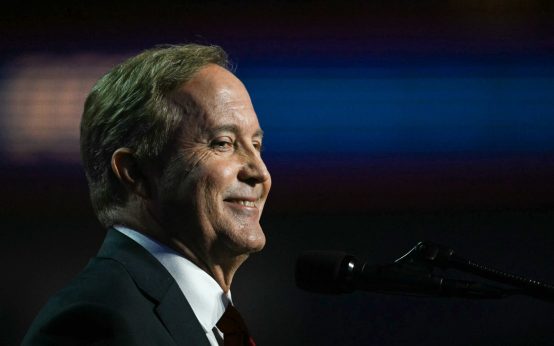 Ken Paxton’s Campaign Funding and Polls
  Inside the Secret Deals Powering the President’s Push to Deport Migrants to Countries Not Their Own
  Independence of Research from Political Agendas
 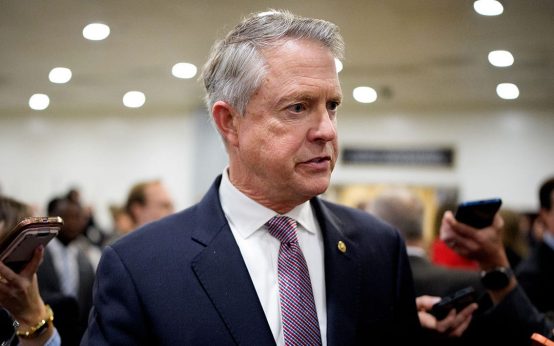 Sen. Roger Marshall Denies Allegations of Political Attack
  Concerns About Food Safety Reach Critical Levels
 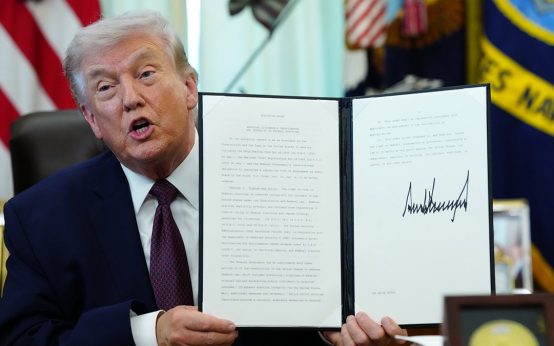 Court Blocks Trump’s Mail-Ballot Rules Ahead of Elections