Laura Ingraham questions how artificial intelligence might influence healthcare, pondering if AI could eventually replace doctors. Notably, a CEO from a major public hospital system intends to use AI for breast cancer screening, targeting cost reduction.
The Debate: AI vs. Doctors
Dr. Marc Siegel, a Senior Medical Analyst, advocates for AI as a complement to human doctors. He emphasizes the essential nature of personal interaction and physician oversight in diagnoses.
Have you ever left a doctor’s appointment feeling uncertain? Processing numerous tests only to end up with unclear answers can be exhausting. Microsoft claims its AI can help address these challenges.
Microsoft’s AI Diagnostic System
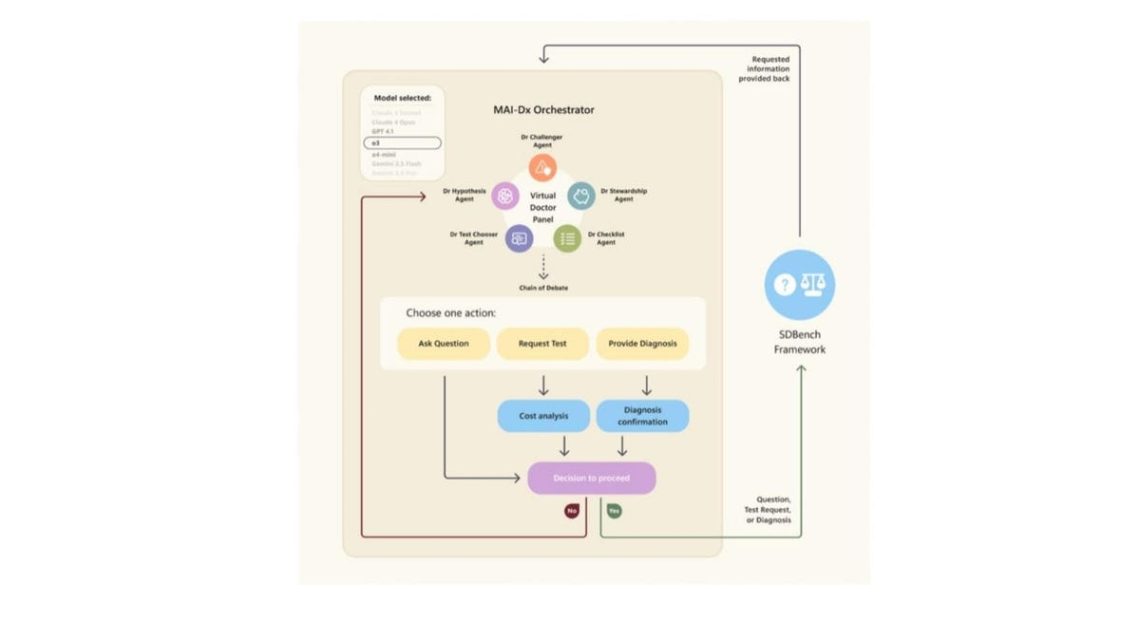
In a Science journal study, Microsoft’s system identified 83% of complex cases correctly, compared to 36% for generalist physicians using reference materials. However, this research took place in simulations, without specialists collaborating. Despite these conditions, the results prompt curiosity about AI’s role in healthcare visits.
Microsoft’s MAI Diagnostic Orchestrator (MAI-DxO) uses multiple AI systems to evaluate symptoms, suggest tests, and progress towards a diagnosis. Like doctors consulting, the AI operates on limited initial data, continuously refining its assessments with new information.
Performance and Comparison with Physicians
The AI diagnosed about 83% of 304 complex cases from the New England Journal of Medicine. In contrast, generalist physicians using references reached 36% accuracy, dropping to 22% without them. Furthermore, the AI showed 80% accuracy in historical emergency cases while physicians achieved 47%.
It’s crucial to note that physicians in these studies were generalists working individually. Moreover, Microsoft’s system studied 304 cases, while physicians handled 56 unique cases. Thus, the comparisons provide a limited perspective on AI’s capabilities in real-world scenarios.
Operational Dynamics and Cost Implications
Microsoft assigns estimated costs to diagnostics. In certain settings, MAI-DxO achieved 81% diagnostic accuracy, with estimated costs of $2,241 per case, compared to $4,725 by physicians with references. However, some AI configurations increased costs. These estimates are simulation-based, not actual patient costs.
Partnerships and Ongoing Tests
Microsoft plans to test its AI in clinical settings at Beth Israel Deaconess Medical Center. Researchers will evaluate AI’s recommendations against physicians’ independent judgments, with doctors holding the responsibility for treatment decisions.
Future Outlook and Challenges
The implications of AI in healthcare continue to evolve. If systems like Microsoft’s improve, your doctor could access AI to assist with complex cases. This development might enhance efficiency in test result evaluations, potentially reducing unnecessary procedures.
Before hospitals widely implement AI, they must ensure accuracy, safeguard patient data, and maintain transparency about utilizing AI insights. Patients should remain informed about how AI influences their care options.
For now, AI in healthcare provides promising support for physicians but cannot replace personal medical consultations.
 Insights from a Hospital Executive’s Journey Working ER Shifts
 Biden Reflects on Memoir and Health Challenges
 Former Aide Criticizes Trump’s Advisers on Health Initiatives
 From Flight Attendant to Content Receptionist: Embracing Simplicity
 A Different Approach to Aging and Beauty
 Jocko Willink on Discipline and Longevity