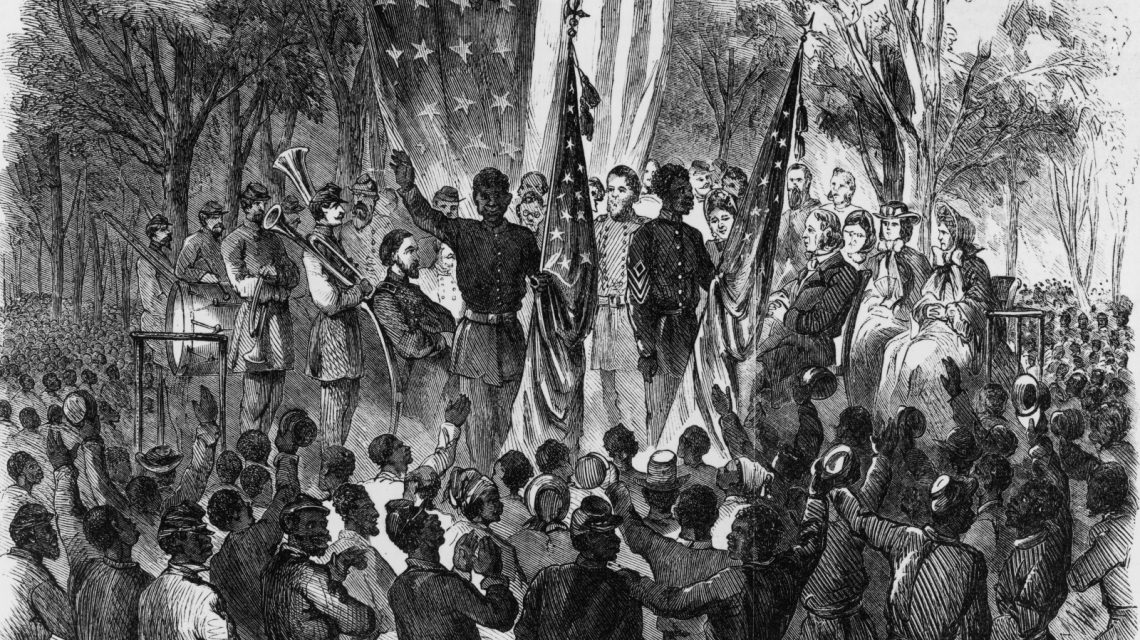
Juneteenth is the most prominent emancipation celebration in the United States, but it is not the sole one. President Abraham Lincoln issued the Emancipation Proclamation on January 1, 1863, declaring that all slaves within Confederate states were henceforth free. However, the journey to freedom took years to complete, and Juneteenth, along with other Emancipation Days, commemorates the gradual end of slavery.
A Complex Emancipation Process
Jim Downs, a History professor at Gettysburg College, notes that the end of slavery was not an isolated event. It involved various events and processes over time. In some regions, enslaved individuals liberated themselves by fleeing to Union lines or leveraging war disruptions. In other areas, freedom came through military occupation, state legislation, constitutional amendments, or the Thirteenth Amendment. The presence of multiple Emancipation Days acknowledges this complex history.
Celebrating Juneteenth
Juneteenth honors the end of slavery on June 19, 1865. On this day, about 250,000 African Americans in Galveston, Texas, learned that the Civil War had concluded and they were legally free. Texas established Juneteenth as a state holiday in 1980, and it became a federal holiday in 2021. While Juneteenth is widespread, states across the nation observe their own dates linked to freedom.
Emancipation Days Across the U.S.
- Florida: Emancipation Day is celebrated on May 20, marking when emancipation was declared in Tallahassee in 1865. In Key West, some communities celebrated as early as 1863 due to the presence of the U.S. Army.
- Tennessee: Celebrated on August 8, coinciding with Tennessee Governor Andrew Johnson freeing his slaves on this date in 1863. Sam Johnson, a former slave, helped organize the first known celebration in 1871.
- Mississippi: Emancipation is commemorated with arts events on May 8 in Columbus each year. This date marks when Union troops arrived and freed local slaves in 1865.
- Washington, D.C.: DC Emancipation Day is observed on April 16, marking when over 3,000 individuals in D.C. were freed in 1862. The event includes parades and cultural activities.
- Ohio: Observed on September 22, the day Lincoln issued a preliminary Emancipation Proclamation. Towns gather for celebrations filled with food and reenactments.
- Maryland: Slavery was abolished on November 1, 1864. The state has officially recognized this day since 2025, featuring concerts and educational events.
Juneteenth’s National Recognition
Downs explains that Juneteenth’s prominence stems from the traditions preserved by Black Texans. As these traditions spread across the U.S., Juneteenth became a national symbol of delayed freedom. Emancipation Days varied across regions, reflecting different timelines and customs.
Even before the Civil War, African Americans in places like Philadelphia commemorated emancipation in the British Caribbean. These celebrations provided a platform to protest ongoing slavery in the U.S. Downs emphasizes that while the history of emancipation cannot be condensed into one day, multiple Emancipation Days remind us of the diverse struggles for freedom.
 Colin Kaepernick’s Press Tour Raises Unasked Questions
  Controversial Claims in Charles Spencer’s Book about Princess Diana’s Divorce
  The Curious Case of Mark Jackson’s NBA Hoops Card
  Communities Continuing Recovery from Hurricane Helene Explored through Graphic Novel
  Art Institute of Chicago Returns Nazi-Looted Painting to Heirs
  Chicago History Museum Responds to Protest with Aquí en Chicago Exhibit