
In Suzanne Collins’ The Hunger Games series, the concept is simple: each district in Panem provides one boy and one girl to compete. This ensures an equal representation across districts, regardless of size. This setup is reminiscent of the newly announced Patriot Games, announced shortly after President Donald Trump’s announcement and likened to The Hunger Games by California Governor Gavin Newsom. ‘May the odds be ever in your favor,’ he quipped, drawing parallels between the fictional event and the Patriot Games, which aim to celebrate America’s 250th anniversary through athletic competition.
The Event
From August 9 to 11, more than 100 teenagers will compete at SPIRE Academy in Geneva, Ohio. The contestants, selected from each state, territory, and tribal nation include one boy and one girl. They will face challenges from various sports disciplines, including football, basketball, and more. The competition culminates on August 13 with a male and female champion each receiving $125,000 in scholarships.
The setup requires a clear distinction by gender and geography. Unlike high school sports participation numbers, which show vastly different numbers for California and Wyoming, each state receives the same representation: one boy and one girl.
The Debate
Critics, like Democratic leaders, have highlighted the quota nature of the event. Yet, the intention behind this setup is creating a national celebration, ensuring representation from all parts of the country. The Trump administration’s approach, contrasting with its general stance against group-conscious affirmative action, focuses on geographic and gender diversity.
Geographic Considerations
Historically, geography has played a role in affirmative action in the U.S. For instance, the 1978 Supreme Court ruling in Regents of the University of California v. Bakke involved a consideration of both race and geography as factors in college admissions. Afterments for race-conscious admissions were barred, geographic diversity became a key strategy to ensure diverse representation in Texas.
Recently, in the Students for Fair Admissions v. Harvard case in 2023, the court banned race-conscious admissions advantages, but acknowledged other diversity factors like geographic, economic, and experiential aspects.
The Military Angle
In contrast, the military does not distribute recruits evenly across states based on numbers. The distribution is determined by recruitment success, with some states being overrepresented. However, gender plays a significant role in military assignments. Recent military policies, led by Defense Secretary Pete Hegseth, have pushed for gender-neutral standards in combat roles.
The Outcome
The Patriot Games make a different decision by ensuring separate champions for male and female athletes. This approach maintains the traditional separation of men’s and women’s sports due to natural biological differences, promoting meaningful opportunities for female athletes.
While the merits of race-conscious admissions and state representation differ, these distinctions illustrate varying approaches to group-conscious selection. Institutions, like the Patriot Games, balance individual achievement with collective team composition to accomplish their goals.
Ultimately, the debate remains over what type of quotas are seen as fair. When one approach is viewed as social engineering and another as a national celebration, the reasons for these perspectives merit careful consideration.
 Influencer Brothers Logan and Jake Paul Visit the Pentagon
  Florida Reports First Dengue Fever Death as Outbreak Expands
  American Public Opinion on Press Freedom
  St. Laurence High School’s Transformative Journey
  Significant Events in Chicago History on September 21
 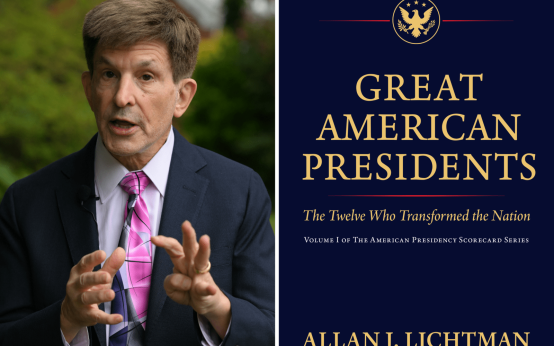 Allan Lichtman’s Framework for Assessing Presidential Greatness