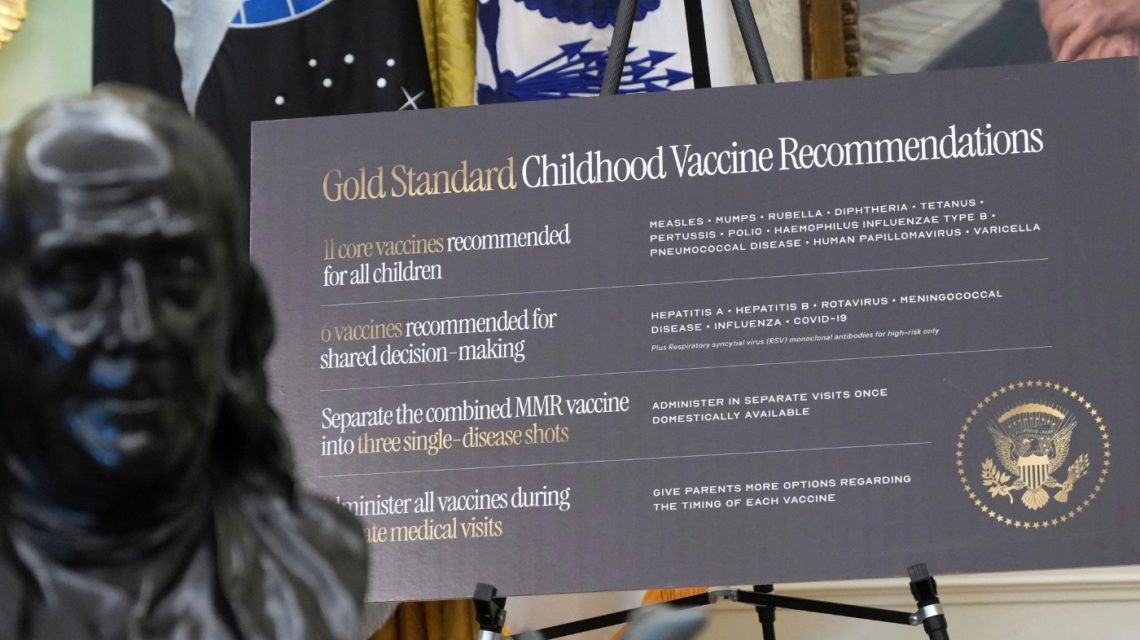
A sign about childhood vaccines was visible as President Donald Trump spoke during a meeting in the Oval Office on August 10, 2026. During this meeting, Trump signed an executive order to reduce the U.S. childhood vaccine schedule. Trump stated this change aligns the U.S. with other developed nations. This decision raises concerns about potential risks to American families and could worsen U.S. health outcomes.
While the U.S. can learn much from countries like Denmark, changing vaccine policies is not advisable. As someone with extensive experience studying global healthcare systems, I recognize that the U.S. has much to learn abroad in terms of health improvements. Despite high healthcare spending, Americans live shorter and less healthy lives compared to nations spending less. Denmark, Germany, and Japan excel in health metrics. Their citizens enjoy longer lifespans, healthier infants, and fewer chronic illnesses. This isn’t due to varying vaccine schedules. In reality, the U.S. vaccine schedule closely matches those of peer nations. Vaccination timing, used vaccines, and targeted diseases are quite similar across these countries.
Denmark presents an exception. Its unique schedule suits a small, homogeneous nation with universal care and low disease rates. Countries with robust primary care systems often maintain protection with fewer doses, ensuring timely care. The U.S. administers more doses to compensate for a fragmented system.
Considering Denmark’s schedule alone does not portray the full picture. We should inquire about why other nations enjoy better healthcare accessibility, outcomes, and longevity. These countries prioritize accessible, affordable systems treating issues before they escalate. Denmark, Germany, Japan, and others have invested in universal healthcare and affordability. Citizens have regular primary care access, affordable prescriptions, and widely available free vaccines. The healthcare system and public policies support mothers, infants, and children, promoting a healthier population.
Countries like Denmark receive attention for health successes. These achievements stem from years of strategic policy decisions establishing a system delivering quality care. In contrast, many Americans remain uninsured or underinsured, facing high out-of-pocket expenses delaying necessary medical care. High prescription costs lead some to skip medications, resulting in preventable illness and mortality. Medical debt poses a persistent issue for numerous families.
The U.S. spends significantly yet achieves less. For genuine health improvement, policies supporting accessible healthcare and affordable prescription drugs are essential. Investing in primary care, maternal health, prevention, and public well-being can foster a healthier nation. Viewing global health successes shows us health is built through policy and investment ensuring healthcare as a right.
Reginald D. Williams II is senior vice president and leader of the international health program at the Commonwealth Fund.
 A Mother’s Tragic Journey Under Abortion Ban
  Medical Diagnosis Errors: Understanding the Crisis
  Lymphatic Drainage and Ice Sculpting: Emerging Wellness Trends
  The Rising Trend of GLP-1 Medications Among College Students
  The Challenges and Opportunities of Testosterone Therapy for Menopausal Women
  Concerns Rise Over NIPSCO Permit In Jasper County