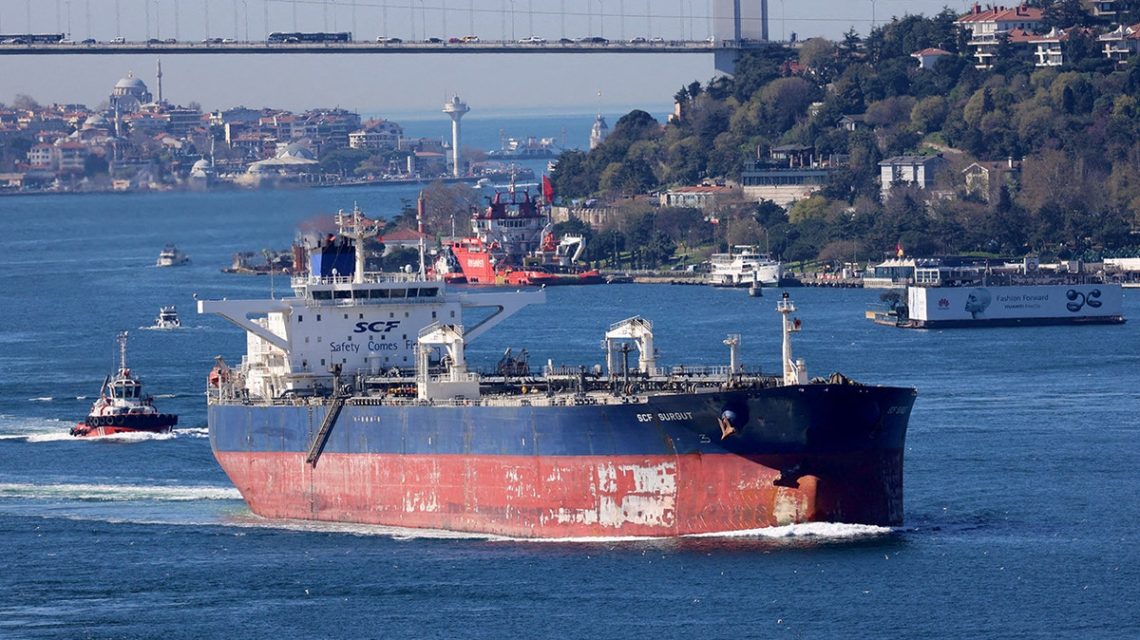
Recent analyses reveal that despite NATO allies boosting defense spending, aiding Ukraine, and imposing sanctions against Russia, the European Union remains reliant on Russian liquefied natural gas (LNG). This dependence aids Russia financially as it continues its military actions in Ukraine.
Data from Urgewald, using Kpler’s shipping data, show European countries spent billions on Arctic LNG in the first half of 2026. Out of 140 shipments from Russia’s Yamal LNG project during this period, 136 were received by European Union ports. The estimated worth of these shipments was around €5.96 billion or $6.8 billion, based on European gas prices.
While European governments aim to reduce reliance on Russian fuels, payments for Russian LNG persist during the transition. France received 51 cargoes from Russia’s project, Belgium 37, and Spain 34 in this timeframe. The focus is on deliveries to ports, not the companies or destinations within Europe.
NATO allies have committed to increasing defense budgets in response to Russia’s aggression. However, the continuous energy payments to Russia highlight the difficulty of enhancing military deterrence alongside reducing energy imports.
Legislation in the EU aims to phase out Russian gas imports. A ban on Russian LNG contracts start Jan. 1, 2027, and pipeline gas contracts end Sept. 30, 2027. Russian LNG remains in demand, while pipeline imports have decreased since 2022.
Former President Donald Trump criticized Europe’s reliance on Russia’s energy, stating that Europe spends more on Russian fuel than defending Ukraine. European Commission spokesperson Anna-Kaisa Itkonen noted contractual adjustments before stricter restrictions came into force.
The closure of the Strait of Hormuz also prompted Europe to seek alternative LNG supplies. President Trump’s agenda positioned the U.S. as a leading global exporter of oil and gas, with Europe increasingly importing U.S. LNG.
Belgium supports the EU’s decision to reduce Russian imports and implements related measures. Political disputes arose over Russia’s influence in shaping EU energy policies, although no comprehensive public findings have confirmed these allegations.
Disruptions from Russia’s energy manipulation and military actions accelerated the EU’s intent to end Russian fossil fuel dependence. New sanctions aimed at Russia’s military-industrial and energy sectors have been approved.
Spain, a significant importer of Russian LNG, is central in debates about EU energy strategies, with some officials requesting a delay in bans on LNG imports. Spain pledges to continue its phase-out of Russian gas, highlighting the temporary nature of increased imports.
Trump criticized Spain’s defense spending and strategic decisions. Recent legislative efforts in the U.S. aim to impose secondary sanctions on countries still buying Russian energy. Bipartisan senators emphasized the need for legislative and executive unity to penalize buyers funding Russian military actions.
 Cancellation of the Red Sea International Film Festival Amid Regional Conflict
  Family Seeks Answers Following Elderly Woman’s Death Under Canada’s Assisted Dying Program
  AI Fears Impact Trump-Xi Dialogue Amidst Challenges
  Venezuelan Leadership Highlights U.S. Relations
  Controversy Surrounds Piers Morgan Following Claims in Earl Spencer’s Memoir
  Ontario Synagogue Shooting During Yom Kippur