An agreement may be forming between the United States and Iran aimed at ending the ongoing conflict and reopening the Strait of Hormuz. President Donald Trump stated recently that the negotiations were largely complete. However, the specifics of the agreement’s conclusion and implementation remain unclear. Trump’s comments followed discussions with Middle Eastern allies, including separate talks with Israel. The information provided comes from two regional officials and one U.S. official, all of whom spoke anonymously due to the sensitive nature of the negotiations.
The End of the War
For the past 12 weeks, the U.S. and Israel have been engaged in a conflict that began with strikes against Iranian targets, which resulted in the death of key figures, including the Supreme Leader, Ayatollah Ali Khamenei. Iran has maintained that any agreement must focus on halting combat on all fronts. This includes Lebanon, where Hezbollah, a political and military group backed by Iran, has been fighting Israel since shortly after the war’s onset. A fragile ceasefire has persisted since April 7, offering some relief to a region fearing further attacks on air travel hubs and Gulf locations considered secure, such as the United Arab Emirates, which have been struck by Iranian missiles and drones.
The proposed strategy could restore global shipping passage through the Strait of Hormuz—responsible for approximately 20% of the world’s oil and natural gas supply. It would also facilitate the reconstruction of energy-related and other infrastructural assets in the region.
Draft Provisions
According to regional officials, the preliminary agreement includes ending the hostilities between Israel and Hezbollah and committing to non-interference in the internal matters of regional countries, including Iran. This is a crucial reference to Iran’s support for allied forces, notably the Houthi rebels in Yemen, Hamas militants in Gaza, and Shia armed groups in Iraq. The U.S. seeks to allow Israel freedom to address perceived threats in Lebanon, a stance Iran opposes. An American official mentioned that the deal would uphold Israel’s right to counter imminent threats to its defense.
Strait of Hormuz Opening
The Iranian nuclear and missile programs, along with its backing of armed allies, were cited by the U.S. and Israel for their actions against Iran. Yet, Tehran’s retaliatory control over the Strait of Hormuz emerged as a major global concern, with hundreds of ships carrying vital resources stranded. Under the emerging agreement, the Strait would reopen gradually, coinciding with Washington lifting the blockade on Iranian ports started on April 17. The blockade has hindered Iran’s oil exports, affecting its already strained economy. The U.S. would permit Iran to sell oil using sanction exemptions, according to one informed official.
Sanction alleviation and the unlocking of billions in frozen Iranian assets are part of negotiations set over the next 60 days, the official added.
Iran’s Nuclear Programme
The nuclear program of Iran and international worries over its potential weaponization are central to these tensions. The U.S. and Israel have considered complex military operations to dismantle Iran’s highly enriched uranium reserves. Regional officials indicate that Iran would surrender this uranium stash under the proposed deal. A person knowledgeable about the negotiations stated that the specifics, such as merging the uranium or transferring it to a third party—possibly Russia—are subject to further discussion within the 60-day period. Russia has volunteered to accept this transfer. A U.S. official confirmed the 60-day timeframe, warning that without forfeiture of the uranium, sanction relief will not proceed.
Iran possesses 440.9 kilograms (972 pounds) of uranium enriched to 60% purity, a near technical step to weapons-grade levels of 90%, per the International Atomic Energy Agency. Despite Tehran’s assertion of an “inalienable” right to nuclear technology claiming its program’s peaceful nature, President Masoud Pezeshkian declared their willingness to assure the world they are not pursuing nuclear weapons on state television.
President Trump posted recently on social media noting improved professionalism and productivity in U.S.-Iran relations but underscored the imperative that Iran refrains from developing or acquiring nuclear weapons.
Missing Elements
Some points remain unaddressed in the emerging agreement, such as the status of Iran’s uranium enrichment. Another omission involves Iran’s missile program, which Israel particularly aims to dismantle. While the U.S. and Israel commenced military actions with the stated intention for Iranians to revolt against their government amid national protests earlier this year, discussions on leadership change in Tehran appear sidelined. Agreements Iran previously proposed, like the withdrawal of U.S. forces from the region or reparations for war damages, seem absent from the current descriptions.
 Don McCullin’s Final Book: A Pioneering War Photographer’s Legacy
  Rep. Alexandria Ocasio-Cortez Defends Macklemore Amid Tour Controversy
  Google Fined for Breaching EU Privacy Rules
 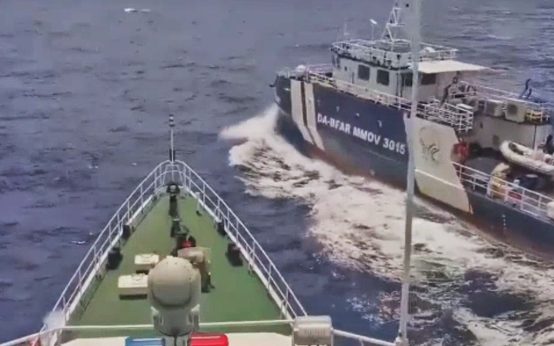 South China Sea Tensions Rise after Collision between Chinese and Philippine Ships
 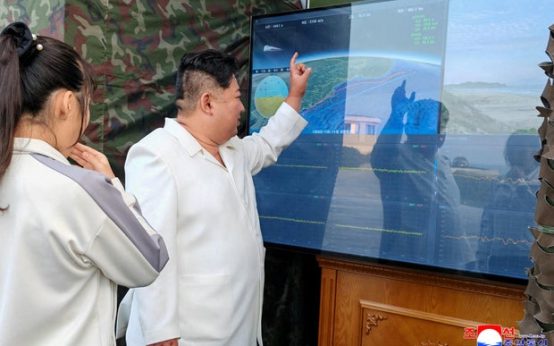 North Korea’s Hypersonic Weapon Test Amid Global Tensions
  Austin Tice: A Search for Answers