El Niño Developments and Forecast
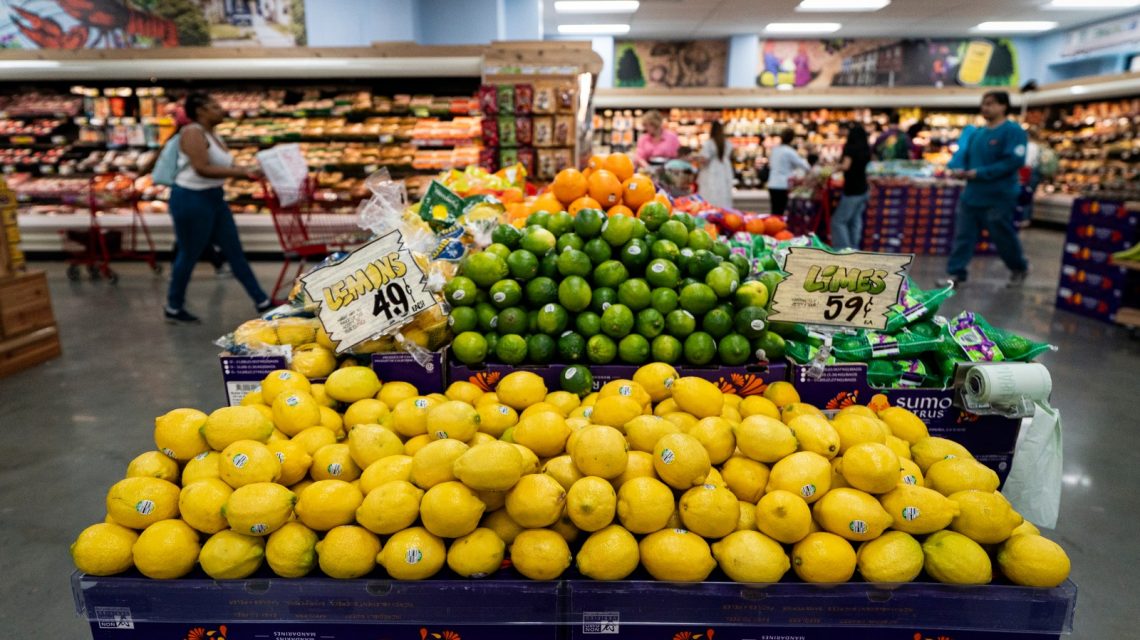
Analysts caution that an emerging El Niño in the Pacific Ocean might elevate global food prices soon. Early July predictions from the World Meteorological Organization (WMO) indicated that the current El Niño weather pattern would intensify quickly, increasing the probability of heatwaves, droughts, heavy rainfall, and other severe weather conditions worldwide. The National Oceanographic and Atmospheric Administration (NOAA) recently stated there is an 81 percent chance of a “very strong” El Niño between October and December, which could be one of the most significant events since records began in 1950.
Meteorologists and economists, including those from the World Bank, express concern that a so-called “super” or “Godzilla” El Niño might disrupt global agriculture and food supply chains into the next year, worsening the economic challenges nations face globally. According to a Goldman Sachs analysis, referenced by The Guardian, El Niño could result in a 15.8 percent rise in global food commodity prices, potentially fully manifesting by the latter half of 2028.
Understanding El Niño
El Niño, meaning “little boy” in Spanish, refers to a climate phenomenon characterized by unusually warm ocean surface temperatures in the central and eastern tropical Pacific. This warming can disrupt normal weather patterns across the globe, often causing flooding and heavy rainfall in some regions while inducing droughts and heatwaves in others. The World Food Programme (WFP) explains that such conditions can bring concurrent droughts and severe flooding, damaging crops, livestock, and infrastructure, thereby reducing food production and disrupting markets.
Potential Impact on Food Prices
The World Bank cautioned in early June that an El Niño could exacerbate pre-existing issues in the food supply chain, already affected by oil, gas, and fertilizer shortages linked to the U.S.-Iran conflict. Schroders Wealth Management analysts suggest a super El Niño might significantly raise food prices over the next year as adverse weather merges with ongoing economic and geopolitical stressors.
The firm Risilience, specializing in climate-risk analytics, noted that an “extreme” scenario could lead to a 14.3 percent decrease in global agricultural production, resulting in approximately $342.2 billion in losses and “price shocks” of 10 to 50 percent across major food crops.
William A. Masters, a food policy and economics professor at Tufts University, highlighted the severe impact on millions of farmers and low-income populations in Africa and Asia, while noting limited effects on the U.S. due to its diversified import supply chains. Chris Barrett, a professor of applied economics at Cornell University, indicated that regions such as Australia and parts of South and Southeast Asia could face the most severe impacts, likely resulting in increased prices for wheat, rice, and palm oil.
Barrett mentioned that although supply disruptions exist, global cereal stocks are high due to good harvests last year, providing a buffer if managed well. Purdue University’s Joseph Balagtas pointed out that the impact on prices will vary by crop, with fruits and vegetables, grown in concentrated areas, potentially reflecting changes in retail prices sooner.
Balagtas expressed particular concern about the potential effects on rice-growing regions. “Rice is the staple for billions in Asia, relying heavily on seasonal monsoon rainfall,” he stated. “If El Niño alters those rains, the key issue won’t be global food availability but food security and affordability for households reliant on locally produced rice.”
Wood Mackenzie, a global consultancy, noted potential wide-ranging energy impacts from El Niño. Ed Crooks, vice chairman for the Americas at Wood Mackenzie, wrote that severe droughts might impact international energy trade and that variations in cloud cover, wind speeds, and precipitation could significantly affect renewable energy generation.
 Challenges and Changes in the 911 Call Taking System
  Measles Exposure in Philadelphia Raises Health Concerns
  Lawsuits Claim Vision Loss Risk from GLP-1 Medications
  States Tighten Regulations on Tianeptine, Known as ‘Gas Station Heroin’
  Medicare Lab Test Payments: Upcoming Changes and Their Implications
  Gen Z Faces Economic Barriers to Dating and Intimacy