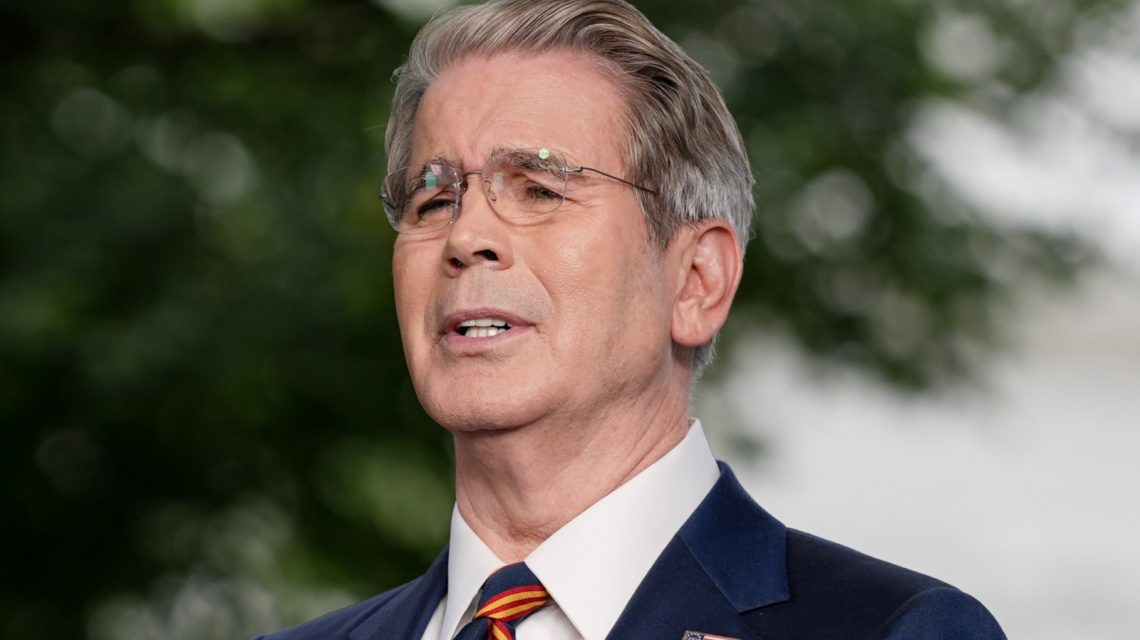
President Donald Trump’s Treasury secretary has dismissed worries that less affluent Americans are left behind. He argues that the notion of a “K-shaped” economy has mostly faded due to the current president’s policies. On CNBC, Scott Bessent expressed his frustration with the K-shaped economy discussions.
Bessent declared, “the K-shaped economy is over,” highlighting wage increases for lower-income workers. He also mentioned the long-term benefits of Trump’s tax reforms. According to Bessent, the U.S. economy now resembles a “C,” where lower-income earners are catching up, similar to trends during Trump’s earlier term.
However, many economists believe a significant gap in prosperity remains. They see a divergence where higher-income households continue to prosper, representing the top arm of the “K,” while lower-income households struggle.
Understanding the K-Shaped Economy
Since last year, economists have noted the growing divide between top and bottom earners in the U.S. The top performers see increased wealth and incomes, while those at the bottom face stagnant income growth and rising costs.
The New York Fed reported that retail spending growth has been driven by households earning over $125,000 annually since early 2023. In contrast, low-income households have experienced real spending declines during this period. They also acknowledge wage growth across different income groups has varied.
Bessent maintains that the economy aligns with a “C” shape, a view shared by several business leaders. In April, Hilton CEO Christopher Nassetta observed improving performance in lower and mid-scale chains, forecasting continued growth through 2026.
Nassetta noted a shift in demand from luxury properties to a more balanced demand, which he referred to as a C-shaped economy.
K-Shaped Divide Perspectives
Despite some claiming a shift, the K-shaped divide persists according to many experts. Former Federal Reserve Chair Jerome Powell asserted the observable divide in December. He pointed to retail earnings reports showing low- and moderate-income consumers buying less and choosing cheaper products.
Peter Orszag, CEO of Lazard, responding to Bessent, called it premature to declare the end of a K-shaped economy. Although encouraging trends are visible, he noted mixed signals on consumer confidence.
Mark Zandi, economist at Moody’s Analytics, maintains that the economic disparity is evident. Federal Reserve data showing spending differences between the top 20% of earners and the lower 80% supports his view. Zandi emphasized the increasing evidence of a K-shaped economy.
The economic debate continues, reflecting differing views on the current shape and direction of the U.S. economy.