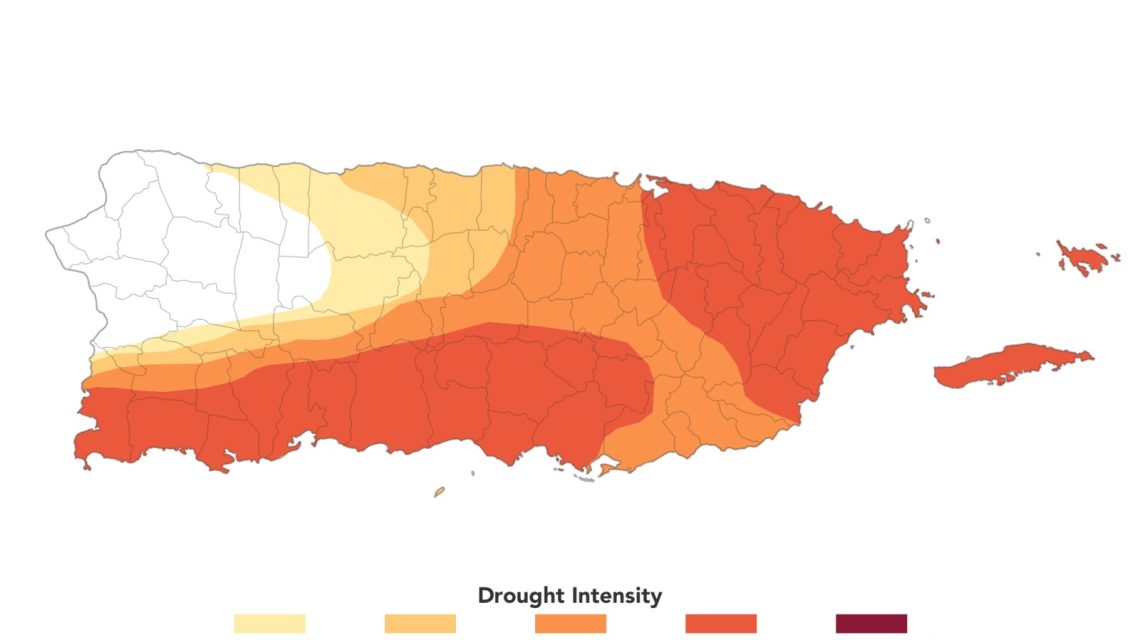
Recent data from NASA highlights the significant drought affecting Puerto Rico, resulting in water shortages and agricultural challenges. The NASA Earth Observatory released a map on September 2, detailing drought conditions in the U.S. territory as of August 25. This map uses data from the United States Drought Monitor, a collaborative effort with the National Drought Mitigation Center, the U.S. Department of Agriculture, NOAA, and NASA.
NASA officials have noted that rainfall deficits and elevated temperatures have led to unusually dry conditions across Puerto Rico. Currently, 75.2% of the island is experiencing drought, with 41% categorized as extreme drought, and 21.3% as severe drought. Over 3 million residents are living in drought-affected areas, according to the Drought Monitor.
Brandon Wright, senior meteorologist at ICEYE, emphasized the rapid development of this drought. According to Wright, this is among the island’s worst droughts since the monitoring began in 1999. Newsweek reached out to the White House, FEMA, Puerto Rico’s Bureau for Emergency Management and Disaster Administration, and the Puerto Rico Tourism Company for comments.
“The current drought situation in Puerto Rico is one of the fastest onsets,” Wright told Newsweek. “The spike in drought conditions over recent months is striking.”
Elena Maksimovich, Everloop’s CTO, attributes the summer of 2026 as exceptionally dry, based on ECMWF data. The report indicates that these months were the second driest summer since 1950, with 1994 holding the record.
The phenomenon known as El Niño has contributed to exacerbating the drought. It typically decreases thunderstorm activities and curtails the Atlantic tropical season, impacting the archipelago’s usual wet season, according to Wright. He noted the impact of reduced cloud cover on heating and drying in the landscape, with record warm months observed in San Juan.
Tropical Storm Dolly recently brought rainfall, but its effects were limited in alleviating the drought.
Climate Concerns Moving Forward
Looking ahead, Maksimovich has pointed out amplified climate threats. These include amplifying heatwave risks and intensifying exposure to droughts and wildfires across the island.
Maksimovich’s report warns that cities like Caguas, Arecibo, and others are especially vulnerable to inland and coastal flood risks, though these risks should not be underestimated. It also emphasizes the need for expanded water storage capacities and addresses potential impacts on tourism and agriculture.
 Great Lakes Face Beach Hazards Due to Dangerous Currents
  Surprising Encounter with Gulf Sturgeon in the Suwannee River
  Potential Impact of Tropical Storm Polo on Southern California
  Communities Continuing Recovery from Hurricane Helene Explored through Graphic Novel
  Fat Bear Week 2026 Highlights: Meet the Competitors
  Annual Fat Bear Week Begins at Katmai National Park