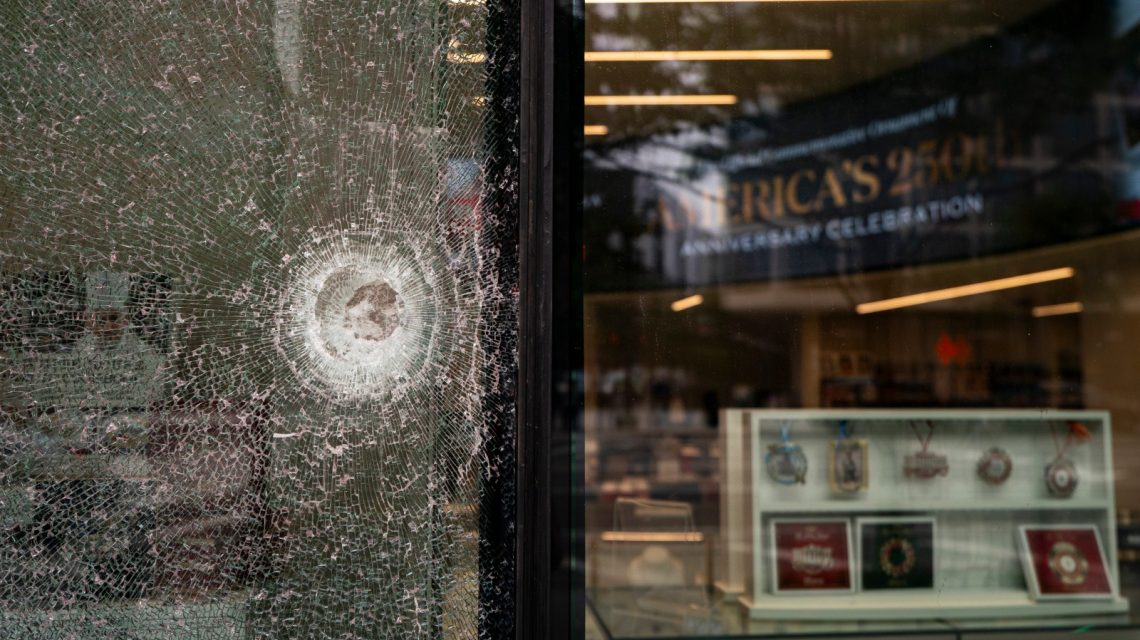
The U.S. Department of Justice (DOJ) highlighted a recent shooting near the White House in a court filing as a justification for dismissing legal challenges to President Donald Trump’s ballroom project. The administration is pushing to advance plans to replace the East Wing, despite opposition demanding more scrutiny.
Trump and his aides assert the ballroom project is critical for national security. They argue that an incident at the White House Correspondents’ Dinner could have been averted if held in the new ballroom. The latest shooting, deemed an attempted attack on the president, occurred close to the White House perimeter, further supporting the administration’s stance.
This second attack on the President this month underscores the critical need for top level, state of the art security at the White House, including the Ballroom, a knitted, unified, cohesive part of the East Wing Project, which is vital for National Security.
The shooting took place near 17th Street and Pennsylvania Avenue NW. Journalists heard gunshots and were moved to the press briefing room for safety. According to a Secret Service statement, the suspect opened fire on agents after approaching a checkpoint. Officers returned fire, injuring 21-year-old Nasire Best, who later died at a hospital.
This wasn’t Best’s first encounter with the Secret Service. He had previously been detained near the White House for making threatening gestures and was arrested in July 2025 for unauthorized attempts to enter a White House security checkpoint.
White House Ballroom for ‘Safety and Security’
The DOJ’s filing outlines the $400 million ballroom project as a necessity for the physical security of presidents and their guests. It would serve as a secure environment, offering enhanced protection compared to temporary tents used for events.
The new facility would boast features such as bomb shelters, advanced medical facilities, military installations, missile-resistant columns, and bulletproof glass. The DOJ expressed concern that details revealed by ongoing litigation could compromise security further.
The ballroom would be environmentally controlled, preventing outside contamination, according to the DOJ.
Two Attempted Shootings in One Month
The DOJ emphasized the urgency of the ballroom’s construction, noting two recent shooting attempts. Besides the latest incident, another armed suspect, Cole Allen, was apprehended near a venue where President Trump attended the White House Correspondents’ Dinner in April.
In its filing, the DOJ stressed the project’s national security importance. It views the ballroom as a significant contribution by President Trump and donors towards future presidential safety and well-being.
Newsweek attempted to contact the National Trust for Historic Preservation for comments. The organization has previously insisted the administration must adhere to legal requirements, refusing to drop its complaint voluntarily.
What Happens Next
Construction on the ballroom is permitted to proceed until June 5, with legal action on hold until then.
 Trump Seeks Diplomatic Success at the U.N. Amid Challenges
  North Carolina Senate Race Influenced by Abortion Policy Messaging
  Trump Pressures Republicans on Filibuster Threat
  Rep. Golden Endorses Rep. Lawler for Re-election
  Public Perception and Political Impact of Data Centers
  Jewish Democrats in Michigan Shift Support to GOP Candidate in Senate Race