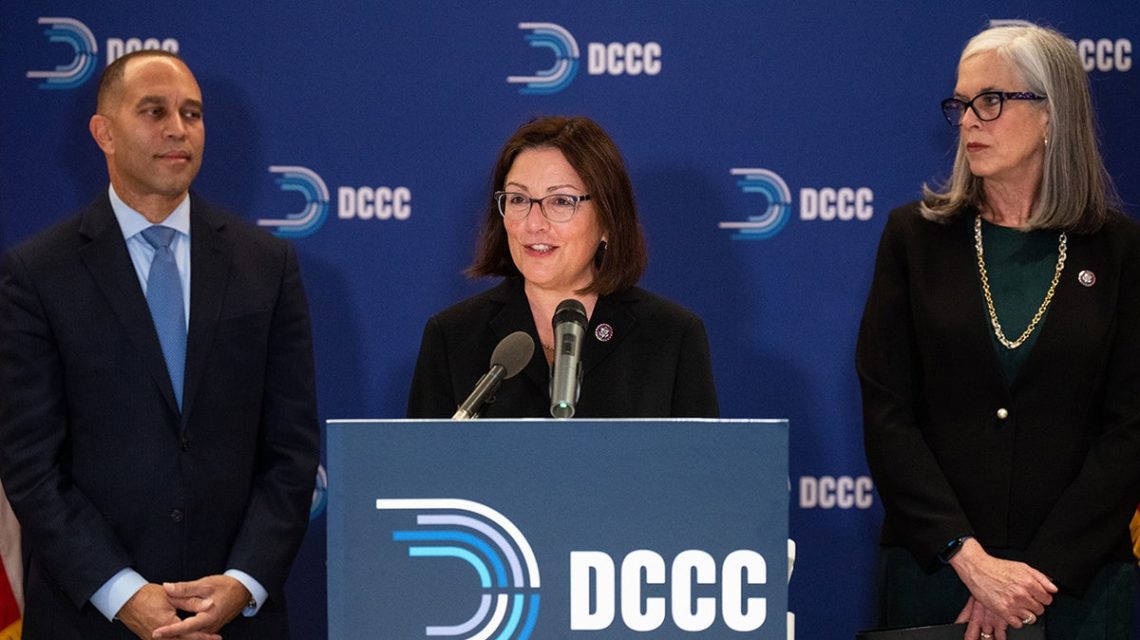
The Democratic National Committee (DNC) faces significant financial challenges as they approach the final 100 days before the midterm elections. A recent analysis revealed that the DNC holds more than $2 million in debts over their cash reserves. Traditional transfers to congressional campaign committees are not planned due to earlier spending, sparking concerns about backing for candidates in crucial swing districts.
Federal Election Commission filings indicate the DNC finished June with $16.3 million in cash and $18.5 million in debts. This leaves the committee’s liabilities approximately $2.2 million above its reserves. In contrast, the Republican National Committee (RNC) reported approximately $128.5 million available with no debt outstanding.
The DNC has informed its vendors to hold off on spending bills until post-election and told congressional leaders that standard transfers to the House and Senate campaign committees will not occur. Additionally, around $840,000 was directed to Democratic organizations in five non-voting U.S. territories since last year.
According to DNC member Donna Brazile, DNC Chairman Ken Martin requires substantial help. “Ken needs help — H-E-L-P,” Brazile commented. “And if he’s reluctant to say it, I’m here to help him ask. It’s hard. It’s very difficult.”
Resource allocation disparity is evident, with the National Republican Congressional Committee ending June with $92.7 million compared to the Democratic Congressional Campaign Committee’s $79 million.
Recent Supreme Court decisions allowing unlimited coordinated spending between parties and candidates emphasize the importance of committee reserves in competitive districts. Control of the House hangs on less than 20 races, according to Associated Press.
DCCC Chair Suzan DelBene highlights the committee’s robust second-quarter fundraising and the performance of Democratic candidates as an optimistic sign. “The DCCC’s strong quarter of fundraising combined with the incredible results of our Frontliners and challengers show that across the battlefield,” DelBene stated in a press release.
DNC Executive Director Roger Lau disputed suggestions of financial distress, calling vendor negotiations routine for contract adjustments.
Democrats aim to regain House control since Republicans won the majority in 2022. Despite the challenges historically faced in midterm elections, Democrats outperformed expectations in 2022, maintaining Senate control although losing the House.
The DNC clarified its spending in U.S. territories as part of a State Partnership Program, allocating over $1 million monthly to 57 state and territorial parties. This program also includes regional training sessions and support through the Red State Fund for parties in Republican-led states.
Recent scrutiny arose when it emerged that the DNC used its headquarters as collateral for a $15 million credit line. A DNC official stated this is standard practice and that similar steps were taken in previous election cycles.
 The War on Poverty: A Lesson on Intentions and Outcomes
  Reporters Blocked from White House by Trump Administration
  Universities Should Reject Political Influence on Research Funding
  Trump’s Approach to China: Trade Dynamics and Challenges
  Media Outlets Sue After White House Ban
  American Public Opinion on Press Freedom