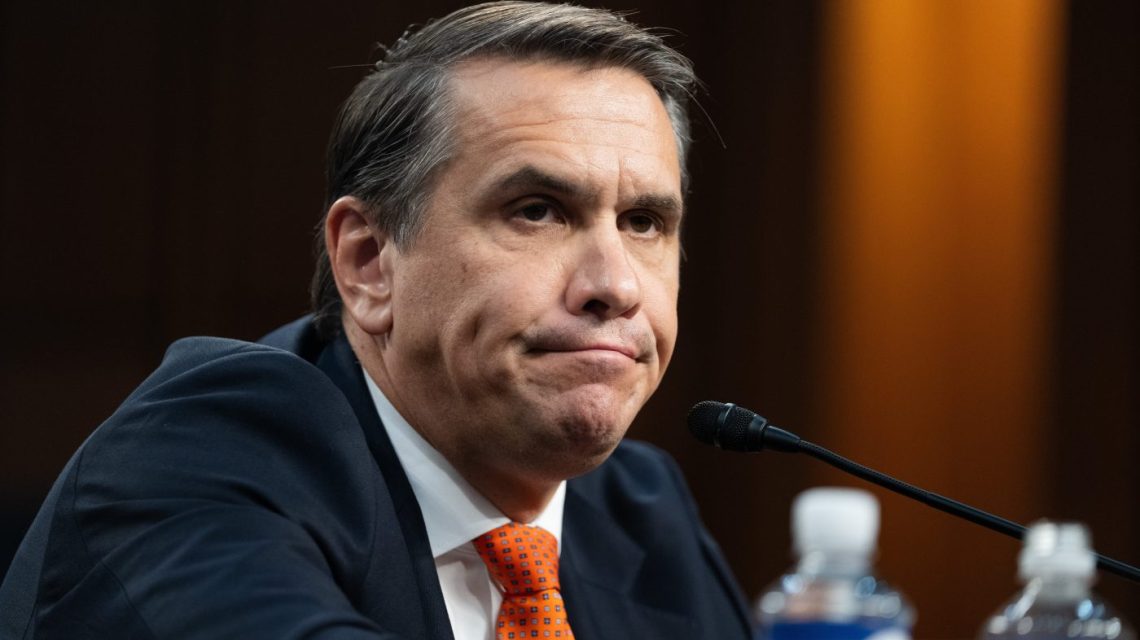
Acting Attorney General Todd Blanche recently faced the Senate Judiciary Committee during his confirmation hearing. A significant focus of the discussion was Blanche’s response to questions regarding potential compensation claims for individuals pardoned for their involvement in the January 6 Capitol riot. He claimed, “we always vigorously defend our cases.” However, this commitment seems to falter when applied to President Trump.
Blanche’s actions have raised eyebrows due to a $1.776 billion “anti-weaponization” fund President Trump proposed. This fund was linked to a $10 billion lawsuit Trump filed against the government. Trump claimed the government improperly disclosed his tax information. Blanche negotiated a settlement that included a clause shielding Trump, his family, and his companies from any claims for incidents before May 19, 2026, including tax return issues.
This settlement acts as an indirect presidential self-pardon, bypassing standard defense procedures. Legal experts noted that the government settled without challenging the lawsuit, which had a likely statute of limitations issue.
The judge involved stated the Department of Justice failed “to zealously defend the interests of the United States” and that the settlement went beyond legal boundaries. Her opinion was forwarded to the New York state bar, questioning Blanche’s conduct.
The core issue is Blanche’s willingness to settle. The attorney general should prioritize representing the U.S., not the president. Examples exist where past attorneys general resisted presidential pressure, such as John Ashcroft and Jeff Sessions, who upheld legal integrity against presidential directives.
Blanche’s inability to oppose Trump’s legal maneuvers shows a lack of independence. He upheld the immunity agreement despite a court ruling it void. His actions raise ethical concerns unrelated to political affiliations. During his testimony, Blanche inadvertently identified himself as “Trump’s lawyer,” later correcting to “was his lawyer.” Such slips suggest underlying biases.
While Trump may favor Blanche’s appointment, Republican senators should reconsider his suitability. Notably, 21 Republican lawyers in the Senate recognize the attorney general’s role as the defender of law, not as a tool for presidential agendas.
The confirmation of Blanche could reflect poorly on Senate Republicans if they perceive their roles as endorsing Trump’s decisions without scrutiny. Voters may question the purpose of such congressional representation in future elections.
This analysis is provided by Chris Truax, an appellate attorney and charter member of the Society for the Rule of Law.
 Allan Lichtman’s Framework for Assessing Presidential Greatness
  Florida Senate Race Tightens as Recent Polls Show Dead Heat
  Ethics Complaint Targets Colorado Representative Lauren Boebert
  Ken Paxton’s Campaign Funding and Polls
  Inside the Secret Deals Powering the President’s Push to Deport Migrants to Countries Not Their Own
  Independence of Research from Political Agendas