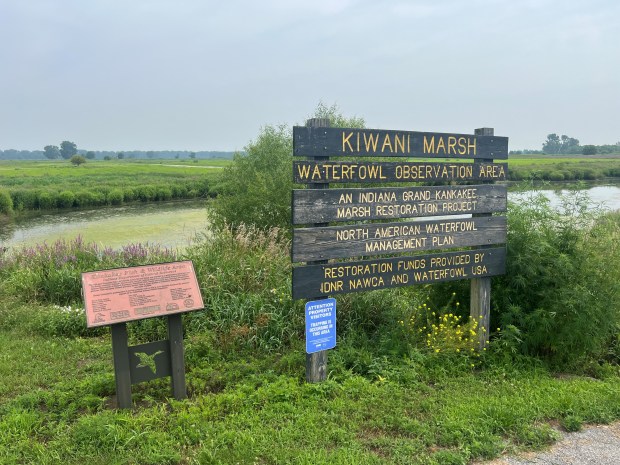
Annette Hansen experienced distress upon learning about federal concerns with Indiana’s wetlands program. As the executive director of Porter County’s chapter of Izaak Walton League of America, she initated efforts to preserve wetlands. “We restored 150 acres, but it’s a small effort compared to the broader issue,” she said.
The Kiwani Marsh in Starke County spreads over 125 miles and serves as a waterfowl observation area. Managed by the Indiana Department of Natural Resources (DNR), it underwent restoration in 2010 as part of the Indiana Grand Kankakee Marsh project.
The Indiana Capital Chronicle reported that the U.S. Army Corps of Engineers identified non-compliance in Indiana’s wetlands program, specifically failing to meet the “three-growing-season timeframe.” Commencing in 2018, the DNR collected at least $109 million in wetlands payments, yet numerous offset projects remain stalled.
Officially known as the Indiana Stream and Wetland Mitigation Program, the program permits developers to purchase credits to satisfy compensatory requirements under various legislations. A DNR spokesperson confirmed ongoing projects in Northwest Indiana with expected completion dates in 2027 and 2028, pending necessary approvals.
The Izaak Walton League’s Frame Family Little Calumet Conservation Area exemplifies successful restoration. The area not only revitalized the land but also improved drainage, mitigating stormwater effects. Hansen emphasized the increasing significance of wetlands as a buffer against climate-induced flooding.
The Army Corps’ Chicago District relayed inquiries to the Louisville District, responsible for Indiana’s program. Following a 2025 review, compliance issues were found across several fronts, leading to the demand for a Corrective Action Plan.
The Army Corps stresses compliance with the 2008 Compensatory Mitigation Rule, which necessitates identifying potential sites, preparing detailed plans, securing permits, and regular monitoring.
Data center developments pose additional threats to wetlands. Their potential impact includes requiring Department of Army authorization if involving discharge into U.S. waters, necessitating compensatory efforts.
“Data center development is a primary threat,” said Susie McGovern, stressing concerns over streamlined permitting facilitated by past administrative policies.
These centers can exploit wetlands, risking irreplaceable losses. McGovern highlighted the essential roles wetlands play, including flood impact reduction, water purification, groundwater recharge, and wildlife support.
She urged Indiana residents to value wetland preservation, advocating for informed choices when balancing business expansion and ecological conservation. Economical opportunities lie in safeguarding these vital ecosystems.
 How Battery Innovations Transform Renewable Energy
  Data Centers Stir Controversy in Texas Amid Growth Boom
  Urgent Archaeological Efforts in Quinhagak Stay Ahead of Erosion
  Concerns Rise Over NIPSCO Permit In Jasper County
  Reader Reactions on Grizzlies and Data Centers
  Managing the Crisis of Drying Rivers