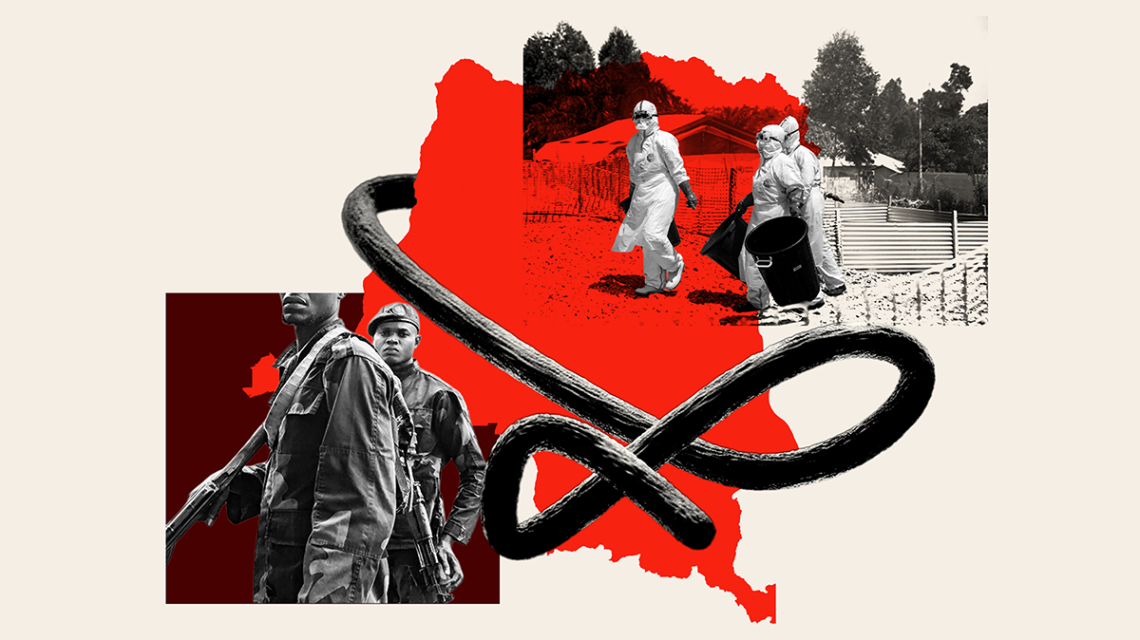
The Democratic Republic of the Congo (DRC) faces multiple conflicts that hinder efforts to manage a severe Ebola outbreak. These conflicts threaten to spread instability and disease beyond the country’s borders. With over 120 million residents, the DRC spans an area larger than France, Germany, Italy, Poland, and the UK combined. It hosts numerous insurgent groups, as the nation still feels the impact of significant wars from the late 20th and early 21st centuries.
Since the first Congo War, more than 6 million people have died over three decades. Most deaths resulted from diseases, malnutrition, and healthcare system failures. The current Ebola outbreak worsens these crises, with over 1,000 confirmed deaths and 2,500 infections. The disease has also spread to Uganda, with the situation remaining precarious.
Challenges in Containing Ebola
The security situation in the DRC is severely complicating efforts to contain the Ebola outbreak by limiting access to affected communities.
According to Jennifer Nuzzo of Brown University, the instability modifies surveillance and vaccination efforts and amplifies public distrust in health responders. These challenges extend the risk to other regions, potentially impacting global stability and economic conditions.
Complex Conflicts and Factions
The DRC’s conflicts are challenging to map due to faction fluidity and fragmented control. Major conflict zones lie in the east, near Uganda, Rwanda, and Burundi. Alliances lack clarity, with both state and non-state actors prioritizing tactical gains over ideology.
President Félix Tshisekedi’s government battles several factions, including the M23 rebel group, supported by Rwandan troops. Other notable groups are the ADF and CODECO, each with distinct objectives, affecting local dynamics.
Health agencies and U.N. peacekeepers also struggle to maintain a strong response, resulting in gaps against the Ebola threat. The M23 tries to demonstrate governance capabilities, potentially leading to underreporting of cases.
Impact of U.S. Policies
It is surprising that the disease has not received more attention from the international health community.
The U.S. aimed to broker peace between the DRC and Rwanda, involving the M23 and the Democratic Forces for the Liberation of Rwanda (DFLR). However, the conflict persists due to unresolved disagreements. The U.S. cut support for tropical disease programs, exacerbating the Ebola outbreak.
So far, cases outside the DRC are limited to Uganda. However, if Ebola spreads to South Sudan or Central African Republic, risks will escalate significantly.
Current Situation and Prognosis
The DRC’s Ituri region records about 88% of confirmed Ebola cases. Conflict here mostly involves CODECO and the Convention for the Popular Revolution, complicating aid efforts. Attacks on health facilities by groups like the ADF hinder Ebola response efforts.
Mobs upset with strict methods also threaten Ebola responders. This situation is part of a historical pattern where war exacerbates disease spread.
Studies show that in past global conflicts, disease claimed many lives. The DRC continues to face this issue, with displacement and inadequate vaccination compounding challenges.
Director Guha-Sapir from the Université catholique de Louvain notes the lack of international focus and funding for this crisis, which could worsen if attention and resources remain insufficient.
Besides Ebola, the DRC’s healthcare struggles with other diseases, emphasizing the urgent need for comprehensive solutions.
 Florida Reports First Dengue Fever Death as Outbreak Expands
  The Cost of Challenging Beijing
  Tensions Escalate in Iran Conflict as Global Leaders Weigh Options
  White House Approves F-35 Sales to Saudi Arabia Amidst Regional Tensions
  Inside the Secret Deals Powering the President’s Push to Deport Migrants to Countries Not Their Own
  Navigating the Challenges of Third-Country Deportations