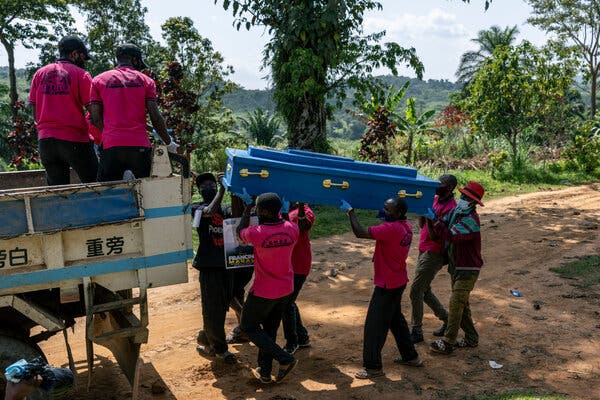
As the Ebola virus continues to spread in East Africa, international attention turns to potential leaders in the global response. Historically, the United States has played a significant role in managing such outbreaks. However, its current involvement is markedly reduced, creating a potential opportunity for China to step in.
The Democratic Republic of Congo’s town, Mongbwalu, stands as the epicenter of this outbreak. The area faces substantial challenges, including inadequate medical facilities. Treatment centers lack critical equipment, medicine, and supplies. Testing is insufficient, complicating efforts to control the Bundibugyo virus, the strain causing this health emergency. This virus strain lacks an approved vaccine or treatment, heightening concerns.
China, with its resources and expertise in epidemic control and biotechnology, appears well-equipped to provide much-needed assistance. Despite significant financial investments in the region, China’s commitment level remains ambiguous. With the U.S.’s role diminished from past emergencies, China feels less competitive pressure to escalate its involvement promptly.
Bradley Parks, executive director of AidData at William & Mary, highlights this pivotal moment. China faces a decision to either allow the outbreak to continue or assume a leadership role. Parks questions whether China is prepared for this leadership challenge.
This week, China made an initial move by deploying a team of five medical experts to Kinshasa, Congo’s capital. This city lies over 1,000 miles from the outbreak’s center, indicating China’s cautious approach to the unfolding crisis.
 U.S. Military Expansion in Greenland
  Understanding and Preventing Suicide: A Public Health Priority
  The Autocratic Age: A Closer Look
  Venezuelan Migrant Arrest in Texas Sparks Outrage
  Senator Calls for Halt in Diesel Exports Amid Rising Fuel Costs
  Presley Gerber’s Death Highlights Concerns in Addiction Treatment Approaches