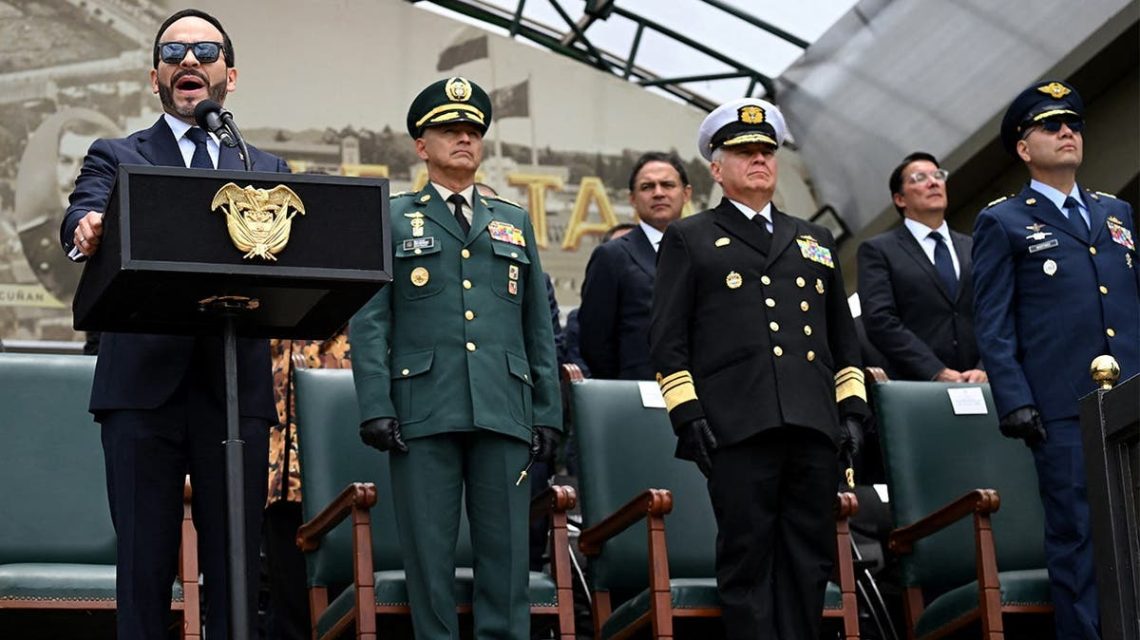
President Abelardo de la Espriella of Colombia is making serious moves against the cartels in his country. Voted in on a law-and-order platform, he’s already seeing results in Colombia and gaining attention in Washington as well.
Recently, during Operation Blindaje 360, de la Espriella was at the Barranquilla police command early in the morning as 587 police officers and soldiers raided 50 locations across the Caribbean port city and its suburbs. Days before, Colombian police intercepted a recording of “Keko,” the alleged leader of “Los del Freseo” gang, boasting that de la Espriella couldn’t touch him. “The Tiger’s got nothing. Let him come out, and we’ll put lead in him,” Keko allegedly said.
Before dawn, President de la Espriella found Keko and confronted him face-to-face, capturing the moment on video. According to his presidential office, El Tigre commented on the fear in Keko’s eyes, comparing it to that of Keko’s victims. The operation resulted in 72 arrests.
Colombia’s new hard-right government plans to label guerrilla fighters, drug traffickers, and other criminal groups as “terrorists.” The approach contrasts with former President Gustavo Petro’s strategy, which favored negotiations with armed organizations. De la Espriella immediately scrapped his predecessor’s “total peace” talks, focusing instead on treating all armed groups as terrorist organizations. His government has reported over 32,000 arrests since he took office and signed multiple extradition orders for individuals wanted in the U.S.
De la Espriella, a dual U.S.-Colombian citizen who once lived in Miami, has aligned Colombia with President Donald Trump’s anti-cartel coalition. He recently handed over Geovany Andrés Rojas, alias “Araña,” to DEA agents. Rojas, accused of leading the “Comandos de la Frontera” and supplying Mexico’s Sinaloa Cartel, now faces charges in Southern California.
De la Espriella firmly stated that dialogue is off the table, emphasizing action over talks. In his first few months, he has overseen thousands of arrests, neutralized leaders, and shut down drug production sites. Colombia also joined the Shield of the Americas coalition in August, allowing for joint military operations.
Despite this aggressive strategy, Colombian Vice President José Manuel Restrepo made it clear that Colombian troops would handle operations against armed groups within the country, not U.S. forces.
Experts have mixed views on these developments. Benjamin Gedan, from the Stimson Center, notes that while flashy military actions have their appeal, a more complex strategy is vital for lasting success. Oscar Palma, a professor from the University of Rosario, argues that a balanced approach combining dialogue and force may be more effective in the long run.
For Colombia, de la Espriella’s approach could signal a new era of collaboration with the United States in tackling crime and strengthening security across the region.
 Trump Dismisses Third Impeachment Prospects
 Custody Dispute Involving Rep. Max Miller Delayed
 Attorney General Addresses Post-Midterm Democratic Threats
 Senator Elizabeth Warren and the Future of Crypto Regulation
 Bipartisan Opportunities in Foreign Policy
 Feud and Legal Battle in New York Family Dynasty