Introduction
After a challenging period, Mayor Brandon Johnson’s commitment to developing a non-police mental health response team has become a focal point of a new media initiative by his administration. Recent videos show Johnson participating in Chicago’s Crisis Assistance Response and Engagement (CARE) van operations, highlighting increased responses since May. An upcoming extension will see a second shift implemented during the evening hours, a significant component of the mayor’s progressive agenda.
Operational Developments
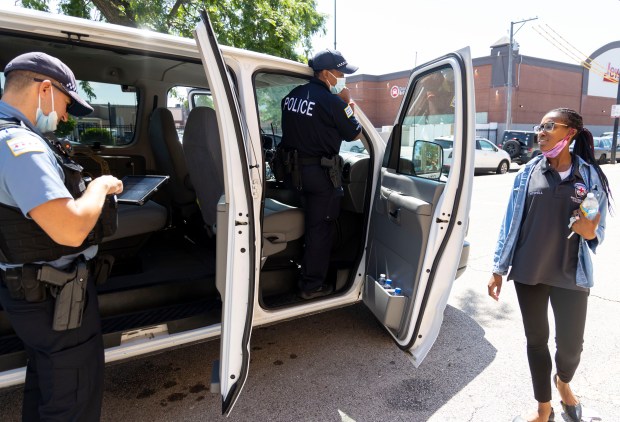
Chicago Police Officer Dantra Daniel and mental health clinician Gabrielle Mitchell, part of the CARE team, start their work day, as depicted in media coverage from July 2022. Johnson emphasized during his City Club of Chicago address that, despite predictions of low demand, calls rose by 51%. Yet, these calls only amounted to slightly above 100 emergency responses from May to August, contrasting with higher past figures during the program’s peak. A slowdown occurred earlier, attributed to administrative errors and political disputes within Johnson’s administration.
Johnson remained vague on who underestimated CARE’s demand, though former health commissioner Dr. Olusimbo Ige publicly questioned the demand before her departure in May. She was succeeded by Dr. Garth Walker, Johnson’s third leader for the Chicago Department of Public Health.
Challenges and Strategic Adjustments
Deputy Mayor Arturo Carrillo disclosed that between May and August, CARE responded to 115 emergency calls alongside 72 non-urgent dispatches via email requests. Johnson acknowledged the difficulties faced by this new governmental entity, noting that perfection isn’t required for the program to function.
Ald. Rossana Rodriguez-Sanchez, appointed to lead the City Council Health Committee, concurred with Johnson’s views during a hearing on CARE. Carrillo shared insights, emphasizing the need for citywide availability, interdepartmental coordination, and efficient dispatch channels for mental health teams.
Starting Monday, CARE will extend operational hours from 8 a.m. to 10 p.m., broadening the age range to 6 to 65 years and expanding crisis response eligibility.
Role of Law Enforcement
Though Johnson aimed to shift away from former Mayor Lori Lightfoot’s reliant model on police officers in CARE responses, the involvement of law enforcement persisted. Chicago Police’s Crisis Intervention Team Coordinator, Lt. Rhonda Anderson, detailed the ongoing collaboration, emphasizing the role of teamwork.
Anderson also highlighted an 8-hour de-escalation training session conducted in August for the CARE team. Johnson repudiated claims that these interactions compromise his vision of a non-police mental health response, emphasizing adaptability based on circumstances.
Systemic Issues and Interagency Conflicts
Jim Poole of the National Alliance on Mental Illness Chicago argued CARE’s underutilization and systemic hindrances in effectively managing mental health emergencies in Chicago. Despite progress, clashes within departments, staffing shortages, and labor tension remain stumbling blocks.
Johnson committed to reinstating police terminals after their removal in 2025 hindered call tracking. Carrillo noted limited dispatch channels currently available, with technological integration into a comprehensive dispatch system ongoing.
Improvement and Data Transparency
The hearing revealed an increase in eligible 911 calls receiving CARE dispatch between June and August. Health Department leadership pledged to restore the public dashboard of CARE responses, providing transparency on call volumes over time.
The initiative’s opposition emerged in political debates, including Illinois Secretary of State Alexi Giannoulias’s critique, citing CARE as a broken campaign promise. Rodriguez-Sanchez defended the program, highlighting its evolution from the “Treatment Not Trauma” movement.
Conclusion
Chicago’s attempt at a non-police model for mental health response continues to face operational and systemic challenges. Nevertheless, Johnson’s administration remains committed to improving and adapting the CARE initiative, spotlighting the ongoing need for effective mental health care solutions in the city.
 FDA Ends Investigation Into Cyclosporiasis Outbreak
  Roseland Community Hospital to Suspend Labor and Delivery Services
  VA Invests in Community Programs to Tackle Veteran Suicide
  More Funding Needed for Psychiatric Hospitals
  Improving Funding for Psychiatric Hospitals
  Trump Administration Distributes Refund Payments to ACA Enrollees