For years, physicists grappled with a core mystery: why do certain particles possess mass, while particles such as light remain massless? Understanding this was vital to explaining the formation of planets, galaxies, and life itself. The prevailing theory suggested that particles gain mass through interaction with an undetectable field named the Higgs field. Proving its existence demanded an unprecedented international scientific collaboration.
Since decades ago, scientists worldwide, including adversarial nations, collaborated to test this theory. The United States played a significant role, contributing a large workforce and substantial funding. This effort culminated in the 2012 discovery of the Higgs boson, corroborating the Higgs field theory and earning a Nobel Prize for its contributors.
A proposed rule by the Trump administration threatens similar future breakthroughs. The rule aims to limit international collaborations and allows political appointees to influence research funding decisions and terminations.
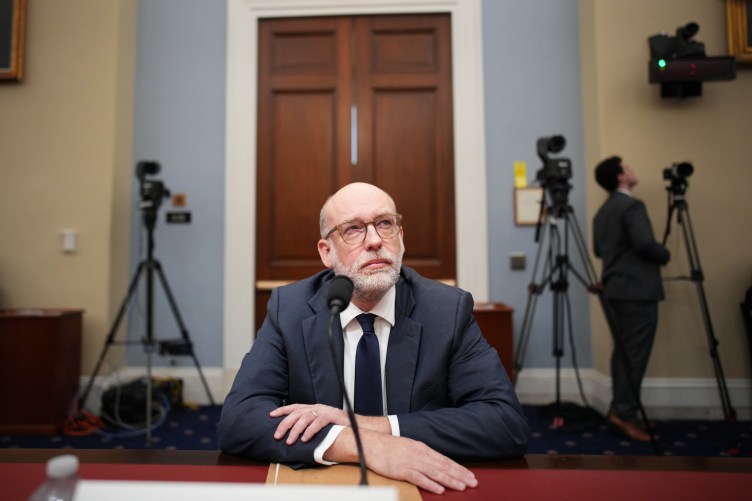
David W. Miller, a U.S. scientist part of the Higgs boson project, expressed concerns in his comment to the federal government. He highlighted the requirement for sustained international cooperation in such experiments. The proposal may compromise U.S. leadership in scientific research.
The proposed rule’s impact extends beyond physics. The Office of Management and Budget (OMB) would enable political discretion over federal grants, covering various sectors such as food stamps, housing, and small business loans. Critics of the rule include numerous organizations, attorneys general, and more.
An OMB spokesperson stated the rule aims to ensure adherence to current laws and agency priorities, not disrupting major scientific pursuits. Scientists, however, argue the rule would hinder vital research endeavors.
The merit-based U.S. system of scientific funding relies on expert evaluations, keeping political influences minimal. This framework enabled the Higgs boson discovery, a major scientific milestone. Miller feared the new rule would dismantle this principle.
Miller’s career underscores the importance of federal research funding. Raised in Chicago, he benefited from government support during his educational and research journey. His participation at CERN showcased international cooperation in physics.
The proposed changes to OMB rules would allow grant terminations without thorough justification. The rule also restricts certain international partnerships, creating potential hurdles for collaborations crucial for scientific progress.
The rule could hinder alliances like those formed during the Higgs boson research, which saw contributions from over 60 countries. Prominent figures like Chris Llewellyn Smith, former CERN director, stress that this contradicts historical scientific cooperation norms.
Scientific advances often result in technological strides, though practical benefits may emerge over generations. Examples include navigational technologies relying on Einstein’s century-old equations.
OMB defends the rule, citing prevention of waste and ideological bias. Critics argue the reform targets non-existent issues. Legal experts question OMB’s authority regarding such measures, anticipating legal challenges post-publication.
Pressure from congressional leaders could influence revisions of the rule. Although opposed by Democrats, some Republicans express concerns over scientific research burdens. Senator Susan Collins, a Republican, voiced objections, particularly against allowing political influence in grant allocations.
 The War on Poverty: A Lesson on Intentions and Outcomes
  Reporters Blocked from White House by Trump Administration
  Universities Should Reject Political Influence on Research Funding
  Trump’s Approach to China: Trade Dynamics and Challenges
  Media Outlets Sue After White House Ban
  American Public Opinion on Press Freedom