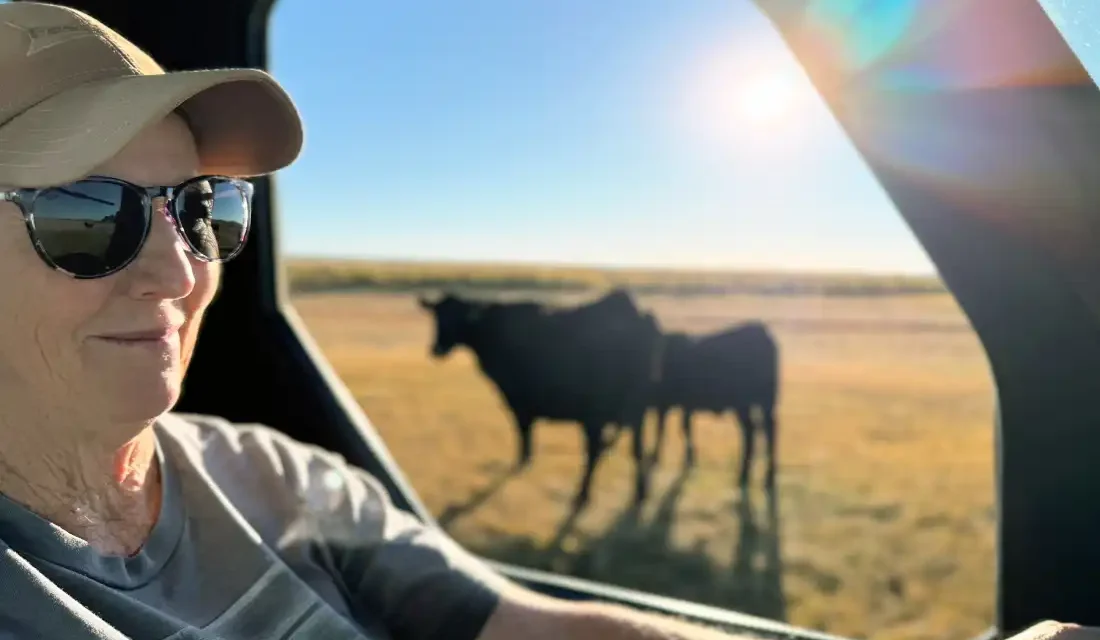
Katie Baltzor navigates her side-by-side vehicle through her black Angus cattle near Hines, Oregon. The rugged landscape features late blooming rabbitbrush lining the roadsides and steep basalt buttes rising dramatically above the basin floor.
Baltzor observes her cattle while horses graze on standing hay in a broad open field. The tranquility of the scene is marked by the quiet, contented animals grazing head down. “You see that horse with speckled colors?” Baltzor notes, referring to a horse named Gravy for its appearance.
As mid-term elections approach, diesel prices remain high despite recent political actions. This increase exacerbates challenges for cattle ranchers already struggling with drought. In Harney County, where cattle numbers far exceed the human population, feeding livestock is a pressing concern.
Baltzor, alongside her husband Keith, recently herded 150 cattle along Highway 205. Such operations can become dangerous when drivers misunderstand the process. “Some don’t realize; it’s crucial not to stop,” Baltzor emphasizes.
The procession aimed at bringing cattle closer to home for pregnancy checks and necessary treatments like vaccinations and deworming.
Impact of Wildfires
Harsh conditions persist for Baltzor as wildfires decimated usual grazing areas. Fires forced an early retrieval of cattle from the mountains, cutting short the grazing season. Cattle returned home in July, two months earlier than usual.
“Areas took years for regrowth,” Baltzor mentions about friends affected by similar circumstances. A continuing concern is finding new grazing lands amidst restrictions and burnt fields.
Additional challenges come from dried-up hay meadows. Limited irrigation has hindered hay production, impacting feed availability. Baltzor highlights, “With certain fields receiving no water, some hay was impossible to harvest.”
Economic Strains
High diesel costs worsen economic conditions. Operating hay equipment is costly, with diesel filling reaching $300 each time. Alternating methods, like ‘rakebunching’, reduce tractor passes to offset these costs.
Rakebunching provides a temporary solution but can limit hay supply later in the season. The impending winter brings concerns about feed scarcity.
The future hinges on sufficient precipitation to support hay growth and cattle sustenance. Otherwise, purchasing hay elsewhere becomes necessary, adding transportation expenses.
Agricultural Economics
Rising beef prices raise the stakes for ranchers. While selling calves is profitable, Baltzor highlights the importance of keeping heifers for long-term investment. “You keep a heifer a couple of years before it calves,” she explains, emphasizing strategic livestock management.
Baltzor and her husband mitigate expenses by switching to gas vehicles. Economic viability varies across ranches, with factors like loans influencing break-even points.
Baltzor reflects on their journey into cattle ranching: “No one gave it to us; effort and rentals laid the groundwork.”
Her family once juggled external jobs to establish financial stability. “To pencil,” she describes economic balance, is achievable with hard work and minimal debt.
In southeast Oregon, she acknowledges the hardships. “Many face tough times,” Baltzor says. Yet, they remain committed to overcoming financial hurdles as winter approaches.
 Alabama Man Faces Charges for Family Murders
 Philadelphia’s Delivery Robot Clash Sparks Discussion on Technology and Jobs
 VA Disability Benefits Adjustment and Distribution Updates
 The Investigation into Ilhan Omar: Allegations and Legal Implications
 Incarcerated Women Earn Degrees from Top University
 Significant Events from Chicago’s Past