Iranian Student at UConn Hopes for Change Amid Conflict
Sadaf Zarei, an international student from Iran at the University of Connecticut, highlights struggles faced by the Iranian women’s soccer team. She discusses the team’s captain, who decided not to seek asylum in Australia due to concerns for her family’s safety under the Iranian regime.
Digital blackouts and human rights violations are widespread in Iran. Zarei calls for an end to the oppressive ruling entity, which she refers to as a ‘criminal terrorist’.
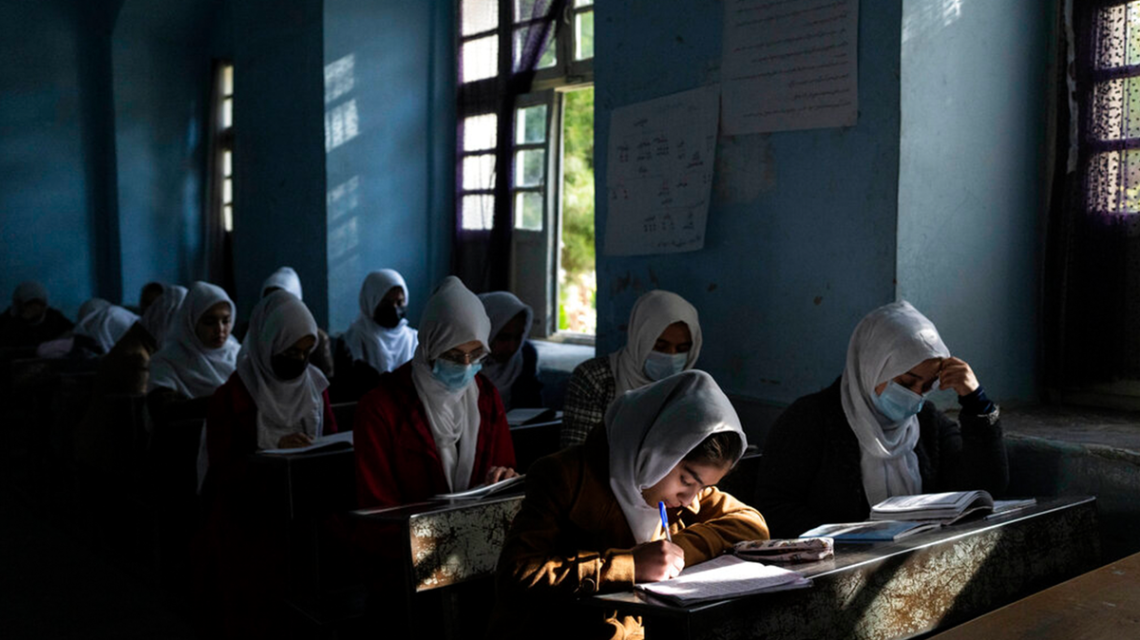
Educational Struggles for Afghan Girls
The Taliban’s return to power five years ago has resulted in 2.4 million girls being banned from secondary school in Afghanistan, reversing decades of educational progress. UNESCO has announced that Afghanistan is currently the only country that formally prevents girls and women from pursuing education beyond primary level.
The United Nations agency urges a prompt restoration of girls’ right to education, emphasizing that the Taliban’s policies impact not just education but also prevent women from working in most paid positions and public-facing roles. Restrictions also limit their freedom to travel without a male guardian.
Impact of Education Restrictions
According to UNESCO, the exclusion of girls from school hinders Afghanistan’s economic growth. Denying education and work opportunities to women contributes to the country’s poverty issues, with nearly half the population living below the poverty line.
Aside from economic consequences, excluding girls from education can damage their mental and physical health and increase the risk of early marriages. Boys are also adversely affected due to the shortage of female teachers.
UNESCO’s Efforts in Support of Learning
In response to the educational restrictions, UNESCO has initiated community-based educational programs focused on literacy and skills development for Afghan girls and women. Over 70,000 people have participated, with 73% being women. Classes are held in community spaces and homes, involving more than 1,000 trained literacy facilitators.
Although these programs have shown positive outcomes in improving livelihoods and household incomes, UNESCO acknowledges that they cannot replace formal education.
UNESCO continues to advocate for the immediate lifting of the education ban, asserting that access to education is a fundamental human right.
Global attention and action are necessary to ensure Afghan girls and women can learn, work, and live freely, according to UNESCO.
 Controversy Surrounds Performances at Gillette Stadium
  Tucker Carlson’s Remarks on Britain and WWII Spark Backlash
  Police Divers Uncover Ancient Roman Artifacts in Sardinia Waters
  Conservative Activist Urges AI Safety Measures
  G7 Nations to Release 100 Million Barrels of Oil Amid Fuel Price Surge
  Attempted Hijacking on FlyDubai Flight to Tel Aviv