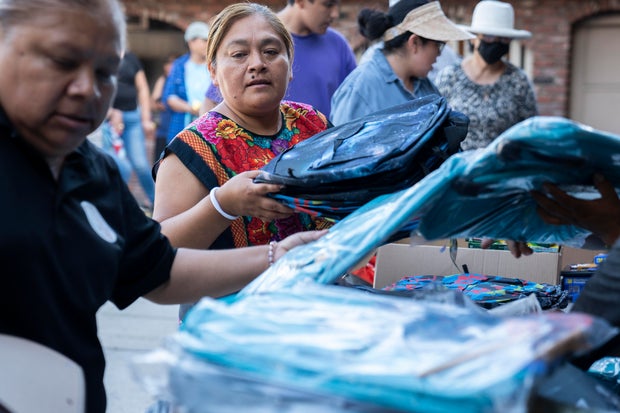
The young girl gazed at Norma Gómez from the threshold of her neighbor’s apartment. Her sad eyes seemed to glow with a sudden hope. ‘Will you bring my mom back?’ she asked.
Gómez, carrying food, diapers, baby wipes, and clothes, tried to respond. The items were for the six-year-old, her baby brother, and the neighbor caring for them. Their parents had been arrested by federal immigration agents in Oxnard, a primarily Latino farming community on the Southern California coast.
“We’re working on that,” Gómez recalled telling the girl.
However, Gómez, a project manager with the Mixteco Indigena Community Organizing Project, knew she couldn’t bring back the children’s parents. Her role involves helping immigrant families affected by Immigration and Customs Enforcement raids. She witnesses the turmoil and pain impacting millions of immigrant families, especially since President Trump resumed office.
A report estimated that by April, around 205,000 children had at least one parent detained by immigration authorities. This separation harms children psychologically, destabilizing families, and leaving caregivers scrambling to meet basic needs.
Even children with parents not detained face challenges. For example, two children died by suicide in February 2025 due to bullying over their family’s alleged immigration status.
Impact of Immigration Policies
Many children in families losing access to medical care, food, and other supports face health and well-being threats. Parents avoid taking children out of fear of federal enforcement, impacting education and healthcare enrollment. Approximately one in four U.S.-born children have an immigrant parent, including 4.6 million whose parents lack legal status.
Wendy Cervantes from the Center for Law and Social Policy expressed concern about the long-term harm on children, affecting their school performance and health outcomes.
Changes in Public Benefits
President Trump has prioritized immigration enforcement since his second term began. His administration attempts include ending birthright citizenship for children born to immigrants without legal status, although blocked by the Supreme Court. His efforts have resulted in detaining many parents of U.S. citizen children.
Critics argue mass deportations harm U.S. workers, although the administration claims these actions free resources and protect public interests.
New policies restrict immigrants’ eligibility for health and food assistance. The administration’s “public charge” rules deny green cards if immigrants use specific public benefits, affecting U.S. citizen children’s enrollment in healthcare programs.
Psychological Impact on Children
Separation from parents leads to lifelong health issues such as anxiety and depression. A 2024 study estimated $292 billion in healthcare spending related to childhood trauma in 2021.
Children of immigrants face increased mental health challenges, with fear of losing parents to deportation. Emmanuel, a 13-year-old in Oxnard, fears his father won’t return from work, while doctors report rising referrals for mental health services.
Community Support
Despite struggles, some children show resilience, helping their parents and siblings amidst threats. Community groups provide groceries, therapy, and support, in a model needed to reform immigration enforcement.
Research suggests humane policies, such as the Family Case Management Program, could maintain family unity while enforcing laws. The introduced program under President Obama was suspended by the first Trump administration.
People like case manager Mabel Alavez help families facing eviction due to immigration fears, assisting them in creating childcare plans if they face detention.
The societal impact is yet unknown, but experts stress the need for more humane policies to end children’s harm.
 Keys to Effective Post-Exercise Recovery for Adults Over 35
  Personal Journey in Understanding Neurodegenerative Diseases
  Artist Speaks Out on Rare Condition Impacting Her Career
  Durham’s HEART Program: A New Approach to Public Safety
  Mindfulness: Manage Stress by Embracing the Present
  Missouri’s Abortion Policy: Conflicting Amendments and Voter Decisions