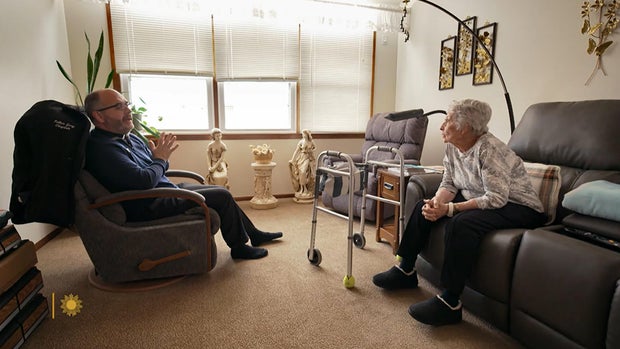
Small farming towns in North Dakota, such as Hebron and Glen Ullin, are becoming homes for many retirees who choose to stay despite challenges. Mae Buchli, aged 98, represents this determination to stay. She stated, ‘We decided we’re not going to move, ’cause we want to stay home.’
Rural America is aging faster than urban areas. The USDA reports that counties with at least 20% of residents aged 65 or older have almost tripled since 2010. This trend highlights health risks like loneliness and social isolation among older populations.
Lynda Hoerauf, age 88, embraces her rural lifestyle. ‘It’s so opposite, these little rural towns, from cities,’ she said, expressing contentment with her life. Sundays tend to be the hardest for her due to a lack of activities.
Father Gary Benz, raised on a nearby farm, visits parishioners like 96-year-old Viola Weinhart. His personal ministry has grown through these visitations, making him more compassionate due to his family’s similar experience. Weinhart appreciates these weekly visits that bring her news and companionship.
One in five adults in rural counties is 65 or older. Moving to urban areas is not an option for many due to cost disparities. The Rural Health Transformation Program under President Trump aims to improve seniors’ access to care, investing $50 billion. Yet, non-medical needs can be overlooked.
Jane Strommen from North Dakota State University Extension emphasizes community support for rural seniors. Through grassroots organizing, neighbors are encouraged to help each other, acting as a neighborhood watch for seniors. The Aging in Community program, funded by Margaret A. Cargill Philanthropies, seeks practical solutions for rural areas.
Kyla Sanders, a retired nurse from Montana, coordinates part of this program. As a regional coordinator, Sanders assists seniors with tasks from pausing watches to filing tax returns. Her work aims to improve seniors’ quality of life, making them more confident and connected.
The program now expands to 12 counties, including ‘frontier’ areas with six or fewer people per square mile. Visits with residents like Lynda Hoerauf signify the importance of place in rural living. As Hoerauf and others emphasize, ‘There’s no place like home.’
For more information:
Rural Health Transformation (RHT) Program
Jane Strommen, gerontology specialist, North Dakota State University, Fargo, N.D.
Aging in Community Program
Story produced by Michelle Kessel. Editor: Remington Korper.
 Celebrating Diversity at Valparaiso’s World Cultural Festival
  Presley Gerber, Son of Cindy Crawford and Rande Gerber, Passes Away at 27
  Princeton Students Aid UN in Creating Digital Privacy Standards
  Patrick Clancy Shares Insights into Tragic Family Loss
  Midair Altercation on Bangladesh to London Flight
  Revival of Organized Labor in 2026