Oil prices fell on Wednesday as most Asian markets experienced declines. South Korea’s Kospi index extended its losses, having dropped over 16% in the prior two days. The volatility in oil prices came after the U.S. conducted strikes against Iran in response to an attack on a U.S. base.
U.S. futures improved slightly following a decline on Wall Street. In South Korea, the Kospi, benefiting previously from the global AI boom, has seen recent declines. Analysts view these drops as a sign of skepticism about the large-scale investments by tech companies in AI expansion. On Thursday, the Kospi was down 1.3% at 5,587.82, following a decrease of 10.8% on Tuesday and nearly 6% on Wednesday. Despite being 35% below its all-time high of over 9,000 in June, it remains up approximately 30% for the year.
Key players in the South Korean market showed mixed results. Samsung Electronics rose 2.4% after announcing record quarterly operating profits that met expectations. However, SK Hynix fell 4% after disappointing investors despite its record quarterly operating profit that was lower than analyst expectations.
In Tokyo, the Nikkei 225 increased by 0.6% to 61,778.02. While SoftBank Group declined 2.7%, Tokyo Electron, a chip equipment manufacturer, climbed 4.4%. Memory chipmaker Kioxia Holdings saw a 7.5% increase. Taiwan’s Taiex index rose by 0.8%, with TSMC up 1.8%. Hong Kong’s Hang Seng index decreased by less than 0.1% to 25,779.70 and the Shanghai Composite dropped 1.2% to 3,784.55. Australia’s S&P/ASX 200 fell 0.9% to 8,959.90, and India’s Sensex edged up less than 0.1%.
Despite ongoing U.S.-Iran exchanges of fire, oil prices decreased on Thursday. President Donald Trump indicated a firm response after Iran targeted a U.S. base in Jordan. The situation has affected maritime traffic through the Strait of Hormuz, crucial for oil transport, creating pressure on global oil supplies. Brent crude fell 1% to $87.18 per barrel. It had sharply increased the previous day and was around $72 per barrel in late February before the conflict. U.S. crude decreased by 0.9% to $83.74 per barrel.
In the U.S., major stock indices fell on Wednesday. The S&P 500 was down 1.5% to 7,316.15, the Dow Jones dropped 2.2% to 51,594.14, and the Nasdaq composite lost 1.7% to 24,442.94. Key chip companies like Nvidia and AMD saw declines of 3.6% and 5.5% respectively, and Broadcom fell 2.8%.
The U.S. stocks fell further after the Federal Reserve opted to keep interest rates unchanged, although some committee members advocated for a rate hike. Federal Reserve Chairman Kevin Warsh emphasized the goal of bringing inflation down to 2%, despite previous faster-than-desired price increases. Warsh indicated a reduction in market guidance from the Fed, potentially leading to more volatile trading. He noted that the Fed made no explicit policy change, but viewed the situation as evolving.
Yields on the U.S. 10-year Treasury increased to 4.70% from 4.61% late the previous day. The U.S. dollar rose against the yen to 163.49 from 163.41. The euro decreased, trading at $1.1454 from $1.1467.
Reporting by AP Business Writers Stan Choe and Matt Ott contributed to this story.
 Data Centers in Virginia face Growing Opposition
  Texas Leads Air Taxi Innovation with Project Nexus
  The Cost of Challenging Beijing
  Experts Warn Against Alarmism in AI Governance
  Tensions Escalate in Iran Conflict as Global Leaders Weigh Options
 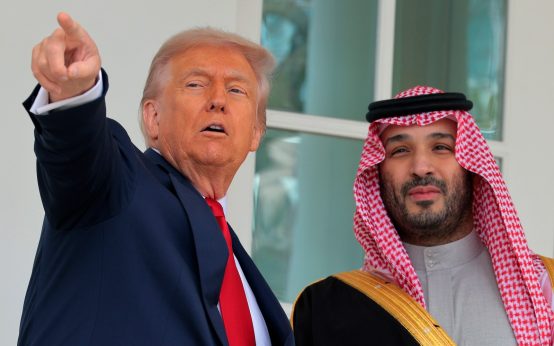 White House Approves F-35 Sales to Saudi Arabia Amidst Regional Tensions