Glassdoor’s latest Employee Confidence Index has revealed a significant decline in American workers’ confidence in their employers’ future prospects. This marks the third record-low reading of 2026, coinciding with ongoing layoffs across multiple sectors and sluggish hiring in many white-collar fields.
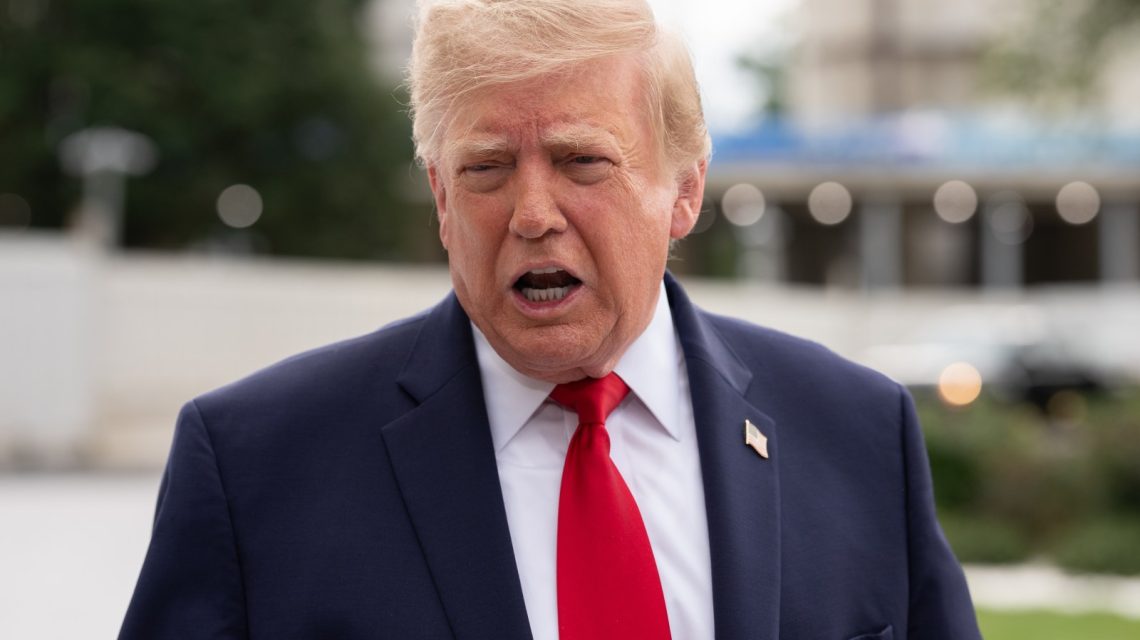
Concurrently, President Donald Trump’s approval ratings have plummeted to some of the weakest levels of his tenure, suggesting that economic dissatisfaction could pose a formidable political challenge as the 2026 midterm elections approach.
Jan Hendrik von Ahlen, managing director and career expert at JobLeads, shared with Newsweek, “It’s not surprising employee confidence has been hitting new lows recently. The job market is as turbulent as ever, so current employees have either already been affected by a round of layoffs or saw their colleagues be laid off.” He highlighted the abruptness of these layoffs, with accesses being cut off swiftly and severance often minimal or nonexistent.
Why Worker Sentiment Matters
Worker sentiment is frequently viewed as a leading indicator of labor market conditions. When employees lose confidence in their employers’ prospects, they might cut back on spending and delay major purchases. Nevertheless, they also tend to remain in their jobs and worry more about layoffs.
The political arena is also feeling the heat, with Trump’s approval ratings hitting historic lows amid public concerns about economic conditions and escalating costs. A Wall Street Journal survey noted Trump’s approval rating at 37 percent, the lowest pre-midterm figure recorded since 1990.
Glassdoor Chief Economist Daniel Zhao stated, “Workers who aren’t in a job are feeling frozen out of the job market. And even workers who are in a job are feeling stuck without any outside options to find a better fit.” He pointed to reasons for rising anxiety, including rapid AI development, policy uncertainty, and resurging inflation.
The Employee Confidence Index, which gauges the share of workers who report a positive six-month business outlook for their employer, dropped to 42.9 percent in September from 44.5 percent.
Michael Ryan, finance expert and founder of MichaelRyanMoney.com, told Newsweek, “The White House can describe the economy as booming, but workers judge the economy from inside their own company.” There’s a growing pessimism among workers regarding future business conditions, exacerbated by elevated layoffs in various white-collar industries.
In Glassdoor reviews, mentions of layoffs increased by 13 percent last year. Additionally, mentions of uncertainty rose by 84 percent, and references to AI grew by 164 percent.
Hendrik von Ahlen commented, “The question ‘will AI kill my job?’ has been asked millions of times.” While AI may have streamlined work for some, others found their workload increased after their colleagues were laid off for efficiency gains that failed to deliver.
Rising Layoff Concerns
The US job market is facing surging concerns over layoffs due to several contributing factors. Experts attribute the anxiety to ongoing layoffs in tech and media as well as sluggish hiring rates.
Michael Ryan remarked, “Inflation and higher costs, interest rates, layoffs in some industries, AI, and workers feeling that changing jobs isn’t as easy as it was a few years ago.” Workers find it hard to feel secure amid hiring freezes, reorganizations, and inquiries into AI’s capacity to take over tasks.
Alex Beene, a financial literacy instructor, noted that employer confidence is multifaceted. “The current economic factors they encounter are more than just inflationary pressures. The greater concern is uncertainty over where spending and demand are headed.”
While many remain employed, finding new jobs is increasingly difficult compared to the post-pandemic peak in hiring during 2021 and 2022. The average job search now takes about six months, with many experiencing over a year-long search process. Even seasoned professionals submit hundreds of applications for limited responses, which are often AI-generated.
Industries with Job Growth
Despite mounting concerns, several sectors continue to exhibit job growth. According to Glassdoor, industries displaying resilience include healthcare, government, construction, energy/utilities, and skilled trades.
HR consultant Bryan Driscoll emphasized the need for employers to reassure workers. “Employers have to give workers an actual, genuine, true reason to feel secure.” He suggested reducing perpetual restructuring, increasing transparency regarding business conditions and AI, and investing in existing employees rather than demanding more work from smaller teams without added compensation.
Sectors Facing Job Reductions
However, certain sectors have seen visible workforce reductions over the past year, such as technology, media and publishing, consulting/professional services, finance, and retail corporations.
Driscoll noted that Trump’s declining approval ratings mirror the rising anxiety among employees, especially in industries with high layoffs. “Trump’s economic policies are part of the picture, yes, and they’re generally catastrophic.” Employees scrutinize their living expenses and conclude if Trump’s promises materialized.
Forecasting Future Trends
Economists are closely monitoring upcoming labor market reports to assess whether worsening worker sentiment is leading to a precarious job market. Further layoffs could further deteriorate worker confidence, whereas stable hiring might restore optimism among employees.
Beene pointed out that many employers do not foresee favorable buying activity in the near future. “What would restore confidence is more long-term certainty, and right now, they’re not getting it.”
 Washington’s AI Concerns and the Promised Technological Future
  Efforts to Restrict Voter Registration Funding Trigger Concerns for Nonprofits
  Mary Peltola Challenges Sen. Dan Sullivan Over Rising Costs and Federal Aid
  Mitch Landrieu Considers Presidential Run Amid Shifting Political Landscape
  A Closer Look at the Pentagon’s Office of Strategic Capital
  News Outlets Fight White House Ban in Federal Court