
Recently, an event organized by The David Network discussed the Pentagon’s Office of Strategic Capital (OSC) and its role. The David Network connects conservative students and professionals with mentors in various fields, including technology and defense. While the United Nations General Assembly in New York pursued its agenda, focusing on resolutions that often have limited impact, the discussion at the event centered on maintaining peace through strength and military capabilities.
Jason D. Greenblatt, a former White House Middle East envoy, emphasized the importance of OSC in today’s geopolitical landscape. He highlighted his extensive experience working with President Donald Trump, who revitalized the OSC from its underutilized state under the Biden administration. Trump saw OSC as crucial for maintaining the U.S.’s strategic edge.
Understanding OSC’s Mission
OSC prioritizes keeping the U.S. ahead in key technological areas critical for modern warfare and civilian sectors. This includes areas like satellites, semiconductors, and cyberspace. OSC collaborates with private capital to support companies developing crucial technologies, ensuring that the U.S. doesn’t rely excessively on foreign sources.
The organization’s approach involves bridging the gap between government resources and private sector innovation. A significant example is a $150 million loan to MP Materials for rare earth separation in California, reducing dependence on Chinese processing. Another is a potential $820 million commitment to Performance Drone Works for boosting domestic drone production.
An Innovative Approach
OSC distinguishes itself by actively engaging with the private sector. Instead of dictating terms, they ask companies about challenges and obstacles. This feedback-driven approach allows them to address barriers preventing technological advancements.
Such a strategy extends to large-scale procurement practices. Historically, the Pentagon’s annual munition purchases led to limited supplier commitment. By securing multiyear contracts, such as a seven-year deal with Lockheed Martin, the OSC ensures a steady supply chain, crucial for maintaining strategic defense capabilities.
Meeting Strategic Challenges
OSC’s proactive stance has included scaling production of interceptor missiles, essential for conflicts like the war against Iran. Despite some media criticism, the production increase aims to counter threats effectively, aligning with Tehran’s strategic calculations.
Unlike some government initiatives, OSC remains embedded in projects, actively participating in development phases alongside companies. This ensures consistent progress and aligns with President Trump’s vision of government accountability and effectiveness.
While the U.N. may deliver eloquent speeches, it is OSC’s persistent efforts that concretely safeguard U.S. interests and bolster global alliances. The contrasting approaches highlight OSC’s focus on practical results in defense and technology sectors.
 News Outlets Fight White House Ban in Federal Court
  The Department of Homeland Security Urges Migrant Caravan to Avoid U.S. Border
 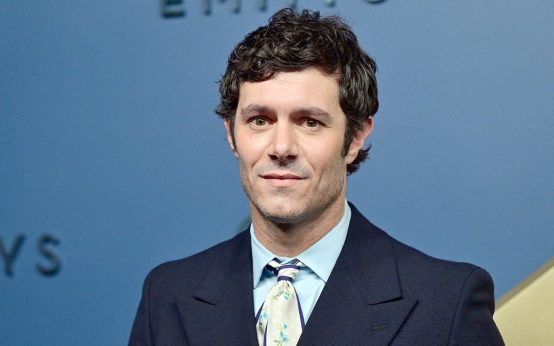 Adam Brody’s Discussion on Political Activism and Israel-Palestine Conflict
  Senator Collins Unfazed by Vandalism Incident Amidst Senate Race
  Controversy Surrounds Huckabee Sanders’ Welfare Ad
  Mamdani’s Child Care Plans: A Model for Policymakers