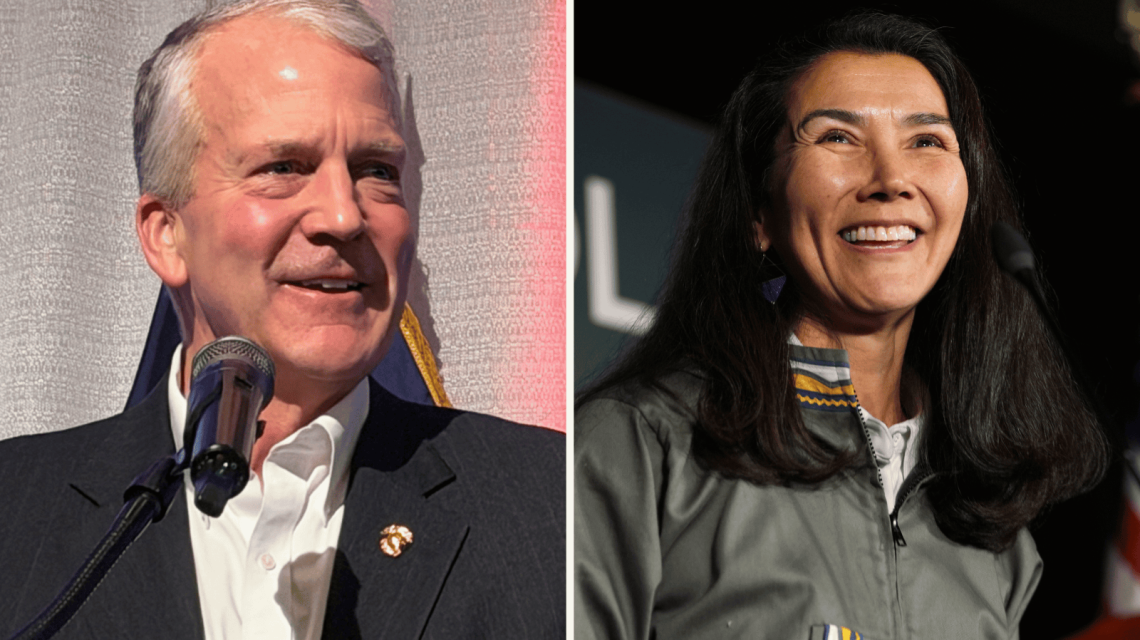
The Senate race in Alaska unfolds on two fronts. One involves the ongoing counting of ballots, a process that may extend until November 18. The other plays out in federal court.
In the latest tally, Democrat Mary Peltola holds a narrow lead over Republican Senator Dan Sullivan by 637 votes. Notably, Daniel J. Sullivan Jr., sharing the senator’s name but unrelated, garnered 3,600 votes, which mirrors the core of a legal challenge initiated by the Justice Department. This situation underscores concerns as Sullivan trails by fewer votes than his namesake received.
The Legal Proceedings
A federal judge dismissed the Justice Department’s lawsuit two days before Election Day. The case was appealed immediately. The numbers are still unofficial, subject to change, and keep the legal battle significant.
Justice Department’s Legal Request
President Donald Trump claimed to have directed the lawsuit. The suit sought to delay certification of results to verify whether voters mistakenly chose the wrong Sullivan.
Opposition from Alaska
Alaska’s election officials, managing a Republican-run state, opposed this move. This is striking since the Division of Elections attempted earlier to exclude the namesake from the ballot. The state’s legal team emphasized that the ballot already distinguished between the two Sullivans. They argued that setting aside ballots would breach constitutional protections for ballot secrecy and would not clarify why someone voted as they did.
Peltola’s campaign, the Democratic Senatorial Campaign Committee (DSCC), Common Cause, the League of Women Voters of Alaska, and two voters represented by the ACLU supported the state. Newsweek reached out to Peltola’s campaign for comments on the ruling and appeal but had not received a response before publishing.
Judge’s Verdict
U.S. District Judge Sharon Gleason determined that the government lacked standing, asserting that no court should order ballots to be set aside for law enforcement review. She concluded that such actions would disclose voter choices, violating privacy.
The Justice Department addressed the ruling’s procedural grounds, noting that it did not dismiss the claim of the namesake being a decoy. Despite communications to the Justice Department regarding their next steps, including any expedited appeal plans, there has been no response thus far.
The Timeline and Investigations
The court’s schedule extends beyond Alaska’s planned certification. However, federal prosecutors are actively pursuing a criminal investigation with grand jury subpoenas, under orders from Republican Governor Mike Dunleavy for a state investigation.
The New York Times reported claims by Peltola’s former campaign manager about a Democratic operative’s involvement in recruiting the namesake, though the staffer later withdrew these accusations. Both the Peltola campaign and the DSCC deny any involvement.
Next Steps
The ballot count will determine the lawsuit’s significance. If Sullivan advances in ranked-choice tabulation, or if Peltola’s win margin surpasses the namesake’s vote count, the lawsuit’s impact diminishes. A close victory for Peltola shifts focus to the appeal and the criminal investigation.
Sullivan declared on CNN his willingness to accept the results if he lost. Newsweek queried his campaign about the appeal and whether his commitment remains unchanged, but there was no response at the time of writing.
All data reflects unofficial results as per the state’s 5:11 p.m. ET Wednesday update and remains subject to revision.
Newsweek utilized Martyn, their AI assistant, for this story. For more details about Martyn or to contact the editors, reach out to Steven Frank and Edward T. Cummins.
 Mississippi State Auditor Shad White Announces Gubernatorial Bid
 Trump Dismisses Third Impeachment Prospects
 Custody Dispute Involving Rep. Max Miller Delayed
 Attorney General Addresses Post-Midterm Democratic Threats
 Senator Elizabeth Warren and the Future of Crypto Regulation
 Bipartisan Opportunities in Foreign Policy