
The ongoing discussion about artificial intelligence in the U.S. emphasizes the urgency of outperforming China in technological advancements. While America reaches for the most advanced AI technologies, China captures the global market by offering affordable and functional solutions. Many nations prioritize cost-effectiveness over cutting-edge technology.
China deploys its accessible AI models globally, establishing relationships in developing regions which pose challenges for the U.S. Entrance of Chinese products in sectors like infrastructure and government means entrenched connections that prove hard to disrupt over time. Moreover, these technologies might undermine security by enabling extensive population surveillance.
China’s open-weight models facilitate easy adoption, contrasting with American versions restricted to services. Chinese companies like DeepSeek and Alibaba allow downloading and modification of their models, boosting accessibility. Huawei increases its presence in the Global South, providing AI services in nations such as Brazil, Indonesia, and South Africa, and offers cloud credits to Egyptian startups to promote Chinese technology.
Microsoft’s report highlights DeepSeek usage in Africa, significantly surpassing other regions’ activity levels in late 2025, achieved through free access and strategic partnerships. The expansion of Chinese cloud technology in Latin America is evident, with significant market hold in Brazil, Chile, and beyond.
Countries integrating Chinese AI face increased influence from Beijing due to dependency on these technologies for essential services. Switching vendors can be disruptive and costly, reinforcing Beijing’s standing and future influence in political and commercial matters.
The repetition of narratives favorable to China’s political stance in AI-driven contexts by models like DeepSeek poses informational risks. As AI becomes central to understanding global affairs, the prominence of China’s perspective may increase.
The U.S. risks losing software, computing equipment, and services markets, which could challenge business viability and diminish employment opportunities. China prioritizes scientific cooperation with the Global South under its Digital Silk Road, providing financial backing to its companies.
The absence of a unified strategy by U.S. agencies hinders effective engagement with developing regions. Enhanced affordable access to AI should be a core strategy for the U.S., necessitating increased funding and collaboration to support local development.
Efforts should include developing talent, supporting tools in native languages, and addressing specific local challenges. Quick action is vital as China leads the AI race in developing areas. Maintaining U.S. dominance is crucial for political influence, security, and shaping global AI evolution.
This analysis underscores the urgent need for action to counter China’s strategic advances in the AI sector.
 FBI’s Global Efforts to Dismantle Scam Networks in Africa
  Apple Unveils Foldable iPhone Duo with Cutting-Edge Features
 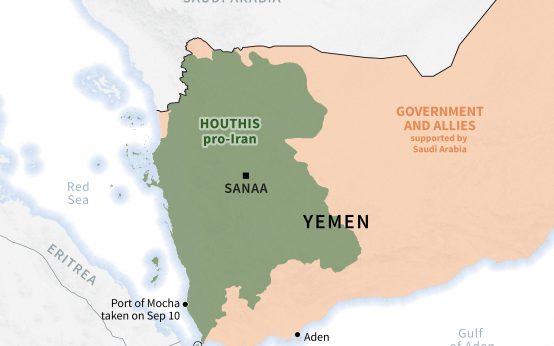 The Rise of Yemen’s Houthi Rebels and Their Impact on the Middle East
  Impact of Ukrainian Strikes on Russian Data Centers
  Pope Leo XIV to Undergo Surgery for Lung Nodule
  The Impact of AI on Job Quality and Economic Growth