
Traders at the New York Stock Exchange faced a challenging week, marked by a steep decline in artificial intelligence stocks. On Friday, the S&P 500 fell by 3.7%, marking its most significant weekly loss in over 18 months. The index officially entered a ‘correction’ phase, having dropped by more than 10% from its peak on October 6.
The Nasdaq composite dropped by 5.3%, pushing it into negative territory for the year. This was its worst performance since March 2020, a period heavily impacted by the COVID-19 pandemic. The Dow Jones Industrial Average, less affected by tech stocks, decreased by 1.9%.
Key chip makers, including Nvidia, Micron Technology, Broadcom, and Advanced Micro Devices, experienced significant declines. AI-related companies like Corning and Bloom Energy also suffered. Notably, the AI lab Anthropic, after a successful IPO, saw its stock fall by 9.1%.
The downturn in AI stocks was mirrored globally. Japan’s Nikkei and South Korea’s Kospi each fell over 5%, while European markets also registered sharp declines. The decline in AI stocks, which have had substantial market influence, reflects growing concerns about the sustainability of their valuations and spending.
Market strategist Michael Antonelli noted that the belief in AI’s ability to sustain unlimited spending is wavering. However, he suggested this shift might not signal the end of the broader bull market that began in October 2022.
Chip manufacturers felt the brunt of the sell-off, with Advanced Micro Devices plummeting 13.3%, Micron Technology 13.9%, and Broadcom 12.1%. The PHLX Semiconductor Index dropped by 10.7%. Meanwhile, Nvidia, central to the AI narrative, fell by 13.8% due to concerns about the AI sector and the fallout from CEO Jensen Huang’s sudden departure.
Anthropic’s initial success with its IPO, which briefly exceeded $2 trillion in value, was dampened as its stock decreased by 23% from its peak price shortly after.
Amid the tech slowdown, other sectors showed resilience. Food producer General Mills gained 3.7% and homebuilder Lennar rose by 1%. Overall, the S&P 500 lost 265.44 points to close at 6,910.39. The Dow dropped 949.73 points, ending at 48,147.33, and the Nasdaq fell 1,261.47 points to 22,617.73.
Despite market volatility, consumer confidence in the U.S. has improved. The University of Michigan’s consumer sentiment index increased, buoyed by easing gas prices and optimistic business prospects post-midterm elections, although still below February levels, before the U.S. conflict with Iran began.
In the bond market, the yield on the 10-year Treasury fell to 4.93%. Brent crude oil rose by 0.6%, settling at $92.57 per barrel, amid ongoing tensions in the Strait of Hormuz related to the U.S.’s ongoing conflict with Iran. Additionally, Saudi Arabia reported missile strikes by Iran-backed Houthi rebels, and Iraq reached an accord with a prominent Iran-backed militia over alleged oil smuggling.
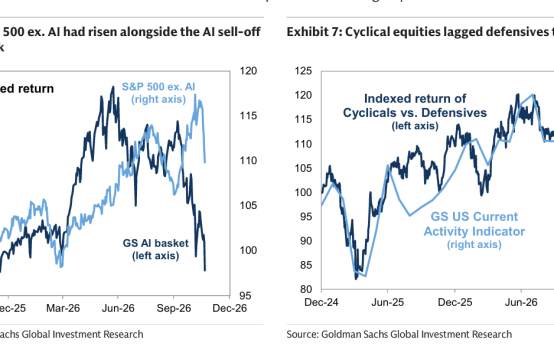 Market Analysis: S&P 500 and Nasdaq Downturns and the Road to Recovery
 Anthropic’s Market Debut and Investor Demographics
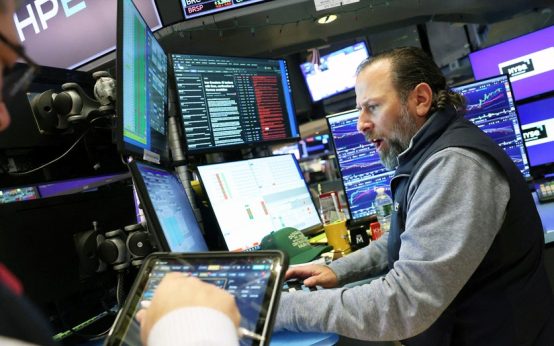 Sharp Decline in Stock Market Amid AI Sell-Off
 Stock Markets Experience Significant Declines
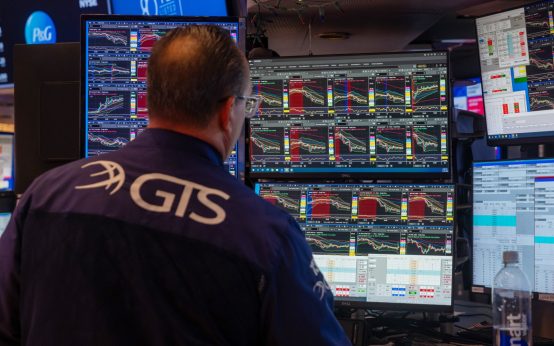 Dow Jones Drops Amid Economic Concerns and Regulatory Uncertainty
 Optimism Grows for Stock Market’s Year-End Rally