
Rising AI Expenses
Flo Crivello, founder of Lindy.ai, a San Francisco startup, revealed a significant cost that was draining his company’s finances. The firm originally relied extensively on Anthropic’s advanced AI models to manage tasks like emails and calendars. However, Anthropic’s AI became the primary expense, surpassing even payroll and rent. To alleviate this financial burden, Lindy.ai switched to DeepSeek-V4, a Chinese AI model that slashed their costs by tenfold, saving millions.
The Double-Edged Sword
AI has emerged as one of the fastest-growing expenses for U.S. companies. While essential, it’s also costly. To manage these expenditures, many businesses are turning to cheaper Chinese alternatives. Although U.S. companies like Anthropic, OpenAI, and Google lead in AI advancements, Chinese models, though behind by six to 12 months, are gaining ground, especially in open-source frameworks.
“The open-source scene right now is absolutely dominated by the Chinese. It’s not even close,” said Crivello.
A surge in Chinese AI adoption is noticeable. Uber CEO Dara Khosrowshahi mentioned AI budget consumption prompting adjustments, while Bloombergreported that Airbnb CEO Brian Chesky had used Alibaba’s Qwen model for its affordability and efficiency.
Political Sensitivity
Despite quality and cost benefits, companies hesitate to disclose their use of Chinese models due to political concerns. These models are accessible via hubs like Hugging Face and GitHub and through multiple aggregators.
Eugene Cheah, CEO of Featherless, emphasized the popularity of these models despite not being frontier. “It’s like driving a Ferrari versus a Honda. The latter works efficiently, at scale,” he said.
Changing Strategies and Costs
Increased use of platforms like OpenRouter demonstrates the shift toward Chinese models. Since January, the usage of DeepSeek from China surged from 9% to nearly 20%. Other models from MiniMax, Xiaomi, and Tencent are also on the rise.
Victor Su-Ortiz from MiniMax highlighted economic benefits. AI usage costs relate to tokens, units of AI work. Lower token costs make open-weight models appealing, especially for repetitive tasks.
Quality vs. Cost
Not all companies find Chinese models sufficient. Jon Gordner of Comment.io prefers high-performing Anthropic and OpenAI models for their superior quality despite potential cost savings with other models. While current discounts are attractive, future evaluations may consider cheaper models.
Market Competition and Adaptation
Ramp economist Ara Kharazian anticipates U.S. companies responding to the challenges from Chinese models by possibly moderating prices or introducing competitive open-source alternatives.
Gordner remains skeptical, suggesting that as U.S. AI firms approach public offerings, profitability pressures may lead to increased costs. Anthropic’s support for NPR was highlighted as a notable financial contributor.
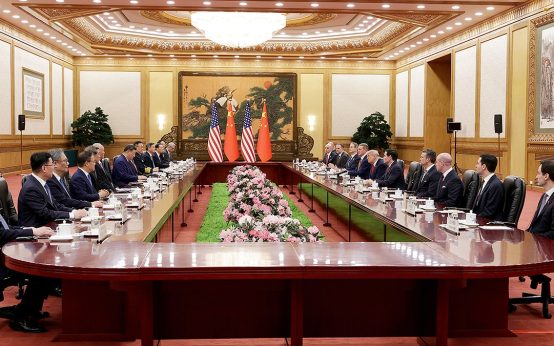 The Technology Rivalry: Trump’s Meeting with Xi and the AI Ecosystem Clash
  Ways to Protect Your Finances from Cyber Threats
  Interview with Nvidia CEO Jensen Huang: AI Outlook and Business Strategy
  Concerns Rise Over Addictive Design of Sports Betting Apps
  Seton Hall National Security Graduate Fellowship Provides Hands-On Experience
  Concerns of AI Experts