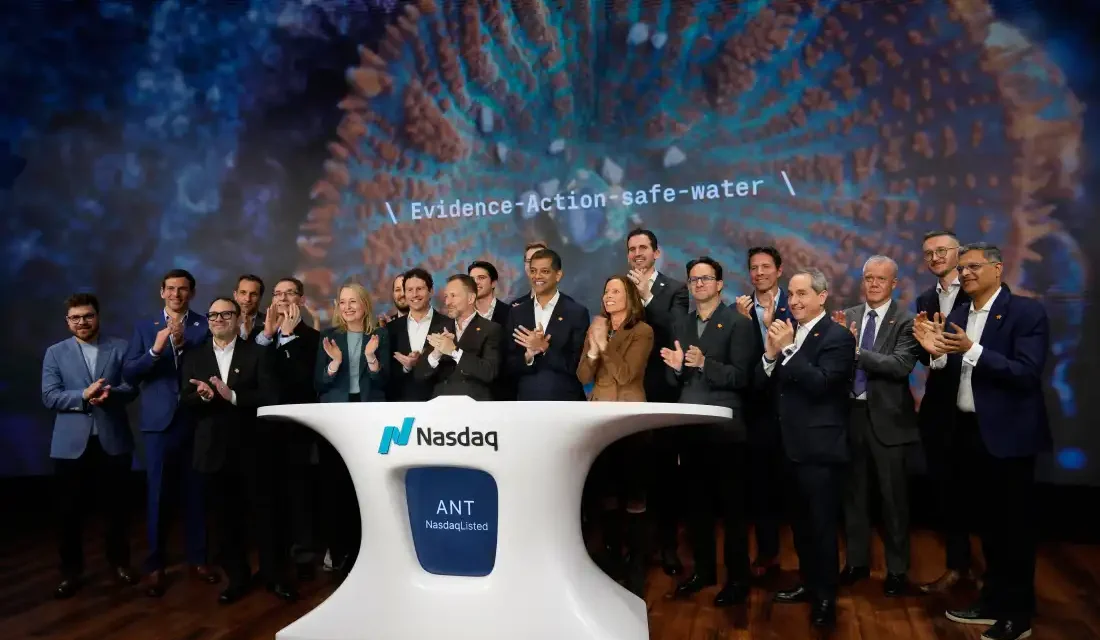
Paul Smith and Krishna Rao from Anthropic were at the Nasdaq MarketSite in New York as excitement mounted during the company’s IPO event. However, a significant announcement from Levent Alpöge, a mathematician at Anthropic, has caught the attention of the math world. Alpöge claims to have solved the Riemann Hypothesis, one of mathematics’ most challenging problems, using the company’s AI tool Claude.
The Riemann Hypothesis, formulated in 1859, addresses the distribution of prime numbers. Alpöge detailed his breakthrough in a four-page explanation on his website. He attributes a large part of his success to Claude, stating that the AI vastly outperformed him in reaching the solution.
After communicating with Anthropic CEO Dario Amodei, Alpöge announced his claim. This revelation closely followed Anthropic’s historic IPO, the most valuable to date. The company declined to comment on Alpöge’s assertion.
Alpöge’s solution appears within 17 million lines of Lean code, a programming language for proving mathematical theorems. According to Alex Kontorovich from Rutgers University, while computers can verify a proof’s correctness, human evaluation is necessary for full understanding.
This is an announcement of historic significance, which holds the promise of a dramatic transformation in the perception of what is possible in the struggle to extend human understanding of mathematics.
The Clay Mathematics Institute still lists the Riemann Hypothesis as unsolved but offers a $1 million prize for its resolution. Martin Bridson, the institute’s president, stresses that assessing the proof’s validity will require significant time and effort.
Recently, OpenAI’s technology contributed to solving another complex mathematical problem, the Navier-Stokes equations. Kontorovich acknowledges the potential shifts AI may bring to mathematics, although understanding and validating these advancements remain a daunting challenge.
Anthropic’s IPO raised $81 billion and reached a valuation of $1.5 trillion. Amodei envisions AI as a catalyst for progress in scientific research while acknowledging its associated risks.
 Bayer Settles Massive Roundup Lawsuit Over Cancer Claims
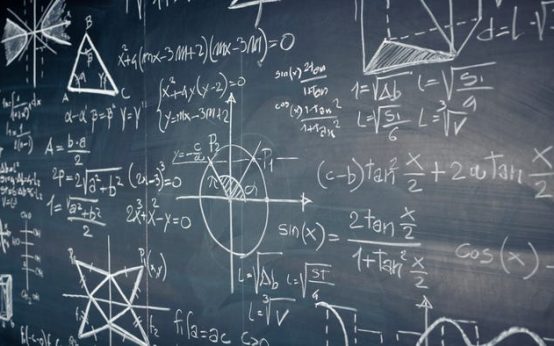 Mathematicians Race to Solve the Riemann Hypothesis Amid AI Controversy
 Key Developments in California, Melania Trump Series, Controversial Execution, and More
 3,300-Year-Old Sword Found in Italian Lake, Still Sharp
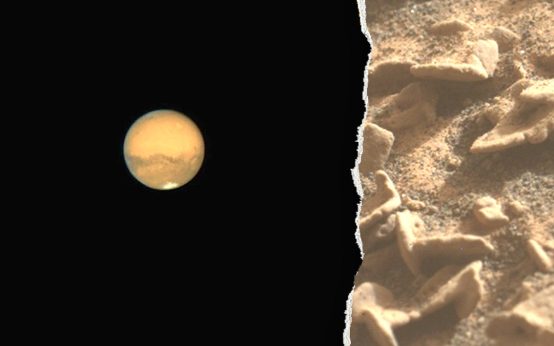 NASA Explores Unusual Martian Formations
 A Complex Portrait of Stephen Hawking in Graham Farmelo’s Biography