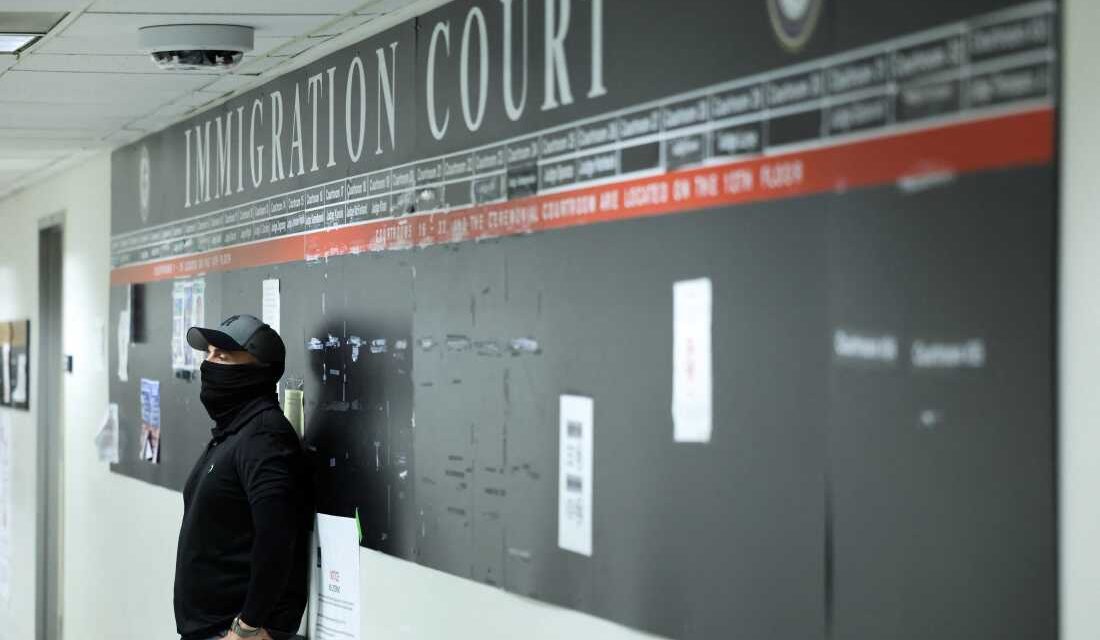
Immigration courts under the Justice Department are speeding up hearings, grouping immigrants together to increase deportation orders. These changes, highlighted by immigration attorneys and the American Immigration Lawyers Association, involve holding ‘mega master’ calendar hearings with over 100 people. Such hearings often represent immigrants’ first opportunity to plead for permission to stay in the U.S.
Challenges for Unrepresented Immigrants
Many immigrants attending these hearings do not have legal representation. Those who arrive late or miss the hearing may receive deportation orders, limiting their already restricted due process. Vanessa Dojaquez-Torres from AILA expressed worries that the lack of proper notice for these immigrants is leading to automatic deportation orders. Often, these courts do not have sufficient space to accommodate such large groups.
The Executive Office for Immigration Review (EOIR), responsible for these courts, has not commented on this approach. This strategy is occurring in Chicago, Boston, and Chelmsford, and is set to begin in Dallas. This aligns with President Trump’s goal to deport one million individuals annually, surpassing the 600,000 deportations in 2025.
Implications and Concerns
Failure to attend a scheduled hearing, even unintentionally, results in removal orders, enabling immigration officers to detain and deport. This trend, observed by NPR, has increased under the current administration, with fewer individuals attending hearings due to detention fears.
Dojaquez-Torres highlighted that many immigrants are uninformed about rescheduled hearing dates due to insufficient notice. ‘Mega master’ hearings involve individuals with originally scheduled hearings in 2027, 2028, or 2029. A Texas-based attorney noted that the government anticipates defaults, leading to completed cases through absentia removal orders.
Attending these large hearings can overwhelm court staff and judges, creating challenging conditions. While some clients may benefit from faster case scheduling, many lack legal support and may not see these advantages.
DOJ Staffing and Efforts
The DOJ continues efforts to expedite cases, especially for nationals of Somalia, Syria, and Iran, and juvenile immigrants. Alongside this, they introduced a larger class of immigration judges. Recently, 77 judges and 5 temporary military lawyers joined, marking a record hiring year with 153 judges.
Acting Attorney General Todd Blanche emphasized the administration’s commitment to instill a robust immigration judiciary to enforce the rule of law. Despite new hires, the EOIR recently lost over 100 judges, including several firings in New York and California. An NPR analysis noted that judges with immigrant client experience faced more dismissals than those with Homeland Security backgrounds.
 State Department Enhances Passport Application Process
  California Gubernatorial Debate: Becerra vs. Hilton
 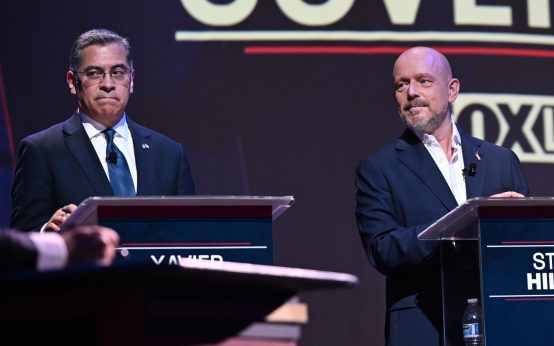 California Gubernatorial Debate: Becerra vs. Hilton
  California Gubernatorial Debate: Becerra vs. Hilton
  Key Moments and Insights from the Becerra-Hilton Gubernatorial Debate
  Becerra and Hilton Clash Over California’s Future in Heated Debate