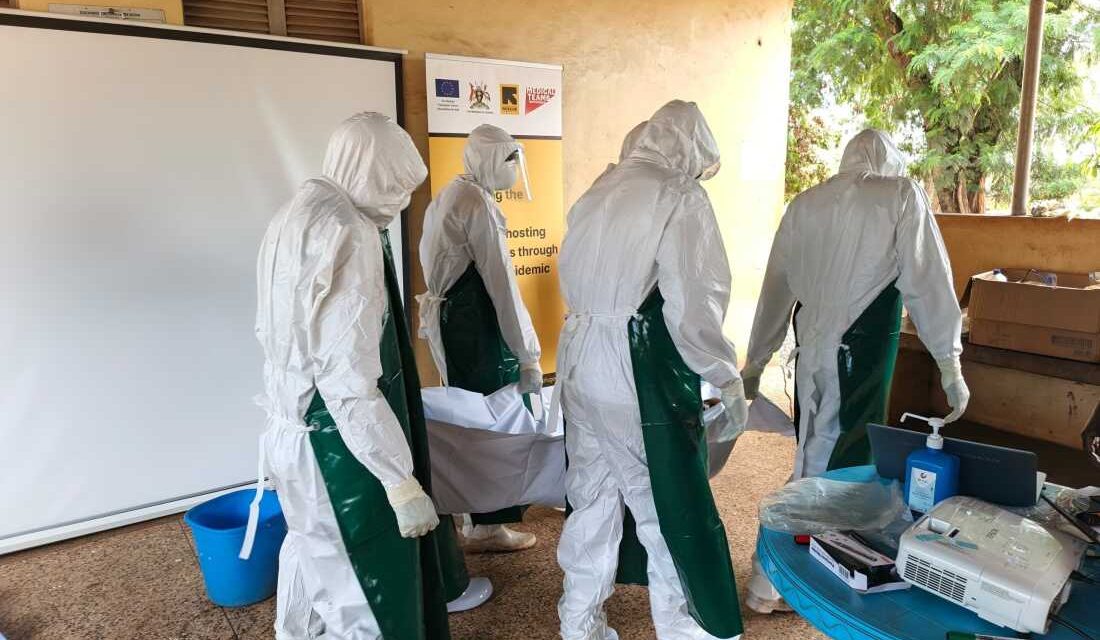
A significant Ebola outbreak in central Africa is expanding, with misinformation complicating efforts to control it. Social media rumors claim Ebola is fabricated or that healthcare workers are exploiting the situation for personal gain. According to the World Health Organization, more than 1,000 cases, both suspected and confirmed, have been noted, with at least 223 deaths potentially linked to Ebola. Experts believe these numbers are likely underestimated.
The Democratic Republic of Congo (DRC) is the primary area affected by the outbreak. Uganda, sharing a border with the DRC, remains relatively unaffected. On May 27, Uganda took preventive measures by closing its official border crossings with the DRC. Leonard Musinguzi, a community and surveillance officer with the International Rescue Committee (IRC) in Uganda, highlights the challenge posed by numerous unofficial border crossings that people continue to use.
Musinguzi’s responsibilities include tracking potential Ebola cases, quarantining refugees, training healthcare personnel, and readying the community to fight the disease. His work is complicated by the rapid spread of misinformation about Ebola, which often outpaces the virus itself. To combat this, Musinguzi’s organization disseminates public health information via radio, posters, and hospital television broadcasts to educate the public about Ebola.
However, funding cuts from countries like the United States have impacted these efforts. Musinguzi reports a reduction in available resources, limiting the reach of educational campaigns. Previously, funding allowed for messages to be aired on five radio talk shows; now they are limited to one due to reduced financial support.
The U.S. State Department, in a statement to NPR, asserted that recent funding adjustments had not significantly affected U.S. contributions to global health or health security programs in the eastern DRC. Spokesman Tommy Pigott emphasized that the United States responded to the outbreak within 24 hours by deploying a range of medical and humanitarian resources.
NPR’s Adrian Florido interviewed aid workers and a former U.S. Agency for International Development employee to explore the challenges faced by the global health system and how federal funding cuts might be a factor. For the complete report, click the play button above.
 Supporting Child Mental Health: The Role of Home Environments
  Abdul El-Sayed Aims to Attract ‘Make America Healthy Again’ Supporters in Michigan Senate Campaign
  Infections Linked to Global Cancer Cases
  G. L. Mezzetta Inc. Recalls Peperoncini Due to Pest Concerns
  Leila’s Kidney Transplant Journey: Setbacks and New Beginnings
  Insulin Cost Legislation Push