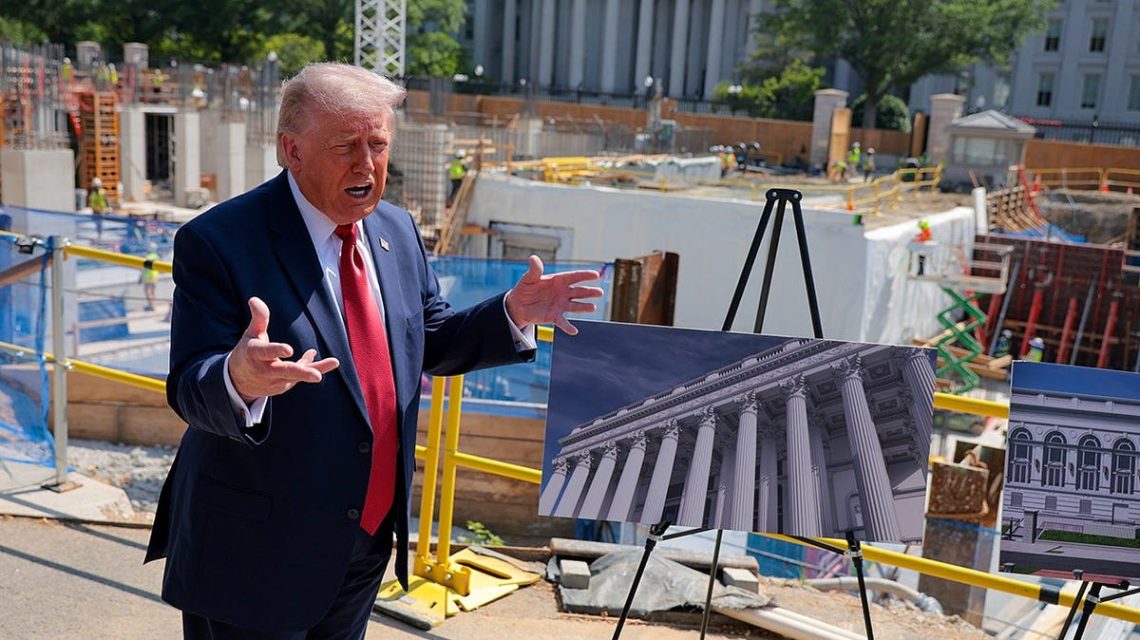
Exclusive Tour of White House Ballroom Project
President Donald Trump recently provided an exclusive tour of the White House Ballroom project. This venture seeks to create a secure and modern venue for formal events. Trump emphasized the innovative design, stating it is a gift to America funded by patriots. The ballroom will accommodate up to 2,000 guests, promising enhanced safety for leaders in the future.
Funding and Legal Challenges
The project, which includes a $400 million ballroom and a rooftop drone base, faces legal scrutiny. Trump publicly criticized U.S. District Judge Richard Leon, who blocked the project following a lawsuit from a persistent litigant. Trump warned that the lawsuit jeopardizes U.S. national security, specifically the sophisticated DronePort designed to protect Washington, D.C. Trump asserted that modern threats demand more than traditional defenses.
Legal Implications and National Security
‘The DronePort at the White House Ballroom will be, perhaps, the most sophisticated anywhere in the World!’, Trump stated.
He urged Judge Leon to dismiss the lawsuit promptly, underscoring the critical need for advanced security. The Justice Department supported this request, highlighting a recent shooting near the White House that underscores the need for heightened security at the executive residence.
Legal Proceedings and Federal Concerns
Judge Leon previously ruled that Trump did not have the authority to proceed with such a large-scale project without congressional approval. The injunction halted above-ground construction, though an appeals court temporarily allowed work to continue. The lawsuit was filed by the National Trust for Historic Preservation, which refuses to withdraw its case. The group focuses on the preservation of historic federal buildings.
Advanced Security Features
The proposed ballroom will feature significant security enhancements, including an underground military complex complete with a hospital and research facilities. The ballroom’s roof is designed to withstand direct attacks and has drone-proof capabilities. The White House spokespeople indicated additional features like titanium fencing and special glass to maximize security.
Project’s Future and Presidential Authority
Trump has argued that the ballroom will provide a secure venue for hosting large-scale events. Current White House spaces are deemed too small for gatherings of up to 1,000 people. The security measures being implemented reflect a commitment to safeguarding the venue against a range of potential threats, further stirring debates over security spending and presidential authority.
The Justice Department awaits Judge Leon’s decision on their request to lift the injunction and proceed with the construction unhindered.
 Analyzing Democratic Loyalty in Evolving Political Landscapes
  Rep. Max Miller Faces Pressure Amid Domestic Abuse Allegations
  Mayor’s Aide Involves in Dispute Between Health Department and Nonprofit
  Abdul El-Sayed Prepares for Upcoming Senate Race
  Democratic Senators Continue Support Amid Allegations Against Maine Nominee
  GOP Primary for South Carolina Senate Seat Heads to Runoff