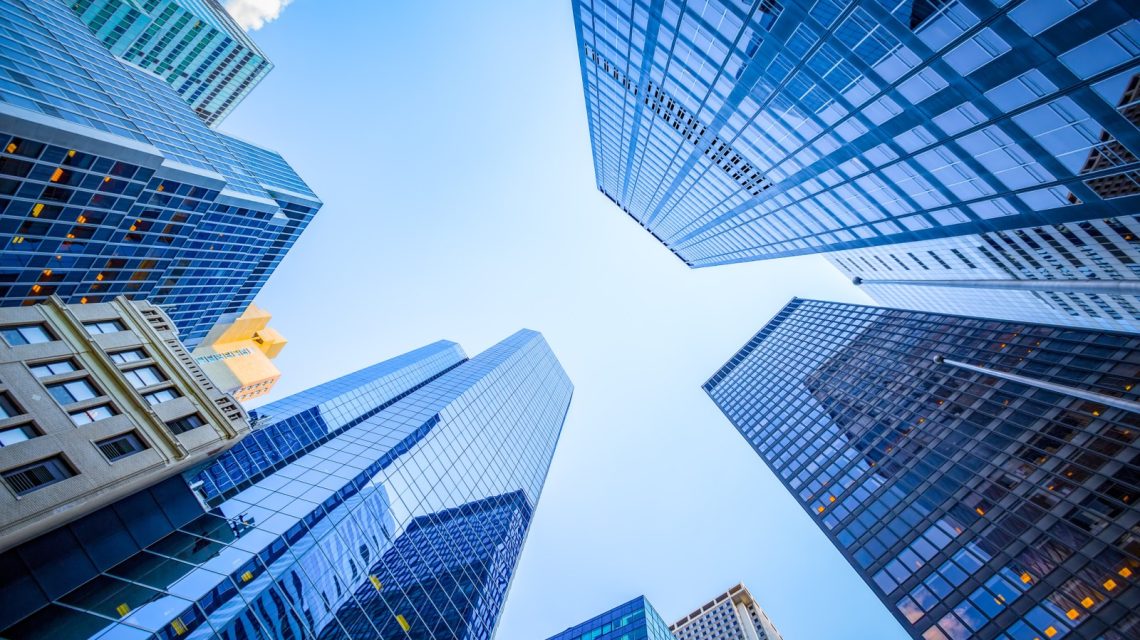
Skyscrapers stand tall with gleaming exteriors, yet much of their complexity lies beneath the surface. Beyond the visible floors and observation decks are crucial yet hidden spaces that ensure a tower’s stability, safety, and functionality. These hidden floors, as noted by Zaeem Chaudhary, director at AC Design Solutions, remain unmarked in public floor numbering, yet play an essential role in skyscraper engineering. These include mechanical plant floors, structural transfer levels, and fire refuge floors, all vital for engineering and safety, yet unnoticed by tenants.
Although imperceptible to most occupants, these hidden floors are indispensable. They contain mechanical systems, structural cores, refuge levels, and damping systems—all pivotal for the functioning of towering structures. As urban areas become denser and populations increase, architects and engineers focus on making tall buildings more efficient and sustainable. Research points to a shift in design priorities, emphasizing reduced energy consumption, integration of renewable systems, and improved building performance through advanced technology. This focus is crucial, as buildings and construction contribute around 37 percent of global CO₂ emissions, according to the United Nations Environment Programme (UNEP).
The Invisible Infrastructure
Mechanical floors form the backbone of any tall building. These dedicated levels house key systems such as heating, ventilation, electrical equipment, and water infrastructure. They are ubiquitous in high-rises and strategically placed throughout the structure to ensure functionality. Multiple mechanical levels are essential because services cannot operate efficiently from a single ground-level plant room.
Structural engineer Hassan Baloch notes that skyscrapers include floors housing HVAC units, water tanks, pumps, electrical substations, and fire-protection systems. These are distributed across a building’s height for practical reasons, though never visible to occupants. This infrastructure ensures the ongoing operation of tall buildings.
In megatall towers like the Burj Khalifa in Dubai, these systems occupy multiple levels, with larger-than-usual floor heights for equipment accommodation. Such infrastructure supports what engineers refer to as a “vertical city,” ensuring power, water, and climate control across massive heights.
Structural Floors That Don’t Exist—On Paper
Another type of hidden level includes structural transfer floors, packed with beams and load-distribution systems instead of usable space. According to Chaudhary, these floors step in when a structural layout must change, such as shifting from a spacious lobby to a denser residential grid. Entire floors become structures, unseen yet crucial for load redistribution across columns and cores, fostering architectural flexibility without sacrificing stability.
Outrigger and belt-truss systems form another hidden layer. They connect a building’s core to its outer columns, bolstering stiffness and curbing sway from wind, the critical load in skyscrapers. These structural components create non-occupiable zones often integrated with mechanical floors.
Wind-induced motion poses challenges, and engineers use tuned mass dampers to combat it. These vast systems absorb and dissipate energy, minimizing vibrations and enhancing safety. They are finely tuned to a building’s natural frequency, stabilizing the structure under wind or seismic forces.
Safety design adds yet more hidden floors. Refuge floors, required by many fire codes, offer secure areas where occupants can safely wait during emergencies, facilitating phased evacuation strategies more effectively than evacuating everyone at once. Besides these, skyscrapers feature lift overruns, communication rooms, roof plant spaces, and interstitial zones within walls or ceilings.
As Brenner highlights, interstitial spaces within buildings hold structural trusses, large mechanical equipment, or unconditioned architectural voids. These can include areas under observation decks or open-air crown structures that conceal rooftop machinery.
 The Impact of Extended Job Searches on Mental Health
  Concerns Over AI’s Impact on Higher Education Learning
  Google Fined for Breaching EU Privacy Rules
  AI-Powered Malware Raises Concerns Over Security
  Debate Continues Over Virginia’s Data Center Energy Plans
  Trump Suggests Renaming AI to ‘Super Intelligence’