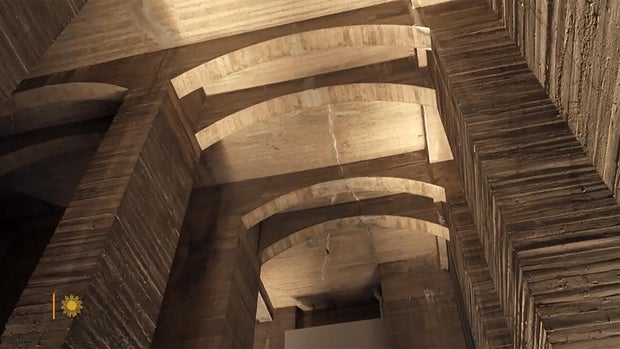
To call Washington a “swamp” is both a metaphor and a literal truth. When planning for the Lincoln Memorial began in the early 1910s, builders faced the challenge of a sinking landscape. Their innovative solution led to one of Washington’s lesser-known secrets, which remained hidden for over a century.
Beneath the Lincoln Memorial lies an area known as the Undercroft. This term typically describes the vaulted basement of a medieval castle or cathedral. Within this space, 120 enormous concrete pillars reach 50 feet down to the bedrock, supporting the massive weight of the structure above.
Secretary of the Interior Doug Burgum revealed that this vast space, measuring 50,000 square feet, had never been accessible to the public until now. He noted the unique stalactites forming as rainwater seeps through granite cracks, absorbing calcium on its way.
Starting this June, visitors can explore a new museum situated directly underneath the memorial. Philanthropist David Rubenstein, instrumental in revealing the Undercroft, contributed significantly to the $69 million fund required for its development. Rubenstein emphasized the importance of honoring and understanding history, stating, “You can’t be a great country if you don’t honor your history.”
The new museum aims to broaden perspectives on Abraham Lincoln’s life, illustrating his personal challenges alongside his presidential achievements. “He had a very complicated life,” Rubenstein said, highlighting Lincoln’s personal tragedies and his complex marriage, ultimately deeming him the greatest president.
Some exhibits delve into the memorial’s history itself. Historian Edna Greene Medford from Howard University sees the site as a platform for evolving American ideals of freedom. She noted, “I think it’s still about freedom, hope, and today it’s about inclusion.”
The Undercroft’s transformation echoes a pivotal 1939 event when contralto Marian Anderson performed there after facing racial discrimination at indoor venues. As Martin Luther King Jr. proclaimed in 1963, “Now is the time to rise from the dark and desolate valley of segregation to the sunlit path of racial justice.”
Medford reflected on the memorial’s symbolism, stating, “The memorial becomes not just a symbol for freedom for Black people, but a symbol of freedom for various groups.” It’s a place where people interpret freedom in diverse ways.
The museum addresses this history during a time when other national sites reconsider exhibits related to slavery and racism. The administration describes this as “restoring truth and sanity to American history.”
Secretary Burgum remarked on the importance of celebrating history, saying, “When using federal dollars, we must tell the story that celebrates this country.” He highlighted a balance between cultural debates and historical celebration.
Visitors to the Undercroft will see the Lincoln Memorial in full—not only the grand marble above but also the hidden, complex efforts below. Burgum noted graffiti from the original construction workers on one of the Undercroft’s columns, reminding us of the labor behind the iconic structure.
This new perspective provides a comprehensive view of Lincoln and the nation, still united in its ongoing journey toward progress.
 Public Confidence in the Supreme Court at Record Lows
  Federal Authorities Arrest California Lawmaker’s Aide for Visa Overstay
 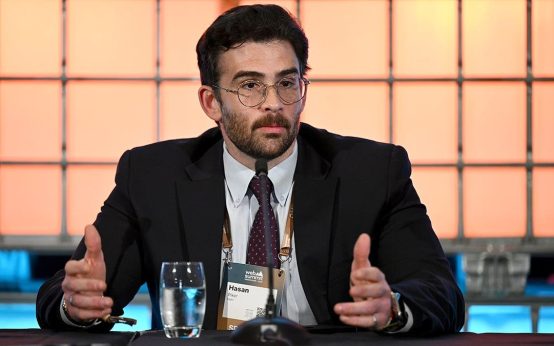 Hasan Piker Addresses Controversial Comments and Political Involvement
  Lukashenko and Putin Share Light Moments While Strengthening Ties
 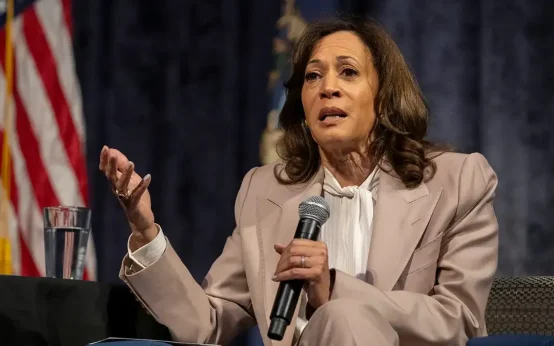 Kamala Harris on Possible 2028 Run Highlights Midterm Importance
  Lawmakers Urge End to U.S. Military’s Drug Boat Strike Campaign