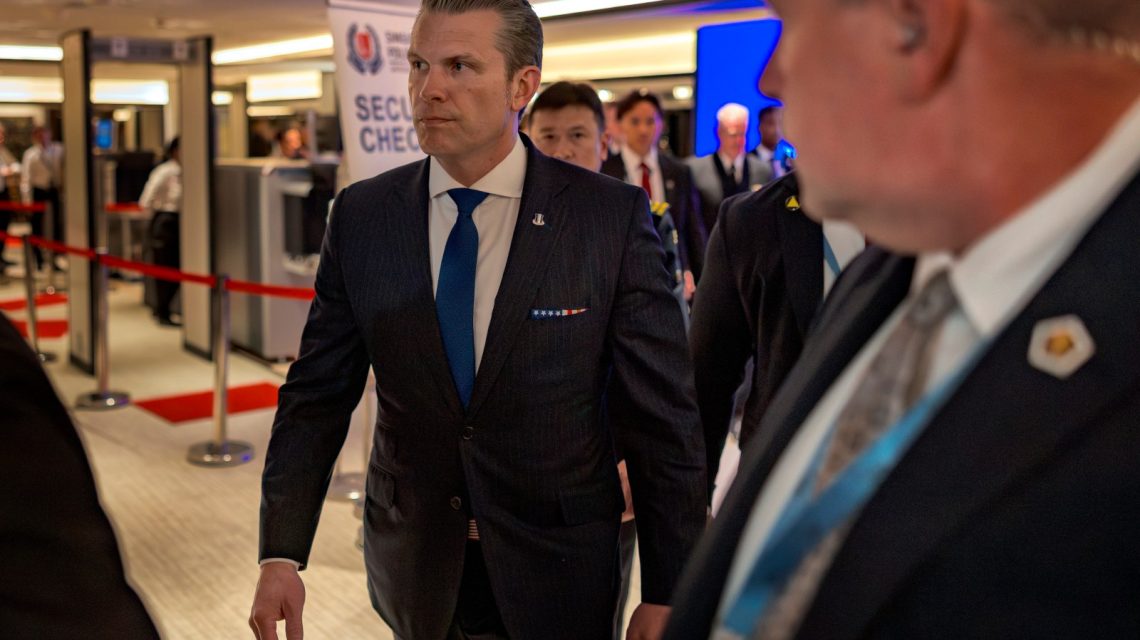
Diplomatic Maneuvering at Defense Summit
U.S. Secretary of Defense Pete Hegseth spoke at a defense summit in Singapore, seemingly calibrated to avoid disrupting President Trump’s diplomatic aims with China. An analyst from a Chinese state-affiliated think tank shared insights with Newsweek on the matter.
The summit occurred 15 days after Trump’s state visit to China, the first such visit in nine years. Both nations viewed the trip as a chance to reset their relationship. The focus included trade, technology supply chains, and Taiwan—a self-governed island that China sees as a renegade province.
President Xi Jinping’s Dire Warning
China’s stance on Taiwan involves potential unification by force if necessary. President Xi Jinping reportedly cautioned Trump about the dangerous repercussions of mismanaging Taiwan. In response, Trump has postponed a $14 billion arms deal with Taiwan, indicating its value as a negotiating tool.
Newsweek sought comments from Taiwan’s foreign ministry regarding the situation.
Careful Approach to Taiwan Relations
While Secretary Hegseth aimed to assure allies of the U.S.’s strong stance, his rhetoric was notably subdued compared to last year’s speech. He recognized regional concerns but praised current China-U.S. relations as the best in years.
Without directly naming Taiwan, Hegseth warned that a Chinese invasion could be imminent. He emphasized deterrence as key to U.S. national security strategy through the First Island Chain, a critical zone from Japan to Borneo, to counter Chinese military power.
Arms Deal and Political Sensitivities
Hegseth accompanied Trump in Beijing and appreciates the delicacy surrounding the Taiwan issue. Da Wei from Tsinghua University noted Hegseth’s awareness of Trump’s pending decision on the arms package.
If Trump proceeds with the deal, Xi might find visiting the U.S. difficult due to his significant investment in the Taiwan issue. Da Wei highlighted this diplomatic tension by noting Xi’s earlier discussions with Trump.
Decoupling Concerns and Supply Resilience
During the summit’s Q&A, Hegseth rejected worries about U.S. munitions supply following the Iran conflict, stating that Taiwan arms sales were independent of this issue. He confirmed that U.S. munitions stocks remain robust globally.
U.S. Dominance as Taiwan’s Weapon Supplier
The U.S. has consistently been Taiwan’s major arms supplier as per the Taiwan Relations Act of 1979. Though Washington pledged to decrease sales gradually, timing remains linked to regional threats.
Experts caution that conditional arms sales empower China to tighten pressure on Taiwan and extract U.S. concessions. Yet, prior administrations have adjusted sales timing to avoid straining relations with Beijing.
 Former German Spy Chief Arrested for Espionage and Treason
  U.S. Military in Okinawa Initiates Pause Following Marine’s Arrest
  Suspected Iranian Drone Plot Pushes U.S. to Evacuate Bombers from British Airbase
  Brett McGurk Discusses Hostage Negotiations and New Book
  Suspected Drone Plot Leads to Evacuation of U.S. Bombers
  Afghanistan’s Economic Crisis and the Impact on Youth