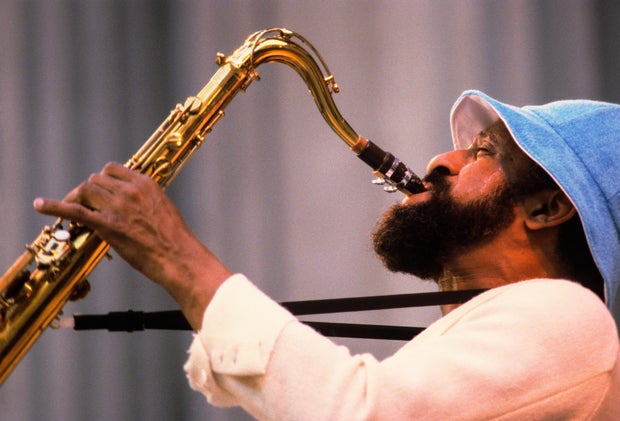
Sonny Rollins, the acclaimed tenor saxophonist known for his distinct tone and constant innovation in jazz, passed away at 95. According to spokesperson Terri Hinte, Rollins died at his home in Woodstock, New York. Although no specific cause of death was mentioned, Rollins had been mostly housebound for the past few years due to various health issues.
Musical Prowess and Legacy
Rollins’s journey in music began as a teenage prodigy and evolved into a lifetime of celebrated solo work and exploration of free jazz. He was one of the last remaining icons from the bebop era, crucially influencing saxophonists alongside John Coltrane and Charlie Parker. Rock audiences may remember Rollins’s sax solo on the Rolling Stones’ 1981 album “Tattoo You,” particularly on the track “Waiting on a Friend,” inspired by watching Mick Jagger dance.
Despite a successful career, Rollins never ceased evolving his art. He occasionally took breaks from performing to pursue new styles. “I am a work in progress,” he often said, never content to remain in one artistic form.
His most beloved work came from his early bebop period, but Rollins often expressed difficulty listening to his older recordings, citing their flaws. “I don’t consider myself a musician who has learned everything I want to learn,” he told The Associated Press in 2007.
Career Achievements and Recognition
In the 1990s and 2000s, Rollins produced numerous acclaimed albums. He maintained a disciplined practice routine and performed on tour into his 80s. However, Rollins retired after being diagnosed with pulmonary fibrosis, which impacted his ability to continue playing. His last concert was in 2012, and he stopped playing entirely in 2014.
Even in retirement, he cherished the act of playing more than the audience’s adoration. Reflecting on his career, he shared, “I was part of something bigger,” a feeling he described experiencing during performances under the open sky.
His 2001 album, “This is What I Do,” won a Grammy for best jazz instrumental album. He won another Grammy in 2006 for his solo in “Why Was I Born?” performed at a concert shortly after the September 11 attacks. That performance, persisting through the urging of his wife and manager, Lucille, held a special meaning. He spoke to CBS News about understanding life’s unpredictable nature through these experiences.
Early Life and Musical Path
Theodore Walter Rollins was born on September 7, 1930, in Harlem into a musical family. His father played clarinet, his sister the piano, and his brother the violin. Young Sonny fell in love with music early on, particularly the saxophone, which he began to learn at age 11.
Much of his training was self-taught due to financial constraints, but he soon made a name for himself. Invited to join Thelonious Monk’s band in his late teens, Rollins connected with legends like Miles Davis, which spurred his recording career.
Like many musicians of his era, Rollins struggled with heroin addiction in his early years, leading to imprisonment and living on the streets. He chose to get treatment and described the processes as transformative, allowing him to restart his career with newfound insight.
A Journey of Reinvention
Post-rehabilitation, Rollins joined forces with Max Roach and Clifford Brown, recording the influential solo album “Saxophone Colossus” in 1956. Seeking new challenges, he also experimented with a pianoless trio setup on several landmark albums.
In 1959, at his career peak, Rollins secluded himself for two years to practice atop a Williamsburg Bridge walkway. This break allowed him to reassess his artistic direction, leading him to embrace free jazz upon his 1961 return, a transition that polarized fans.
The mid-’60s saw Rollins toggling between traditional and avant-garde styles during European tours. After discovering Zen Buddhism in Japan, Rollins took another break from the scene but re-emerged in 1972 to wider recognition and mainstream acceptance. His achievements included a Guggenheim fellowship and induction into the Downbeat Hall of Fame.
In his later years, Rollins was honored at the Kennedy Center and left behind a wealth of unreleased recordings. He made peace with his legacy, expressing relief at no longer needing to worry about his music after departing this world.
Personal Reflections and Legacy
Rollins’s reflection on the events surrounding the September 11 attacks elucidated his philosophical approach to life. Reflecting on the tragedy, he concluded that understanding was elusive, but acceptance was essential.
Sonny Rollins is survived by his nephew Clifton Anderson, and nieces Vallyn Anderson and Gabrielle DeGroat. His influence endures through his powerful music and the legacy of progress he advocated throughout his life.
 Presley Gerber’s Death Investigated: Details Emerge
  Energetic and Heartfelt Films Shine at Toronto International Film Festival
  Cindy Crawford’s Son Presley Gerber Dies in Rehab
  Nicole Kidman Discusses ‘Lioness’ Season Three Finale
  Jaclyn Smith Reflects on Love, Career, and Family in Memoir
  Presley Gerber’s Impact on His Family and Legacy