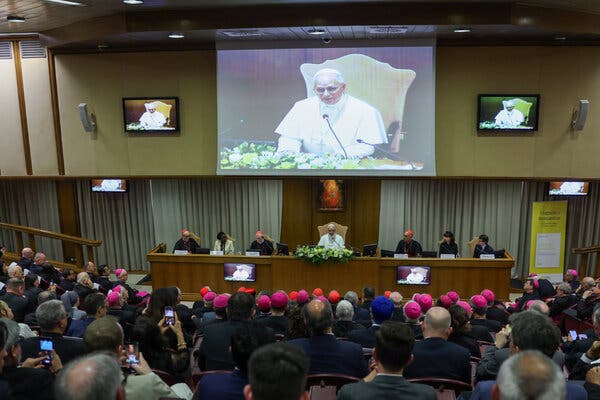
Pope Leo XIV has released a significant new teaching, focusing on safeguarding humanity amid rapid advancements in artificial intelligence. His encyclical, titled “Magnifica Humanitas”, addresses the profound impact of technological change on human life.
Background and Inspiration
This document marks the first encyclical from Pope Leo XIV. It draws inspiration from the 19th-century encyclical “Rerum Novarum” by Pope Leo XIII, which discussed labor issues during the Industrial Revolution. Leo XIV has adopted a similar approach, aiming to tackle urgent modern challenges related to technology.
The document is released as the world approaches a critical technological era, underscoring the importance of putting human welfare at the center of these developments.
Key Insights from “Magnifica Humanitas”
The letter, spanning 42,300 words, addresses various themes. One critical point is the inherent distinction between artificial intelligence and human intelligence.
A.I. is fundamentally not human. We must avoid the misconception of equating this type of “intelligence” with that of human beings.
Artificial intelligence excels in computational speed and data processing, providing benefits across diverse fields. However, it inherently lacks human experiences, emotions, and the ability to grow through relationships.
Pope Leo XIV emphasizes AI as a rapidly evolving field that offers valuable tools. Yet, he stresses the essential reality—artificial intelligence, despite its advancements, remains non-human. It cannot fully replicate the human mind or soul.
 Pope Leo XIV to Undergo Surgery for Lung Nodule
  The Impact of AI on Job Quality and Economic Growth
  Putin Gains Political Advantage Amid Controversial Diesel Deal
  Trump’s Defense of Diesel Deal with Russia Faces Pushback
  Houthi Drone Strike on Riyadh Airport: Details and Impact
  Choosing the Best LED Light Bulbs: A Comprehensive Guide