
Democrats are projected to trail Republicans by several seats in the U.S. House race for the 2026 nationwide redistricting. They aim to catch up by 2028, yet must overcome numerous hurdles that Republicans do not face.
Redistricting Challenges
In various states, Democrats face restrictions on partisan redistricting. Notably, Colorado, New Jersey, New York, and Washington employ independent commissions to ensure non-biased map drawing. To gain an advantage, Democrats would need voter consent to dissolve these commissions and establish partisan boundaries. Republicans have already capitalized on redistricting after President Trump urged a reevaluation to maintain their House hold.
If procedural errors occur, courts might nullify the maps. For instance, Virginia’s Supreme Court recently invalidated Democrat-supported maps due to a legislative procedural mistake, costing the Democrats potential additional seats.
“It’s going to be expensive, it’s going to be unpopular, and it’s going to be a challenge for them to do what they want,” said Adam Kincaid, executive director of the National Republican Redistricting Trust.
Impact of the Census and Legal Barriers
The Democrats face further complications from the recent Supreme Court decision, which weakened the Voting Rights Act, affecting majority-Black districts. This benefits Republican redistricting efforts, possibly reducing Democratic-held seats.
Historical patterns, like Democrats gaining 40 seats in 2018 during Trump’s midterm, play a role, with strategists expecting Democratic gains due to the incumbent president backlash. However, the outlook for 2028 remains challenging.
Post-2030 census changes could shift House seats predominantly towards Republican-controlled states, potentially adding up to 10 seats at Democratic states’ expense.
Strategic Redistricting Efforts
Illinois and Oregon offer the clearest path for Democrats to secure more seats. In other states, including Colorado, Maryland, and New Jersey, Democrats need constitutional amendments for partisan changes.
Maryland voters might face an amendment proposal to oust the state’s sole Republican House seat. Other Democratic-controlled legislatures might vote for similar measures to expand their districts.
Efforts to change laws in Minnesota, Pennsylvania, and Wisconsin aim at gaining control over new maps, with significant seat gains possible in Wisconsin.
“If we’ve learned anything, we’ve learned that when you know a knife fight is coming, bring a bazooka,” said Devin Remiker, Wisconsin Democratic Party Chair.
Persisting Hope and Challenges
Colorado stands as a prominent example of Democrats reversing their stance on nonpartisan redistricting. After Republicans gained control of statehouses in 2010 and used it to secure U.S. House dominance, Democrats initially pursued nonpartisan redistricting. However, recent years have seen a shift. Barack Obama, who once championed nonpartisan efforts, now supports more aggressive map redrawing.
The urgency among Democrats is palpable, viewing the Republican push as a significant threat. Legal and constitutional challenges remain, but the pursuit of new strategies continues.
Associated Press writer Scott Bauer in Madison, Wisconsin, contributed to this report.
 Tensions Rise Between Democratic Moderates and Progressives
  Republican Candidates Compete for South Carolina Senate Seat
 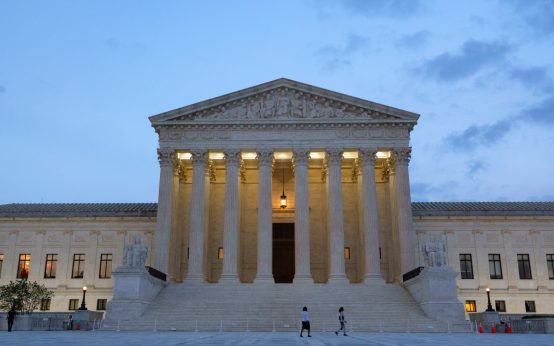 Conservative Activists Aim to Shape Judicial Perspectives on Birthright Citizenship
 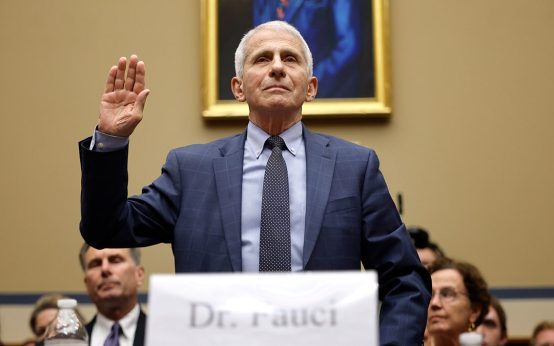 Understanding Contempt of Congress: Recent Case Involving Dr. Fauci
  Legal Experts Predict Trump’s Success in White House Ballroom Case
  Senate Passes Stopgap Funding Bill, Affecting Key Policies