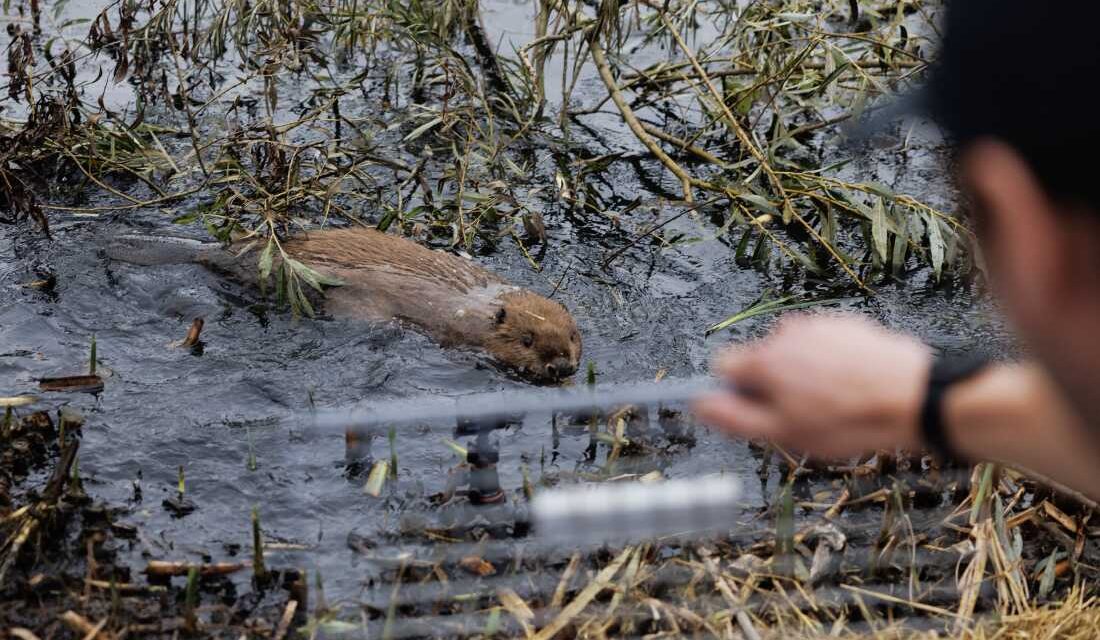
On October 11, 2023, a family of beavers was released in Greenford, England, as part of the Ealing Beaver Project. This family of five, composed of two adults and three kits, marked the return of beavers to the west of Britain’s capital for the first time in 400 years.
Historically, West London used to experience severe flooding during intense rainfall, particularly affecting the Greenford Tube station. Sandbags lined the corridors as a desperation measure to prevent water from inundating the area. However, a new solution emerged with the introduction of beavers in the vicinity.
The Ealing Beaver Project aims to combat the modern challenge of climate change. Britain is known for frequent rain, but climate change is causing more intense and less predictable rainfall. As these changes occur, areas that rarely flooded are now increasingly waterlogged.
Conservationists, seeing the potential of beavers as natural flood engineers, gained government support to introduce beavers into a 20-acre urban park in West London, formerly a golf course. Within weeks of their introduction, the beavers transformed the landscape. By damming the creek, they created a pond with the capacity to absorb and regulate water flow, facilitating a natural mitigation of flooding concerns.
Sean McCormack, a local veterinarian, initiated the project together with Elliot Newton from Citizen Zoo. Their efforts have resulted in the conversion of the area into a giant sponge that can effectively manage heavy rainfall by slowly releasing water back into the environment, reducing flooding risks.
Beyond flood control, the beavers have rejuvenated the area ecologically. By felling trees, they opened up the canopy, encouraging biodiversity. The creek now hosts freshwater shrimp, eight new bird species, two types of bats, and the rare brown hairstreak butterfly.
Economic benefits have also been realized. Plans for expensive infrastructure solutions, like reservoirs and levees, have been replaced by the natural engineering of beavers, offered at a fraction of the cost.
Local residents and visitors can witness these changes first-hand. Joggers, teenagers, and visiting groups often stop to watch the beavers at work. Guided tours and beaver safaris have become popular activities.
Britain had to start reintroducing beavers after they were hunted to extinction over 400 years ago. By examining fossils, scientists found that Norway’s beaver populations were genetically similar to the ones that once lived in Britain. This led to reintroduction efforts beginning in 2009, in Scotland, where the modern British beaver population began with a pair named Millie and Bjornar.
In some regions, the beaver population has increased and spread onto private lands, causing conflicts. In Scotland, some farmers have expressed concerns, as beavers can dam up irrigation channels and flood cultivated land. However, a fund exists to aid in repairing public-interest damages, and a permitting process oversees the management of beavers.
Meanwhile, other farmers like Tom Bowser in Scotland have found a way to coexist with beavers. Tree protection methods and adaptation strategies allow them to enjoy the ecological benefits the animals bring, like controlling floodwaters naturally.
Beaver projects are gaining momentum globally as their benefits are recognized. For land managers, beavers offer natural solutions to challenges like flooding and biodiversity loss.
South Norwood Country Park looks forward to welcoming beavers in the future, with hopes they will enhance their local ecosystem by creating wetlands. Although beavers in Britain do not have natural predators anymore, their instinctive behaviors significantly contribute to their usefulness in environmental management.
 Communities Continuing Recovery from Hurricane Helene Explored through Graphic Novel
  Fat Bear Week 2026 Highlights: Meet the Competitors
  Annual Fat Bear Week Begins at Katmai National Park
  Understanding Hurricane Development
  California Prepares for El Niño-Fueled Storms with Emergency Declaration
  California’s Growing EV Adoption: Challenges and Benefits