
A federal judge has mandated that White House staff and President Trump’s advisers stick to a law ensuring preservation of certain presidential records. U.S. District Judge John Bates issued a preliminary injunction, detailed in a 54-page decision, requiring preservation of records by most White House employees under the Presidential Records Act.
The 1978 law, enacted post-Watergate, established public ownership of presidential records. Notably, the injunction excludes President Trump and Vice President JD Vance. Effective from 9 a.m. on May 26, this order impacts key figures like White House chief of staff Susie Wiles, deputy chief of staff Stephen Miller, the National Security Council, and Council of Economic Advisers.
Bates’ decision contradicts a Justice Department’s Office of Legal Counsel opinion, which argued the Act’s unconstitutionality under Congress’ powers, suggesting non-compliance by Trump. Historical groups, including the American Historical Association, American Oversight, and the Freedom of the Press Foundation, legally challenged this. They pursued judicial intervention to ensure adherence and record preservation.
Judge Bates, in granting relief, asserted the likely constitutionality of the Act, diverging from the Justice Department. Invoking the phrase etched on the National Archives Building – ‘What is past is prologue’ – he emphasized the necessity of records for reflection and transparency. Bates stressed the importance of public trust in government authority and the Act’s role in maintaining this openness.
“Each branch of government derives its authority from the trust placed in it by the People, and Congress has validly determined that this Act helps to maintain that trust by shining some light on the activities of the President and his aides,” the judge noted.
Bates remarked on the absence of a Watergate-level scandal as evidence of the Act’s efficacy. He noted that neither the Court nor other entities should second-guess Congress’ decision to grant citizens access to records.
The plaintiff organizations celebrated the ruling. Chioma Chukwu, executive director of American Oversight, highlighted the judgment’s significance for presidential accountability. Chukwu criticized any attempts to replace established federal law with reliance on presidential discretion.
Passed four years after Nixon’s resignation, the Presidential Records Act mandates that presidential records are governmental property and require preservation. The law directs most presidential documents to the National Archives and Records Administration post-administration, outlining maintenance, access, and preservation processes.
The Act applies to the president’s, vice president’s, and certain Executive Office records, excluding personal records. The plaintiffs cautioned that Trump might retain records at his current term’s conclusion, referencing his previous retention of boxes in 2021 despite the Archives’ persistent retrieval efforts.
These boxes contained thousands of documents, some classified, and Trump claimed the Act allowed retention. Although he faced legal charges for mishandling classified records, the case concluded after his reelection in 2024. The Justice Department has yet to comment on Bates’ ruling.
 Lukashenko and Putin Share Light Moments While Strengthening Ties
 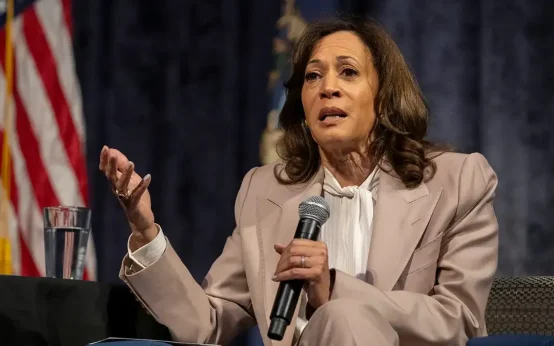 Kamala Harris on Possible 2028 Run Highlights Midterm Importance
  Lawmakers Urge End to U.S. Military’s Drug Boat Strike Campaign
  Investigation into Far-Left Groups Organizing Protests
  How China Uses AI to Challenge U.S. Dominance
 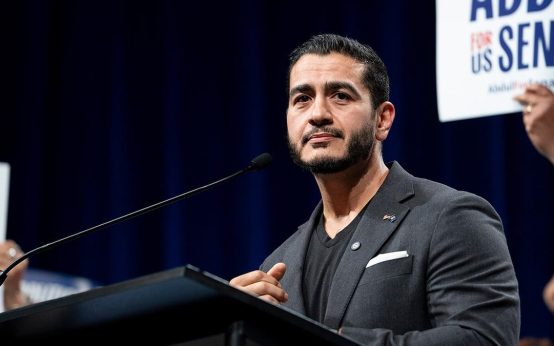 Michigan Senate Candidate Abdul El-Sayed Faces Criticism Over Comments