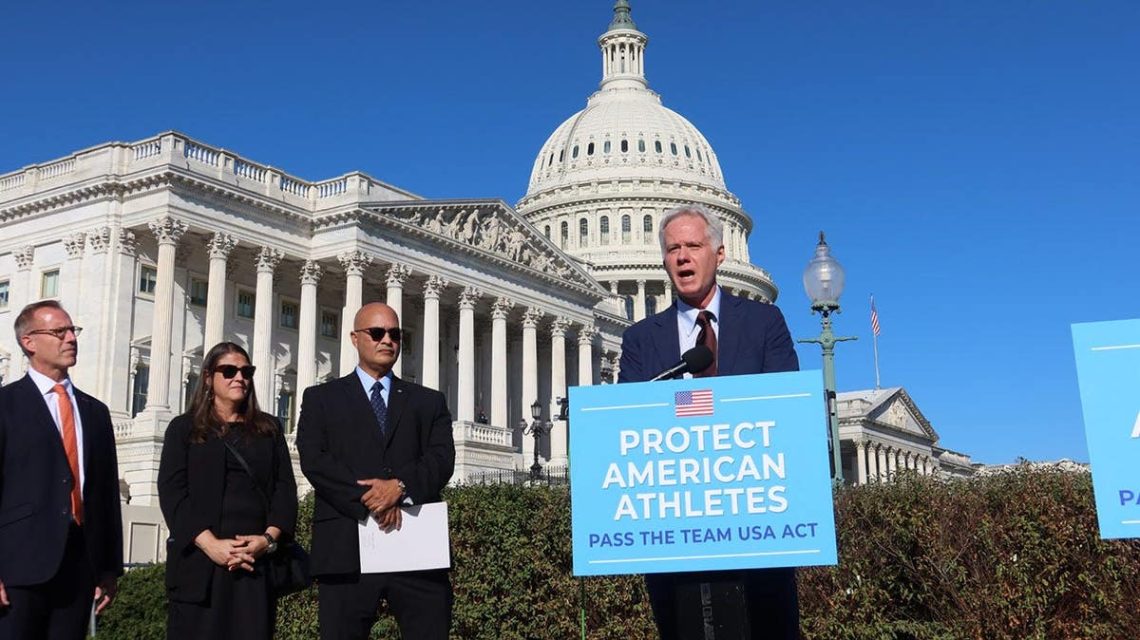
McEnroe Advocates for the TEAM USA Act
Outside the U.S. Capitol on Wednesday, Patrick McEnroe, President of the International Tennis Hall of Fame, expressed direct support for the TEAM USA Act. This legislative proposal seeks to impose a 20% cap on international recruits in college sports, aiming to secure more opportunities for American athletes.
Current Challenges in College Sports
McEnroe highlighted significant concerns over the dominance of international recruits in U.S. college athletics, particularly in Division I tennis. Reports indicate that these athletes occupy nearly 70% of available spots. This shift has seen the number of international athletes with scholarships almost triple from approximately 8,945 in 2001 to around 25,000 today, according to the House Education and Workforce Committee.
“The numbers are stratospheric,” McEnroe stated, pointing out that 70% of Division I tennis players are foreign, with similar trends in other sports.
Coaches have privately supported a recruitment cap, although many refrain from speaking openly due to job security concerns. The competitive environment often pressures sports programs to seek success by recruiting international players over local talents.
The Legislative Approach
During a joint press conference with House Education and Workforce Committee Chairman Tim Walberg, the urgency of the Training and Education for American Members in University Sports and Athletics Act (H.R. 10351) was underscored. McEnroe, drawing from personal experience as a former college athlete at Stanford University, called for establishing clear limits to prioritize American students.
International vs. Domestic Athletes
The act proposes a consistent rule across all collegiate sports, whereby only 20% of any college team can comprise international athletes. For example, a 10-player tennis roster would be restricted to two international players. This measure aims to dismantle the existing system, where foreign governments indirectly benefit from American taxpayer-funded training for their athletes.
Long-term Implications
Bypassing the TEAM USA Act, McEnroe and Walberg argue that the focus should be on boosting opportunities for the 99% of college athletes who do not pursue professional careers. They maintain that college sports should remain an avenue for educational and personal development, supported by the nation’s educational institutions.
McEnroe’s advocacy comes amidst discussions in Washington, where awareness of this issue remains limited. For meaningful change, the bill requires bipartisan support in Congress. Meanwhile, McEnroe continues to champion the preservation of college sports as a pathway for American students to elevate their education and lives.
 Senate Leadership Conflict Reveals Deep Divides in Democratic Party
 Flavio Bolsonaro Claims Political Persecution Led to U.S. Asylum
 Key Developments in U.S. Politics and International Affairs
 Ex-Oath Keepers Leader Turns Against Trump
 Progressive Democrats Seek to Push Agenda in House
 Controversy Surrounds Governor Newsom’s Death Sentence Commutation Plan