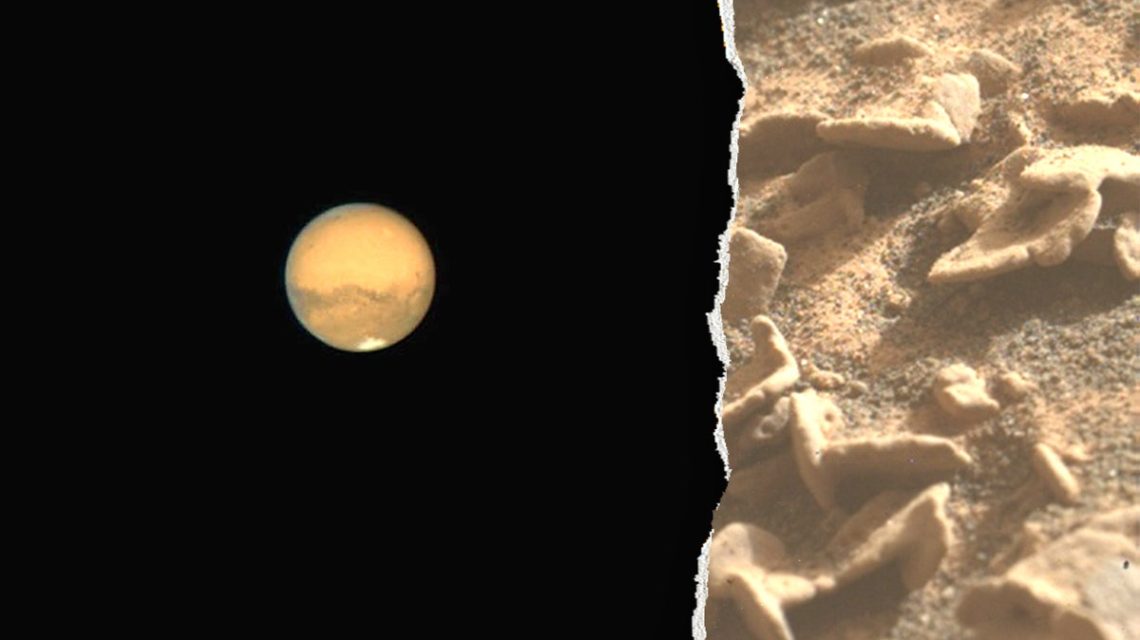
NASA scientists are studying peculiar formations on Mars that bear a resemblance to potato chips. The announcement came through NASA’s Curiosity blog. The Curiosity rover, operational since 2012, observed these formations during a drilling operation at a site known as “Nazca.”
Exploration of the Nazca Site
The Nazca drill site is located in an area where disk-shaped features have appeared in the bedrock. These formations have been described as either disk-shaped or potato-chip shaped. Images captured reveal irregular curling shapes embedded in the Martian bedrock.
Scientific Objectives and Methods
One main goal for NASA scientists is to understand these unusual chip-shaped features better. Samples from the Nazca drill hole have been sent to Curiosity’s Sample Analysis at Mars (SAM) laboratory for chemical analysis.
The rover also plans to use its ChemCam instrument, which is equipped with a laser, to examine a crystal-shaped formation called “Colca.” This will provide details about its chemical composition.
Additionally, Curiosity will utilize the Mars Hand Lens Imager (MAHLI) to photograph these formations under white-light and ultraviolet LEDs at night.
Continuous Exploration and Discoveries
After examining the Nazca site, Curiosity will resume its southward journey on Mars. NASA scientists are intrigued to learn if these formations have been observed elsewhere on the Red Planet.
This study is part of ongoing efforts to explore Mars and other parts of the solar system. Last month, astronomers discovered a potential new dwarf planet beyond Pluto using the Vera C. Rubin Observatory in Chile. Named 2026 ED138, this object ranges from 370 to 930 miles in diameter, potentially placing it among the largest known dwarf planets.
 Bayer Settles Massive Roundup Lawsuit Over Cancer Claims
 AI and Mathematics: A Potential Breakthrough on the Riemann Hypothesis
 Mathematicians Race to Solve the Riemann Hypothesis Amid AI Controversy
 Key Developments in California, Melania Trump Series, Controversial Execution, and More
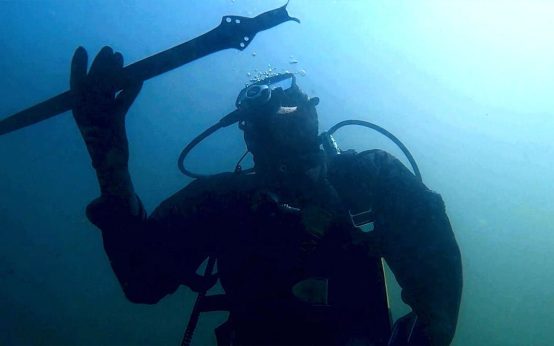 3,300-Year-Old Sword Found in Italian Lake, Still Sharp
 A Complex Portrait of Stephen Hawking in Graham Farmelo’s Biography