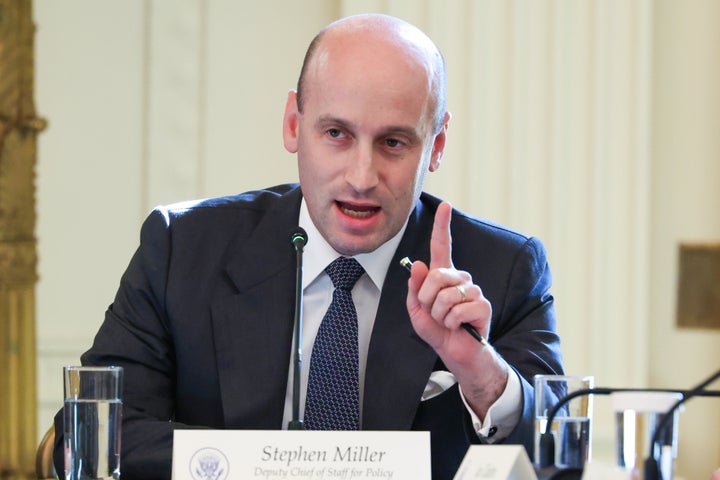
Stephen Miller has taken on a prominent role in President Donald Trump’s administration. His appointment as Trump’s top aide follows the departure of Susie Wiles. Wiles was known for moderating Trump’s more extreme impulses, contrasting sharply with Miller’s reputation for advocating strong, often controversial measures.
Stephen Miller is widely recognized for his influence on Trump’s policies regarding immigration and other issues. His rise to chief of staff suggests that Trump may prioritize confrontational politics over bipartisan cooperation. This aligns with Miller’s history of contentiousness, as noted by Democratic leaders who have criticized his views.
Wiles, coming from a more mainstream Republican background in Florida, was instrumental in Trump’s political resurgence following the January 6, 2021, insurrection. Her experience included working on environmental efforts, illustrating a more moderate approach compared to the divisive tactics often associated with Miller.
Miller previously worked alongside Jeff Sessions in the Senate. He opposed immigration reform fiercely and communicated his views energetically through media channels. His writings and policies often stressed the perceived risks of undocumented immigration.
Sarah Matthews, a former press office staffer during Trump’s first term, indicated that Miller’s promotion likely means continued political strategies aligned with Trump’s first term, with little expectation for significant bipartisan changes.
Trump’s history with racially charged rhetoric precedes his collaboration with Miller. Yet, Miller’s involvement seemingly intensified this focus, notably in Trump’s speeches highlighting crimes by undocumented immigrants.
Despite setbacks, such as the rejection of the initial Muslim travel ban—a policy Miller largely crafted—his influence persists in shaping immigration policy. His hardline stance shaped significant measures such as challenges to birthright citizenship and intensified deportation practices.
Criticism of Miller includes dissent from his own family, with relatives openly condemning his immigration policies. An op-ed by Miller’s uncle decried the contradictions in Miller’s advocacy against the backdrop of his family’s immigrant history.
As Trump continues into the later years of his presidency, Miller’s strategic influence will likely remain significant. With many Republicans citing loyalty and political acumen as reasons for Miller’s trusted status, his role may shape policy directions and institutional relations.
Moving forward, Miller’s experience in previous political battles might prove crucial. With Democrats gaining control, his familiarity with high-stakes political dynamics will be important in addressing challenges within the administration.
 Mississippi State Auditor Shad White Announces Gubernatorial Bid
 Trump Dismisses Third Impeachment Prospects
 Custody Dispute Involving Rep. Max Miller Delayed
 Attorney General Addresses Post-Midterm Democratic Threats
 Senator Elizabeth Warren and the Future of Crypto Regulation
 Bipartisan Opportunities in Foreign Policy