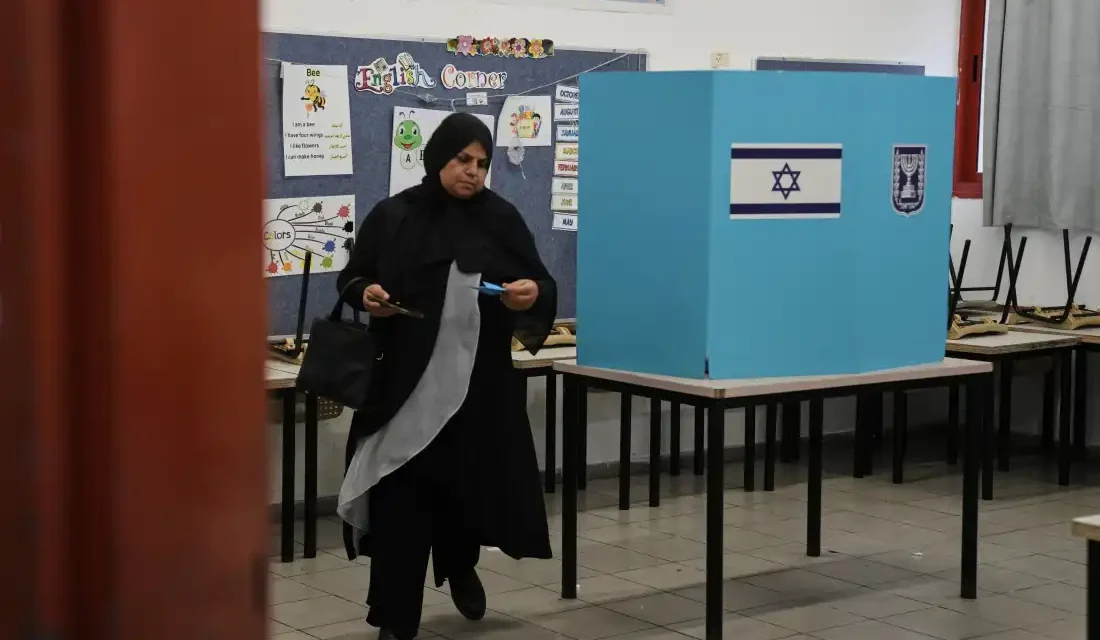
A Palestinian citizen of Israel places her vote in the general election at a polling station in Umm al-Fahm, Israel, on October 27, 2026.
In recent times, many Palestinian citizens of Israel have avoided elections, feeling that engagement in the politics of a state often seen as marginalizing their communities and oppressing fellow Palestinians in the West Bank and Gaza offers little benefit. Despite this, a significant shift occurred last month when Palestinian Arabs in Israel turned out in record numbers to vote. Their participation critically weakened Prime Minister Benjamin Netanyahu’s far-right government, which lacked the majority needed to continue. Arab-led parties gained enough votes to emerge as a strong political force in Israel.
Jamal Zahalka, chairman of the High Follow-Up Committee, representing Palestinian citizens of Israel, remarked on this development: “We blocked the government of Netanyahu from continuing. It’s a historical achievement. I think our community found its strength.” Netanyahu’s coalition and Gadi Eisenkot’s center-right opposition both failed to secure the 61 seats needed to form a government. Arab-led parties captured 19 out of 120 seats, granting them a significant role in deciding Israel’s political future during this turbulent period.
Historical Context
The election results bring attention to enduring questions about Israel’s identity and the role of Palestinian Arabs within its society. Just two days after the election, hundreds gathered in Kufr Qasim, a Palestinian-majority town, to commemorate the residents killed by Israeli border police in 1956. This event reflected on past and present issues, such as increased discrimination since the October 2023 Hamas-led attacks on Israel and the ongoing destruction in Gaza, which has left thousands dead.
Netanyahu’s right-wing government’s actions in the occupied West Bank, where settlers have increasingly displaced Palestinians, also fueled the high voter turnout. In Kufr Qasim, residents like Intisar Sarsur shared the sentiment of lacking freedom, motivating many to vote. Standing beside an olive tree, Sarsur commented, “There is no freedom anymore. We are seeking our basic rights as human beings.” The scene was marked by the bittersweet enjoyment of traditional dishes amid memories of disrupted olive harvests in the West Bank due to settler attacks.
Impact on Israel’s Political Climate
Palestinian citizens of Israel, who remained after Israel was established in 1948, now constitute about 20% of the population. This election saw a 64% increase in votes for Arab-led parties compared to previous elections, according to the Central Elections Committee. These gains have provoked reactions from Israel’s political right, as they perceive a threat to the nation’s Jewish identity.
Netanyahu and allies highlighted the increased Arab turnout as an “emergency.” Allegations of election fraud were made without evidence, and the elections were deemed fair by officials. These accusations are seen as an attempt to prevent Eisenkot’s center-right group from aligning with Arab parties, a move that would enable him to form a government.
The intensified anti-Arab sentiment since 2023 poses challenges for Eisenkot and Arab parties attempting to collaborate. Although not a natural partner for Arab parties, Eisenkot’s military background and views present hurdles to unity. Meanwhile, Ra’am, an Islamist party, opened dialogue on coalition-building by placing a Jewish former police official second on its list.
President Isaac Herzog is consulting with party leaders to determine a candidate who will attempt to form a coalition. The nominee will receive up to 42 days to form a government. Failure to do so will result in further attempts or another election next year.
In the atmosphere of remembrance at Kufr Qasim, Mansour Shaaban expressed a strong resolve to continue voting. Participating for the first time in this election, he emphasized the importance of confronting the racism and suppression experienced under Israel’s right-wing leadership.
“Even if we don’t succeed to create change this time,” Shaaban stated, “now right-wing Israeli politicians know that Palestinian citizens of the country have found their voice.”
 Feud and Legal Battle in New York Family Dynasty
 Political Shifts and Concerns Post-Midterms
 Death Toll Rises After Krakow Shooting
 Villa Vie Odyssey Faces Legal Challenges After Halting Operations
 Trump Shares AI-Generated Video Featuring UFC Personalities
 Suspected Shooter in Krakow Dies After Hospitalization