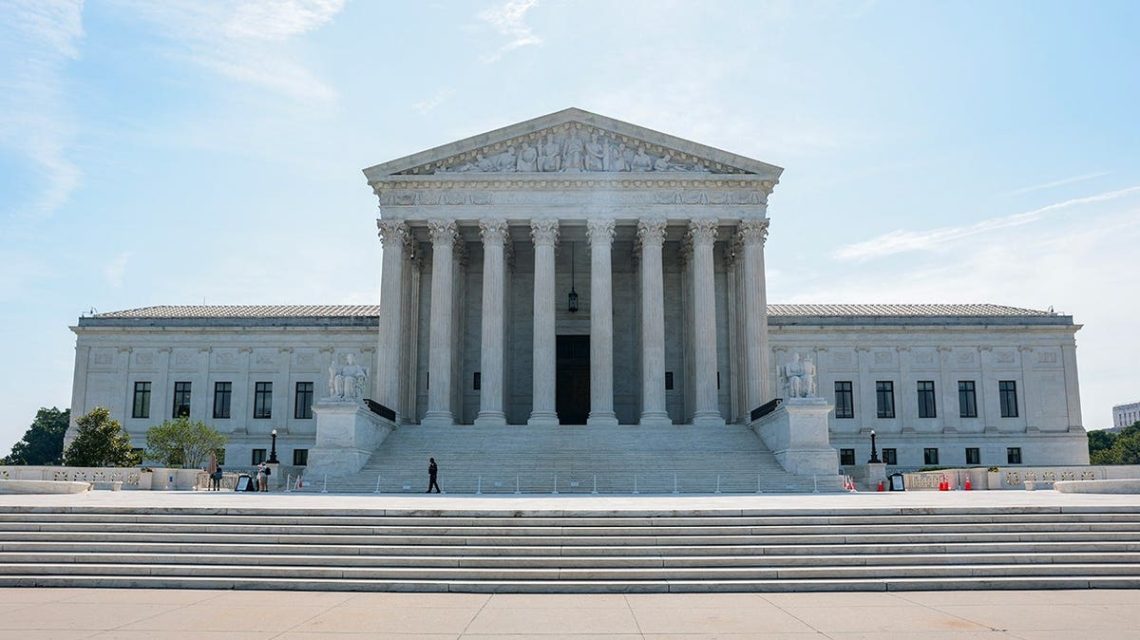
The Supreme Court is tackling a major case involving religious rights, specifically concerning Catholic preschools in Colorado. These institutions claim that they are improperly excluded from a taxpayer-funded program, infringing on their religious freedoms.
Context of the Dispute
The issue arises from the state’s anti-discrimination laws that affect preschools denying admission to children of LGBTQ+ parents. The Catholic schools argue this prevents them from receiving public benefits that should be universally applicable.
This legal challenge is part of a series of religious rights appeals reaching the Supreme Court from Colorado in recent years.
Justice Opinions
During a two-hour oral argument, justices debated the balance between religious liberty and equal opportunity for gay and lesbian parents.
I’m hard-pressed to think that, given those [Catholic] teachings, that any homosexual family is going to choose to go to one of these schools, but that should be their choice, not your choice to exclude them,
Justice Sonia Sotomayor commented, challenging the plaintiffs’ stance.
Conversely, Justice Brett Kavanaugh questioned the state’s approach:
Why not seek the win/win? There are plenty of opportunities to respect the rights of the religious believers and respect the ability of LGBT parents to find among the 2,000 [Colorado] schools an appropriate fit for their children.
Policy and Implications
The Universal Preschool Program (UPK), initiated in 2020, provides public funds to participating schools demanding equality in enrollment irrespective of various factors such as race, ethnicity, and sexual orientation.
Two Catholic parishes have claimed that this policy specifically targets their beliefs about same-sex marriage. Their argument rests on claiming the exclusion constitutes religious discrimination under the First Amendment.
Colorado argues its conditions are neutral and broadly applied. The funding amounts to $6,300 annually per child for up to 15 hours of weekly preschool, sourced from a tobacco tax.
Legal Precedent and Impact
The high court will decide whether to narrow a longstanding precedent that religious practices do not provide exemptions from generally applied laws.
The First Amendment has previously focused on separating church and state. However, the current conservative majority seems inclined to favor free exercise claims raised by religious institutions.
Conservative justices are scrutinizing whether state requirements for public benefits promote conformity, potentially constituting religious discrimination.
Individual Cases and Voices
Erika Nagle, a parent at St. Mary Catholic School, shared her experience of being denied state preschool funding, highlighting the financial strain imposed by these regulations:
We are being excluded from this benefit because we are Catholic… The state is dangling a carrot over here, incentivizing people to leave their faith, to abandon the Catholic education that they want.
The Becket Fund for Religious Liberty has claimed severe consequences due to the state’s policies, noting enrollment declines and preschool closures.
The Supreme Court’s decision in St. Mary Catholic Parish v. Roy (25-581) is expected by next spring, and it could shape the intersection of religious rights and state anti-discrimination laws.
 Former Virginia Soccer Coach Faces Charges for Exploiting Minor
 Potential Breakthrough in OJ Simpson Case Through Fingerprint Analysis
 Survivor’s Struggle with Trauma and Justice in 1992 Rape Case
 Trial Begins in Decades-Old Cold Case Murder
 Judge Orders Bond Hearing for Illinois Green Card Holder in ICE Custody
 New Jersey Elementary School Aide Faces 61 Child Sex Crime Charges