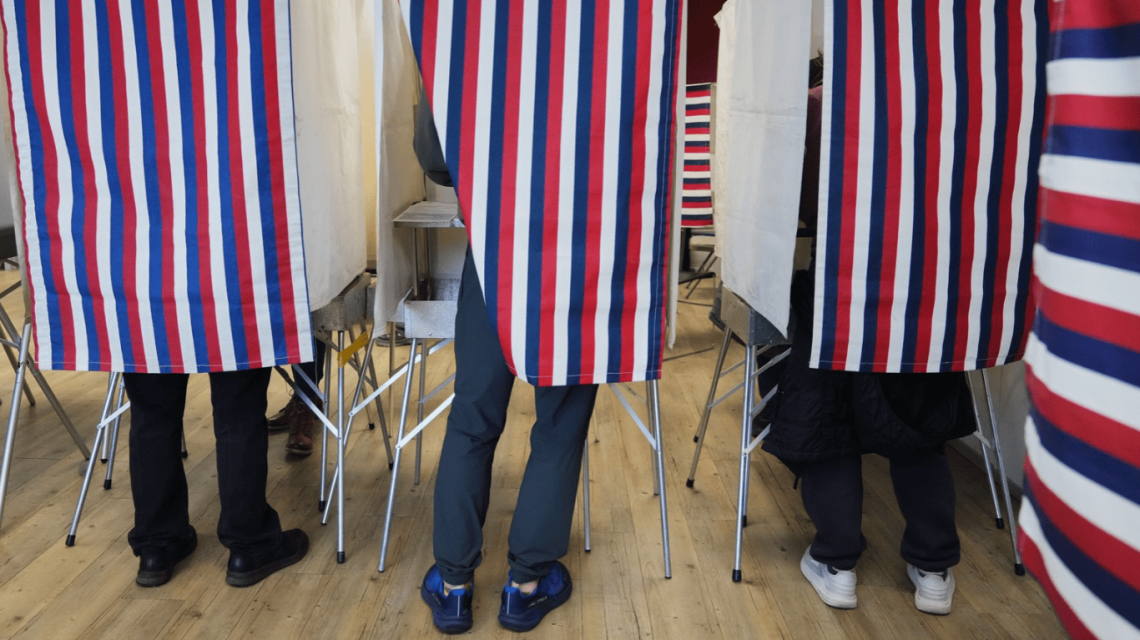
For two decades, Thomas Evans played a crucial role in setting up voting booths at Nanwalek, Alaska’s community center. During the 1980s and ’90s, he witnessed substantial voter turnout from the village. Today, Nanwalek finds itself without a regular precinct polling place on Election Day.
“There’s no polling place anymore,” Evans stated. He explained, “It has really handicapped our village, not being able to turn in a reliable count for who the people want.”
Nanwalek is among 18 rural Alaska communities engaged in a legal dispute accusing the state of promoting in-person voting locations that ultimately did not open. Most of these are Alaska Native villages accessible only by plane or boat. The lawsuit, filed Thursday, is under scrutiny as it addresses issues less than a day before the Senate race polls open.
The state’s website had indicated Nanwalek’s absentee in-person site opened on October 19. However, the lawsuit claims the site remained closed during that week, with reports it did not open until October 30. The Division of Elections, contacted by Newsweek, referred back to its web listing, which Newsweek couldn’t independently verify. If the claims hold true, Nanwalek missed the first 11 days of early voting without a local voting site.
Lawsuit Details
The case, Midnight Sun Independence Fund v. Dahlstrom, was filed on October 29 in Anchorage Superior Court. It names Lt. Gov. Nancy Dahlstrom, Division of Elections Director Carol Beecher, and the division itself. The lawsuit asserts that closing advertised sites infringes on voting rights, potentially breaching the Alaska Constitution. The court was prompted to ensure these sites remain operational. A hearing was set for 9 a.m. Monday.
The Alaska Democratic Party, alongside rural state lawmakers, filed a parallel lawsuit, citing potential violations of a federal consent decree ensuring Yup’ik language voter assistance in Western Alaska.
Throughout rural Alaska, voting during the 15 days preceding an election primarily occurs via absentee in-person voting. Here, voters receive ballots from local officials, seal them in envelopes, and later have these counted. In 2024, 18,158 individuals utilized this voting method.
The lawsuit highlighted 18 sites listed on the division’s website as inactive during the week of October 19. These include Alakanuk, Chignik Bay, Chistochina, Ekwok, Gambell, Goodnews Bay, Holy Cross, Huslia, Kongiganak, Manokotak, Mountain Village, Nanwalek, Napaskiak, Newhalen, Pedro Bay, Pilot Station, Quinhagak, and Toksook Bay. At these locations, officials either didn’t receive ballots or received materials without adequate training.
Five additional site closures were reported within the Yukon-Kuskokwim Delta. The state refuted the reported scale of closures, indicating that 12 out of the 18 sites confirmed they were open, while three declined and three did not respond.
Nanwalek’s Voting Dilemma
The lawsuit specifically addresses Nanwalek’s situation, noting its lack of a regular precinct polling place for the 2026 general election. When absentee in-person sites are non-operational, Nanwalek voters must venture to Tyonek. A round-trip flight to Homer costs approximately $200, followed by additional travel to reach Tyonek’s polling station.
“There’s no way people could afford trips to Homer, then to Kenai, and further flights,” Evans expressed. “Costs are prohibitive.”
Evans, now residing in Anchorage, recalls turnout plummeting after the early 2000s when Nanwalek lost its polling place. Residents remain puzzled, with little clarity offered regarding these changes. In the 2000 election, around 60% of registered voters participated locally. By 2022, the Tyonek precinct’s participation dropped to 6%.
Currently, ballots arrive by mail, though unreliable postal services and environmental conditions affect their delivery.
Local Voting Impact
Ordinarily, a few village site closures would be a local concern. However, this election year coincides with a tightly contested Senate race. Peltola, a former congresswoman, is challenging Republican Sen. Sullivan. Polls indicate a razor-thin margin between the two candidates.
Historically, Alaska elections have swung on minimal vote differences. Recent examples include Nick Begich claiming the U.S. House seat by 7,876 votes, and a ranked-choice voting repeal failing by 737 votes.
A separate lawsuit aiming to prevent Senate election certification if Sullivan loses was dismissed by a federal judge, though an appeal is forthcoming.
Future Developments
As of Sunday, inquiries to the Division of Elections regarding Nanwalek’s voting site status received limited responses. Division spokesperson Steve Kirch provided links to available voting site lists, suggesting alternatives like mail or electronic submissions.
Judge Matthews will oversee the Midnight Sun case on Monday. Even with potential favorable judgments, the villages would have barely Election Day itself to facilitate local voting.
 Mississippi State Auditor Shad White Announces Gubernatorial Bid
 Trump Dismisses Third Impeachment Prospects
 Custody Dispute Involving Rep. Max Miller Delayed
 Attorney General Addresses Post-Midterm Democratic Threats
 Senator Elizabeth Warren and the Future of Crypto Regulation
 Bipartisan Opportunities in Foreign Policy