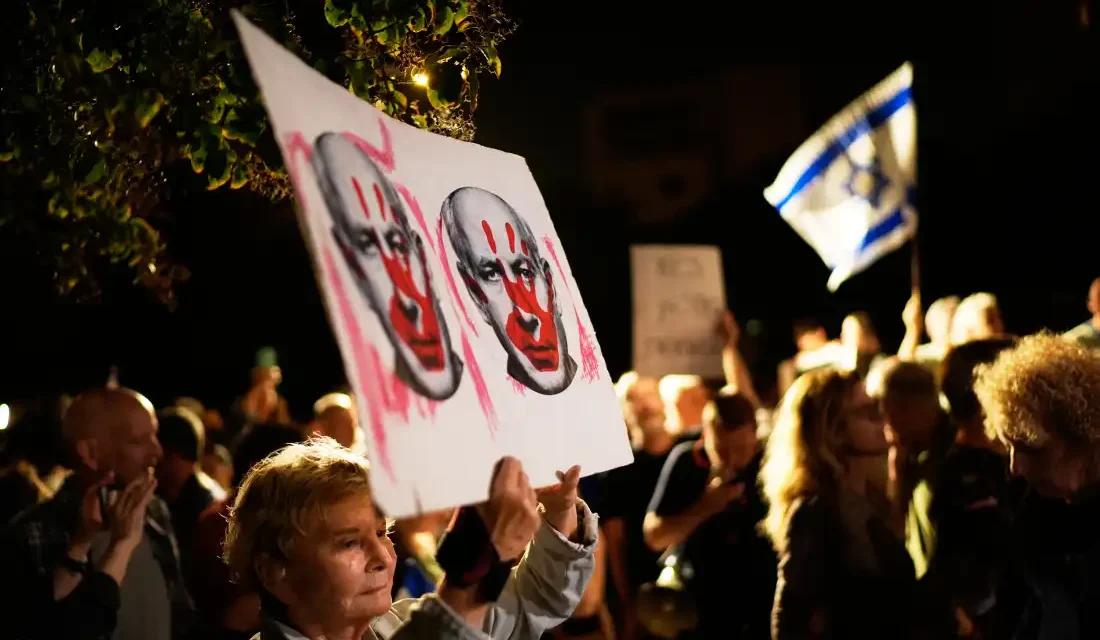
In Herzliya, Israel, left-wing activists urged the inclusion of Arab parties in government formations outside the residence of Yashar party leader Gadi Eisenkot. The recent Israeli election has resulted in a political stalemate, providing no clear path for Prime Minister Benjamin Netanyahu or his main rival, Gadi Eisenkot, to form a government.
The final election results show that opposition parties secured more seats than Netanyahu’s right-wing bloc. However, Eisenkot, a former military chief with a center-right stance, cannot achieve a governing majority without relying on Arab parties, a strategy he and his allies dismissed during their campaign. Netanyahu’s Likud party received the most votes yet falls short of a majority. His coalition of right-wing, far-right, and ultra-Orthodox parties cannot secure the 61 seats needed for a parliamentary majority in the 120-seat Knesset.
Formation of the Israeli Government
The upcoming days will see Israel’s president consulting with leaders from each elected party. Each party recommends the leader they believe should receive the first opportunity to form a coalition. The president chooses not the leader of the largest party but the candidate most likely to build a governing coalition. That individual then has 28 days to garner support from at least 61 lawmakers. The president might extend the period by 14 days. If unsuccessful, another candidate gets the chance to form a government, a process that could last weeks, months, or end without a majority.
First Chance at Forming a Coalition
Based on the results, Eisenkot might receive the most initial recommendations from elected lawmakers. But this is no guarantee that he can form a coalition. His bloc lacks a majority without the Arab-led parties, which represent 21% of the population and are known as Palestinian citizens of Israel. Eisenkot and his allies have cited disagreements with the Arab parties on issues concerning Hamas and Gaza, insisting these differences prevent collaboration.
Netanyahu faces a parallel challenge, as his traditional partners do not have enough seats to restore his power.
Possible Outcomes
A unity government with both Netanyahu and Eisenkot is one potential outcome. This could involve moderate parties from the center and right and align with U.S. interests for regional priorities. Though reports suggest President Trump favors this, Eisenkot has refused to serve under Netanyahu. Additionally, determining who would be prime minister and any rotational agreements remain unresolved.
Another scenario is an Eisenkot-led government supported externally by Arab parties. Together, they would hold a parliamentary majority over 67 seats. However, this approaches conflict with campaign promises made by Eisenkot and his allies.
The possibility of another election looms if a majority cannot be formed. The recent election saw the highest turnout in years. Still, if no majority is reached, returning to the polls is possible. Declining Arab turnout, due to exclusion by predominantly Jewish parties, and decreased participation by liberal Israelis could impact repeat election outcomes.
Lastly, either bloc might attempt to persuade opposing lawmakers to defect. Under current results, this path seems improbable, needing significant numbers from either side.
Opposition Tactics During Stalemate
A majority opposed to Netanyahu might push forward legislation, backed by Arab lawmakers. Efforts could include replacing the Knesset speaker or establishing inquiries into failures before the October Hamas attack. Opponents could also revise laws seen as undermining democratic processes made under Netanyahu’s leadership. Such actions wouldn’t form a new government but could demonstrate parliamentary strength.
Impact of Potential Conflict with Iran
Netanyahu’s election night speech emphasized the need to address Iranian threats, while Eisenkot warned against using security issues for political gain. Renewed conflict with Iran, especially involving the U.S., might disrupt opposition plans and heighten pressure on Eisenkot for an emergency unity government; a scenario seen following the October attack when Eisenkot briefly joined Netanyahu’s government.
Analyst Danny Citrinowicz suggests that Netanyahu might benefit from initiating conflict during ongoing government talks, creating a scenario that could encourage unity between opposing factions.
Reporting contributions by Daniel Estrin in Tel Aviv.
 Judge Orders Trump Administration to Disclose States Targeted for Election Compliance
 Oil Company Earnings Spark Voter Discontent Pre-Election
 Unremarkable Troy Jackson Faces Challenges in Maine Senate Race
 Carolyn Hax Advises on Managing Relationship Resentment
 Challenges in Polling the Kansas Senate Race
 U.S. Military Actions in the Strait of Hormuz Aim to Counter Iran